Hungarian snacks

Your guide to Hungarian snacks – Try the best and most unique local treats!
Curious about Hungarian snacks? You’re in the right place.
Hungary isn’t just famous for its goulash and paprika — it also has a sometimes surprising snack culture. From sweet childhood retro favorites to savory bites with unexpected twists, Hungarian snacks offer a fun way to explore the country’s flavors. Whether you’re a foodie, a first-time visitor, or just snack-curious, this guide offers a tasty intro to what locals grew up with — and what might be waiting for you on the tasting table. And if you’re hungry for more, don’t miss our Budapest Gastro Guide for places to eat, drink, and explore local flavors across the city.
Túró Rudi – The iconic one
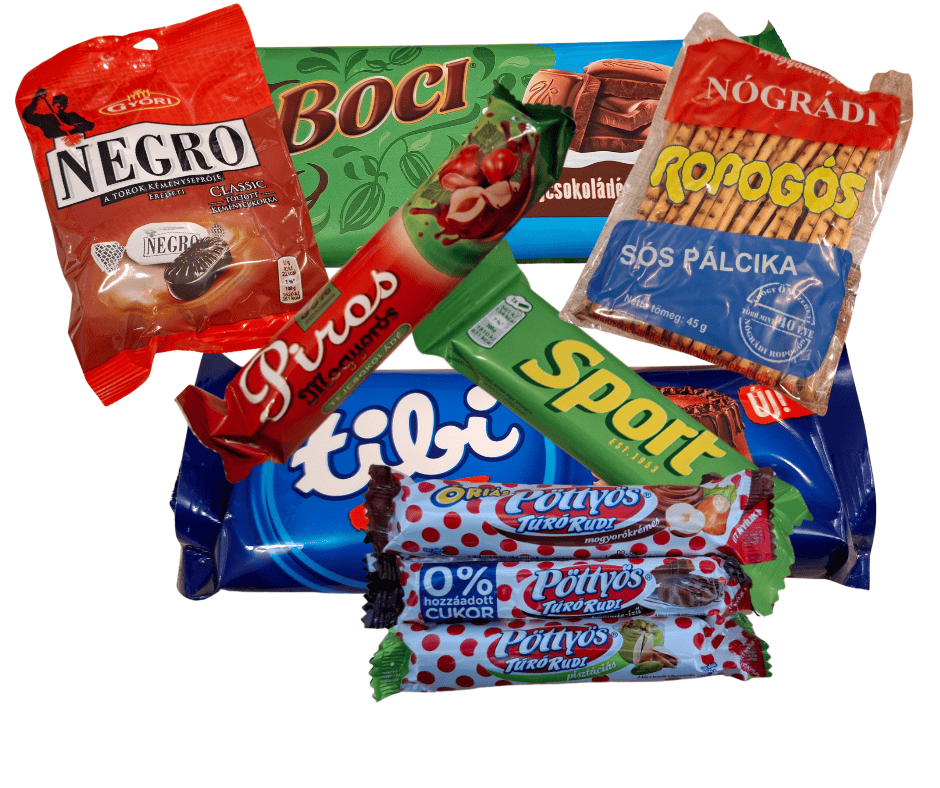
A creamy curd cheese bar coated in chocolate that has been a staple of Hungarian snacks since 1968. Its unique combination of sweet and savory flavors makes it a must-try. It’s often considered Hungary’s “national snack.” Sweet, simple, and iconic! Pöttyös is the most famous brand of Túró Rudi which is available in many flavours (my favourite is the hazelnut cream and the brownie flavoured version, which has 0% added sugar). Pöttyös has other popular dairy products such as cocoa drink (I vote for the dark chocholate flavoured one).
Fun Fact: Túró Rudi is the “most popular Hungarian snack” and, even after more than 40 years on the market, it has never lost its popularity. Originally inspired by a Soviet Russian sweet, it has since become a staple in every Hungarian household!


Sport Szelet – The retro energizer
This chocolate bar is packed with a delightful mix of crunchy wafers, chocolate, and rum flavor. Originally created in the 1950s to fuel athletes, it’s now a beloved treat for everyone. Sport Szelet is all about energy – both in taste and history.
Fun Fact: Sport Szelet was originally created in the 1960s as an energy booster for athletes. However, it quickly became a national favorite and is now available in almost every pub and store in Hungary.
Balaton Szelet – The nostalgic bar
This wafer bar with creamy cocoa filling and chocolate coating is inspired by Lake Balaton. It’s a nostalgic favorite for many Hungarians, and its simple but satisfying flavor continues to win hearts.
Fun Fact: The name “Balaton Szelet” comes from Hungary’s largest lake, Lake Balaton, which has become a symbol of summer relaxation. Imagine enjoying a delicious, refreshing slice of chocolate while relaxing by the lake!


Negro Cukorka – The throat sweeper
Please note: ‘Negro’ is a popular Hungarian throat lozenge named after the Italian word for ‘black,’ referring to the color of the candy. Although the name may sound outdated or offensive in English, in Hungary it has no racial connotation and is purely brand-related.
Known as the “chimney sweeper candy,” this hard candy has an unexpected, yet fun, taste of licorice and menthol, often associated with Hungarian folklore. If you like bold and unusual flavors, this one is for you!
Fun Fact: Negro Cukorka was extremely popular during the socialist era, and its distinctive licorice flavor was considered one of the most unique candies of its time. Its polarizing taste has made it a hit with some, while others simply “don’t like it.”
Pilóta Keksz – The Hungarian Oreo
A crunchy biscuit with a cocoa cream filling, Pilóta Keksz is often compared to the Oreo. First made in the 1960s, it’s a nostalgic treat loved by children and adults alike. Perfect for dipping into milk or enjoying on its own!
Fun Fact: Pilóta Keksz was one of the first Hungarian products that other nations tried to copy, but no one quite succeeded. For many Hungarians, Pilóta Keksz is the tastiest cookie, and they don’t understand why it hasn’t become as popular as Oreo. While Oreo is an international star, Pilóta Keksz offers a unique flavor profile that is simply irreplaceable for many locals.


Kakaós Csiga – The cocoa swirl
The Hungarian “chocolate snail” is a soft, sweet pastry filled with cocoa and rolled into a spiral shape. A common breakfast or snack in Hungary, it’s a chocolate lover’s dream and sure to satisfy any sweet tooth.
Fun Fact: Kakaós Csiga is a Hungarian classic! The sweet, fluffy cinnamon roll-like pastry with a cocoa filling is so popular that it’s often considered a breakfast or snack item at any time of day. Its name literally means “cocoa snail” because of its spiral shape, and it’s loved for its simple yet irresistible taste.
Ropi – The crunchy stick
These crunchy, salty pretzel sticks are a quintessential snack in Hungary. They come in a bag that’s hard to put down, and the perfect balance of salt and crunch makes them ideal for parties, watching sports, or just a casual nibble.
Fun Fact: The popularity of Ropi is likely due to the fact that there is no shortage of crunch when you start a “ropi” eating contest! If you haven’t tried it yet, it’s time to join the “Ropi” enthusiasts!


Sajtos Tallér – The crispy favourite
These cheese crisps are irresistible little bites that combine a crunchy texture with a rich, cheesy flavor. Ideal for pairing with a cold beer or enjoying as a snack any time of day.
Fun Fact: Sajtos Tallér first appeared in the 1980s, and since then it has become a must-have snack at almost every gathering and party. The unique cheesy flavor and crispy texture have made it the undisputed king of Hungarian snacks.
Salted Pretzel – The salty classic
Hungarian salted pretzels (sós perec) are a popular and nostalgic bakery snack often found in bakeries, street stalls, and local markets. These crispy, slightly dry ring-shaped treats are made from a simple dough of flour, water, salt, and yeast, then baked until golden and sprinkled with coarse salt. They’re typically eaten as a light snack, often with beer or as a quick bite on the go. You’ll also see them in local grocery stores, either freshly baked or packaged in bags.
Fun fact: In Hungary, the word “perec” refers to both the pretzel shape and the snack itself — but it doesn’t always look like the classic twisted pretzel. The Hungarian version is usually round, with a large hole in the middle!


Boci Csoki – The creamy classic
A creamy milk chocolate bar that’s been a household name in Hungary since its creation. It’s a simple pleasure for chocolate lovers, with smooth, sweet milk chocolate that melts in your mouth. Available in many flavor: the author’s favorite is the one with biscuit and apricot flavor.
Fun Fact: Boci Chocolate is one of Hungary’s most beloved chocolate brands, known for its iconic milk chocolate bars with a delicious creamy filling. The brand’s logo features a cute cow, which has made it instantly recognizable in Hungarian households for decades. The chocolate has become a nostalgic treat for many Hungarians, evoking childhood memories.
Zizi – The colorful crunch
Zizi is a colorful puffed rice candy that’s light, crunchy, and sweet, perfect for children or anyone who enjoys a sugar-coated treat. Its nostalgic charm makes it a timeless snack.
Fun Fact: The uniqueness of Zizi candy lies not only in its taste but also in its packaging, which evokes a sense of nostalgia. The candy also hides a “mystery,” as people often try to guess what color or flavor the candy will be. Zizi’s popularity lies in its simplicity, and it has been a part of the Hungarian candy market for over 30 years!


Dianás Cukor – The retro liquor bite
A traditional hard candy with a liquid center that contains a slight hint of alcohol. Originally, it was thought to cure a hangover, making it a quirky yet beloved candy among Hungarians. Be careful, it’s liquid inside.
Fun Fact: Dianás Cukor is a true retro candy that almost everyone who grew up in socialist Hungary remembers. Due to its unique liqueur flavor and distinctive packaging, it’s a bit nostalgic for many!
Mackósajt – The bear-y cheesy treat
Known as “bear cheese,” this creamy, spreadable cheese in foil triangles has been a Hungarian favorite for decades. Now, even lactose-intolerant individuals can enjoy a version that’s made without lactose. It’s simple, creamy, and beloved by all ages. It is available in many flavours and has a lactose free version as well.
Fun Fact: Medve Sajt (Bear Cheese) is a popular Hungarian snack that’s famous for its small, individually wrapped portions, resembling a bear’s paw! It’s a soft, creamy cheese that’s often enjoyed with bread or crackers. It’s beloved by kids and adults alike, and it’s a favorite for lunchboxes across Hungary.


Dunakavics – The Danube crunch
Meaning “Danube pebbles,” this candy features sugar-coated peanuts that resemble colorful river rocks. Sweet and crunchy, it’s a fun snack with a unique shape and flavor. It is very hard to chew. Take care of your teeth!
Fun Fact: The popularity of Dunakavics in Hungary is no coincidence, as its name references the Danube River, which brings pebbles throughout the year, much like this candy. Known for its colorful, small shapes and crunchy coating, it’s a real “flavor bomb” for candy lovers. Dunakavics became especially popular in the 1980s and evokes nostalgic feelings for many.
Cheesy pretzel – The cheesy twist
The cheese pretzel is a beloved savory snack in Hungary, often found in bakeries, local markets, and grocery stores. It’s made from soft dough twisted into the classic pretzel shape and generously topped with melted cheese that turns golden and crispy in the oven. It’s perfect as a quick bite during sightseeing or as a light snack with a cold drink.
Fun fact: In Hungary, cheese pretzels are so popular that some bakeries sell them warm straight from the oven at breakfast time — locals often grab one on the go instead of a croissant!


Mesekeksz – The fairy-tale bite
Translating to “Fairy Tale Biscuits,” these cookies are small, fun, and have a light, sweet taste. They’re a favorite among children and perfect for a sweet snack.
Fun Fact: Mese Keksz are a nostalgic treat for many Hungarians, often associated with childhood memories. These biscuits are usually filled with a creamy, sweet filling and have a unique, whimsical shape, making them a favorite for kids. The name “Mese” (meaning “Fairy Tale”) reflects the magical, fun aspect of these cookies, often bringing to mind the innocence of childhood and bedtime stories. They are also known for being the perfect pairing with a glass of milk, making them a classic snack for Hungarian families.
Tibi Csoki – The everyday favorite
One of the most famous Hungarian chocolate bars, Tibi is known for its smooth texture and rich flavor. Available in a variety of flavors, it’s an essential part of the Hungarian chocolate experience.
Fun Fact: Tibi Chocolate is famous for its simple but irresistible taste. It’s often considered the “everyday chocolate” in Hungary, as it’s widely available and affordable. The unique thing about Tibi Chocolate is that it was one of the first chocolates in Hungary to be wrapped in colorful foil, which made it stand out in stores back in the day!


Szamos – The sweet elegance
Szamos Marcipán is one of Hungary’s most beloved confectionery brands, known for its high-quality marzipan treats. Founded in 1935 by Mátyás Szamos, a self-taught confectioner, the brand quickly became famous for its handcrafted marzipan roses and pralines. Today, Szamos offers a wide range of products including chocolate-coated marzipan bars, elegant bonbons, and even beautifully sculpted marzipan figures.
You can find Szamos shops and cafés all over Budapest – even at the airport.
Fun fact:
Mátyás Szamos first gained recognition when he crafted marzipan roses for a royal wedding cake — a treat fit for royalty that sparked a national love affair with marzipan!
Szerencsi – The sweet heritage
Szerencsi is one of Hungary’s most iconic chocolate brands, with a history dating back to 1923. Named after the northeastern town of Szerencs, where it was founded, the brand has long been associated with nostalgic childhood treats, creamy milk chocolate, and charming retro packaging.
Fun fact:
During the socialist era, Szerencsi chocolates were among the few sweet indulgences widely available — they became a beloved symbol of comfort and celebration in everyday life.


Vadász Chocholate – The rich rum one
A classic liquor-filled chocolate since the mid-20th century. These treats are known for their rich dark chocolate coating and a flavorful liquid center infused with rum or other liqueurs. They were especially popular during the socialist era and have remained nostalgic favorites among Hungarians. Their strong, slightly bitter alcohol kick balanced with sweet chocolate — definitely not your average candy bar!
Fun Fact:
The name “Vadász” means “hunter” in Hungarian, symbolizing strength and boldness — fitting for a chocolate that comes with a boozy surprise inside!
Staying with us in Budapest?
You can actually taste these snacks by joining our Hungarian Flavor Roulette – a lighthearted tasting experience we offer to our guests. It’s free, fun, and full of surprises. Ready to try a delicious (or unique flavoured) snack?