Budapest to Vienna by Train (2026): ÖBB Railjet, RegioJet & Train Ticket Guide
Whenever visitors ask us for the easiest way to combine Hungary and Austria on one trip, our answer never changes: skip the airport and take the direct train from Budapest to Vienna. Roughly 20 direct trains a day link the two capitals across 243 km of flat countryside in 2 hours and 40 minutes from downtown Pest, or just 2 hours and 25 minutes if you hop on at Budapest-Kelenföld on the Buda side. Booked a few weeks early on the official railway apps rather than markup resellers, one-way tickets start at €11 to €15 (~4,400–6,000 HUF) on private yellow RegioJet carriages or €13 (~5,200 HUF) on hourly red ÖBB Railjet Xpress trains.
We ride this route several times a year for museum weekends and flights out of Vienna, and the trip itself is smooth once you avoid two classic mix-ups: showing up at the wrong Budapest station for a RegioJet train, or leaving your physical passport packed inside a suitcase before the Austrian border check at Hegyeshalom. Below is how we book the lowest 2026 fares, which cabin class is actually worth paying extra for, and how each departure station works on the ground.

Direct Train Operators, Daily Schedule & 2026 Ticket Prices
Three rail brands run direct daytime trains between Budapest and Vienna in 2026. National railways ÖBB (Austrian Federal Railways) and MÁV-START (Hungarian State Railways) team up on hourly high-speed Railjet Xpress (RJX) and daytime EuroCity trains, while Czech private operator RegioJet runs four to five bright yellow departures of its own. The first direct train pulls out of Budapest around 05:40, and hourly or near-hourly departures continue right through 20:40 every single day.
Here is how the four direct services compare in 2026 (using roughly 400 HUF = €1 alongside our own notes from riding the 15:40 RJX 68 out of Platform 9 at Budapest-Keleti):
| Train Operator & Service | Budapest Departure Stations | Journey Time (to Wien Hbf) | 2026 Advance Ticket Price (2nd / 1st Class) | Same-Day Walk-Up Fare | Seat Reservation Rule | Who It Suits Best |
|---|---|---|---|---|---|---|
| ÖBB / MÁV Railjet Xpress (RJX) Hourly flagship high-speed train | Budapest-Keleti & Budapest-Kelenföld | 2h 40m (2h 25m from Kelenföld) | €13 (~5,200 HUF / ~$14) via MÁV+; €19.90 via ÖBB; 1st Class from €29 (~11,600 HUF) | ~€47 (~18,800 HUF) 2nd class; ~€75 (~30,000 HUF) 1st class | Optional: €0 FREE in MÁV+ app (€3 on web/ÖBB; €15 Business Class) | Most travelers, families & hourly schedule flexibility + full restaurant car |
| RegioJet (RJ Yellow Trains) 4–5 daily private runs | Budapest-Déli & Budapest-Kelenföld (Never Keleti!) | 2h 35m – 2h 46m (arrives Meidling & Wien Hbf) | €11–€15 (~4,400–6,000 HUF / ~$12–$16) Low Cost/Standard; Relax/Business €19–€29 | €19–€34 (~7,600–13,600 HUF) until sold out | Mandatory & €0 free (included automatically with seat map) | Budget travelers, last-minute bookings & Buda-side hotels + free cancellation up to 15 min prior |
| MÁV / ÖBB EuroCity (EC) Select daytime runs (e.g. Hortobágy, Dacia) | Budapest-Keleti & Budapest-Kelenföld | 2h 38m – 2h 45m | €13 (~5,200 HUF) 2nd class; €29 (~11,600 HUF) 1st class | ~€44–€47 (~17,600–18,800 HUF) | Optional: €0 in MÁV+ app (€3 web) | Classic compartment fans & Hungarian dining-car lunches |
| Kálmán Imre EuroNight (EN) Early/late international link | Budapest-Keleti & Budapest-Kelenföld | ~2h 45m | From €13–€19 (~5,200–7,600 HUF) seated | ~€47 (~18,800 HUF) | €5 (~2,000 HUF) seat reservation | Early-morning onward connections toward Salzburg, Munich or Zurich |
2026 Budapest to Vienna Train Fare & Station Planner
Tap your Budapest neighborhood and group size below to see which station saves a cross-town cab ride and what your tickets should cost in Euros and Forints under 2026 MÁV START Europa (including the €5 child fare for ages 6 to 14) compared with RegioJet.
Which Budapest Train Station Goes to Vienna? (Keleti, Kelenföld & Déli)
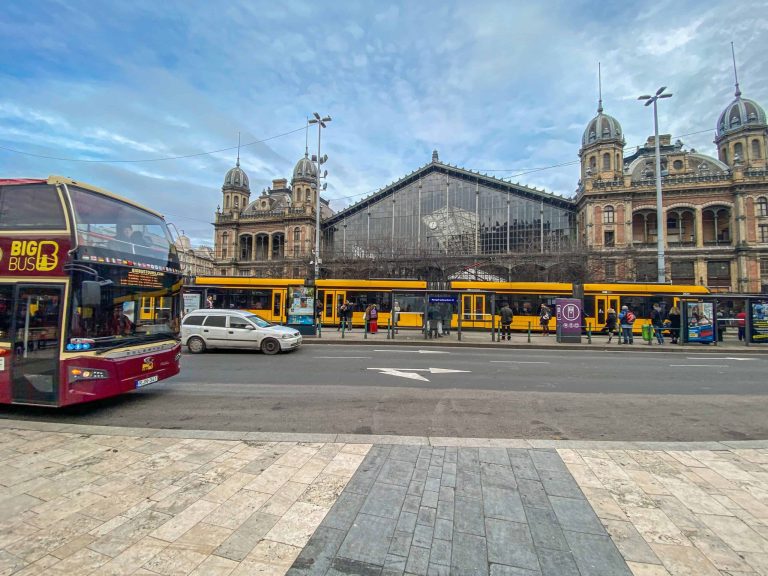
Double-checking your departure station the night before saves the single most painful mistake on this route. International trains use three different Budapest main railway stations depending on the carrier you picked, and turning up under the grand iron roof of Keleti with a yellow RegioJet QR code means watching your train pull out across the Danube without you.
If you booked an hourly ÖBB Railjet Xpress, a MÁV EuroCity, or the Kálmán Imre EuroNight, your train starts at Budapest-Keleti (Eastern Station in District VIII on the Pest side), right above Metro Lines M2 (red) and M4 (green). RegioJet trains never enter Keleti. Instead, RegioJet starts on the Buda side at Budapest-Déli (Southern Station below Buda Castle, the western terminus of Metro M2).
Our favorite local shortcut is Budapest-Kelenföld in South Buda (District XI), at the western end of Metro Line M4. Every single Vienna train in 2026, whether ÖBB Railjet, MÁV EuroCity, or yellow RegioJet, makes a two-minute stop at Kelenföld roughly 13 minutes after leaving Keleti (or 7 minutes after Déli). Whenever we are staying near Gellért Hill, Bartók Béla út, Kálvin tér, or Corvin-negyed, we take M4 straight out to Kelenföld and shave 15 minutes off the rail trip to Wien Hbf.
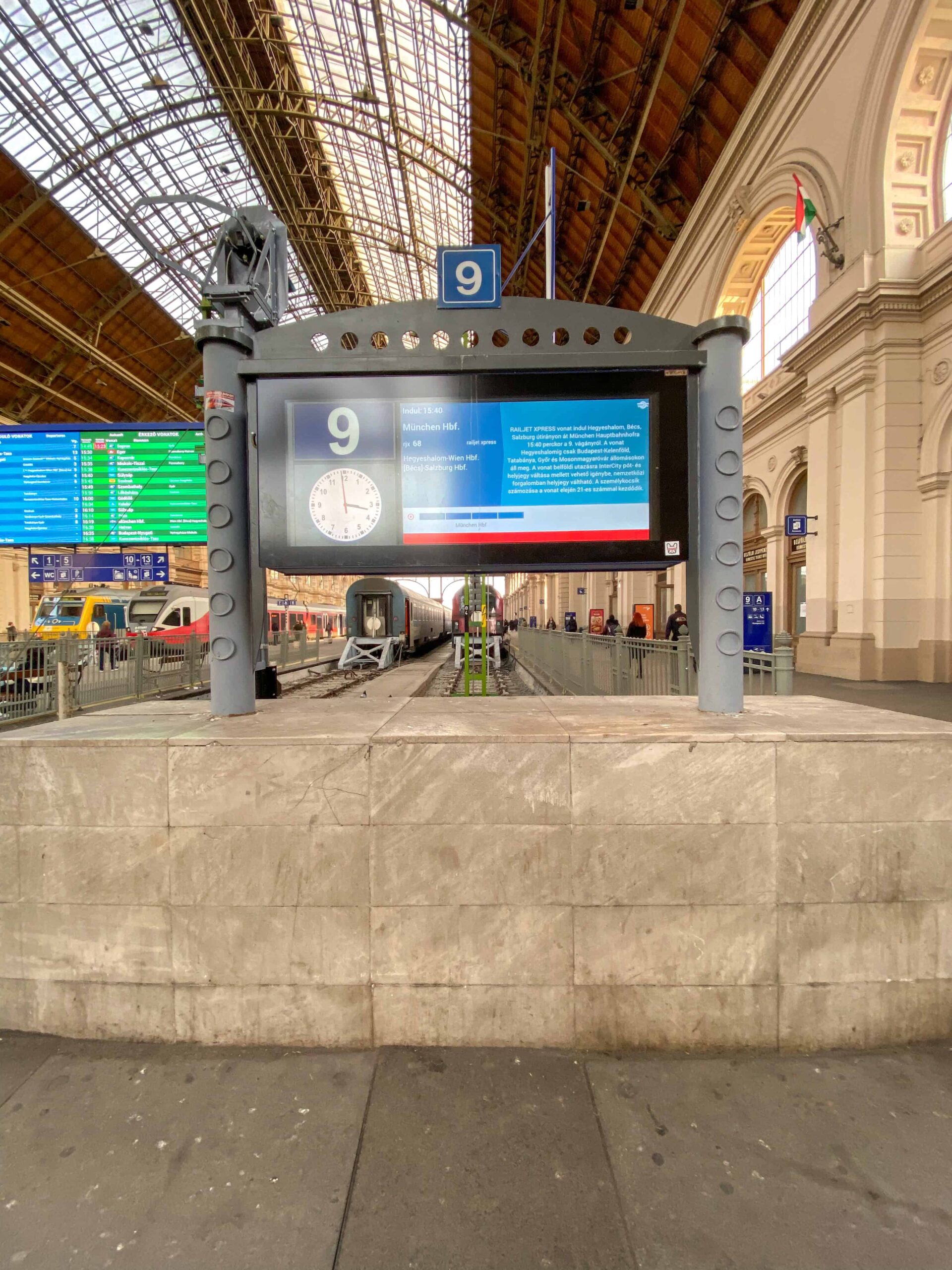
One detail at Budapest-Keleti catches first-timers by surprise almost every hour, as you can see in our Platform 9 photo above. Vienna Railjet Xpress trains usually leave from the high-numbered main hall tracks (often Platform 9, though check the big central board 20 minutes before departure), and the top line on the screen rarely says Vienna! Because ÖBB Railjets keep rolling west into Germany or Switzerland, the headline destination reads München Hbf., Salzburg Hbf., or Zürich HB, with Hegyeshalom and Wien Hbf. (Bécs) listed in smaller letters underneath. Notice the blue Hungarian note on the right side of the display too: international coach numbers start at Car 21 at the front of the train, and Hungarian stops are strictly Budapest-Kelenföld, Tatabánya, Győr, Mosonmagyaróvár, and Hegyeshalom.
Getting to any of the three stations on Budapest public transport (BKK) costs 500 HUF (~€1.25) on a single ticket or 2,750 HUF (~€6.90) with a 24-hour travelcard: Metro M2 runs from Deák Ferenc tér to Keleti in 6 minutes, while Metro M4 connects Kálvin tér to Kelenföld in 11 minutes. If you are flying into BUD Airport and heading straight onto a Vienna train, see our step-by-step Budapest Airport to Main Train Station transfer guide comparing the 2,500 HUF (~€6.25) 100E Airport Express + Metro M4 Kelenföld link against direct station rides.
Inside the ÖBB Railjet Xpress: Business, First & Economy Cabins Compared
Red ÖBB Railjet Xpress trains carry three seating classes: Business Class, First Class, and Second (Economy) Class. Every coach has free onboard Wi-Fi (ÖBB Portal), 230V power sockets, air conditioning, ceiling route monitors, and walk-through access to a proper sit-down restaurant car pouring draft Austrian beer alongside goulash, schnitzel, and espresso. We walked through and photographed all three cabins on the 15:40 RJX 68 out of Keleti so you know what you are actually getting.
1. ÖBB Railjet Business Class (+€15 Supplement Over First Class)
Tucked right behind the driver’s cab at the end of the First Class carriage, Business Class adds a flat €15 (~6,000 HUF) upgrade onto any First Class fare and automatically includes your seat reservation. You sit in quiet semi-private booths behind frosted glass with wide black leather armchairs, red headrest cushions, leg rests, a fold-out cocktail table, a complimentary welcome drink (prosecco, fruit juice, or sparkling water), and at-seat meal service from the dining car. Just note one strict ÖBB rule if you travel with a dog: pets are not allowed inside Business Class.

2. ÖBB Railjet First Class (2+1 Leather Seating, Advance from €29)
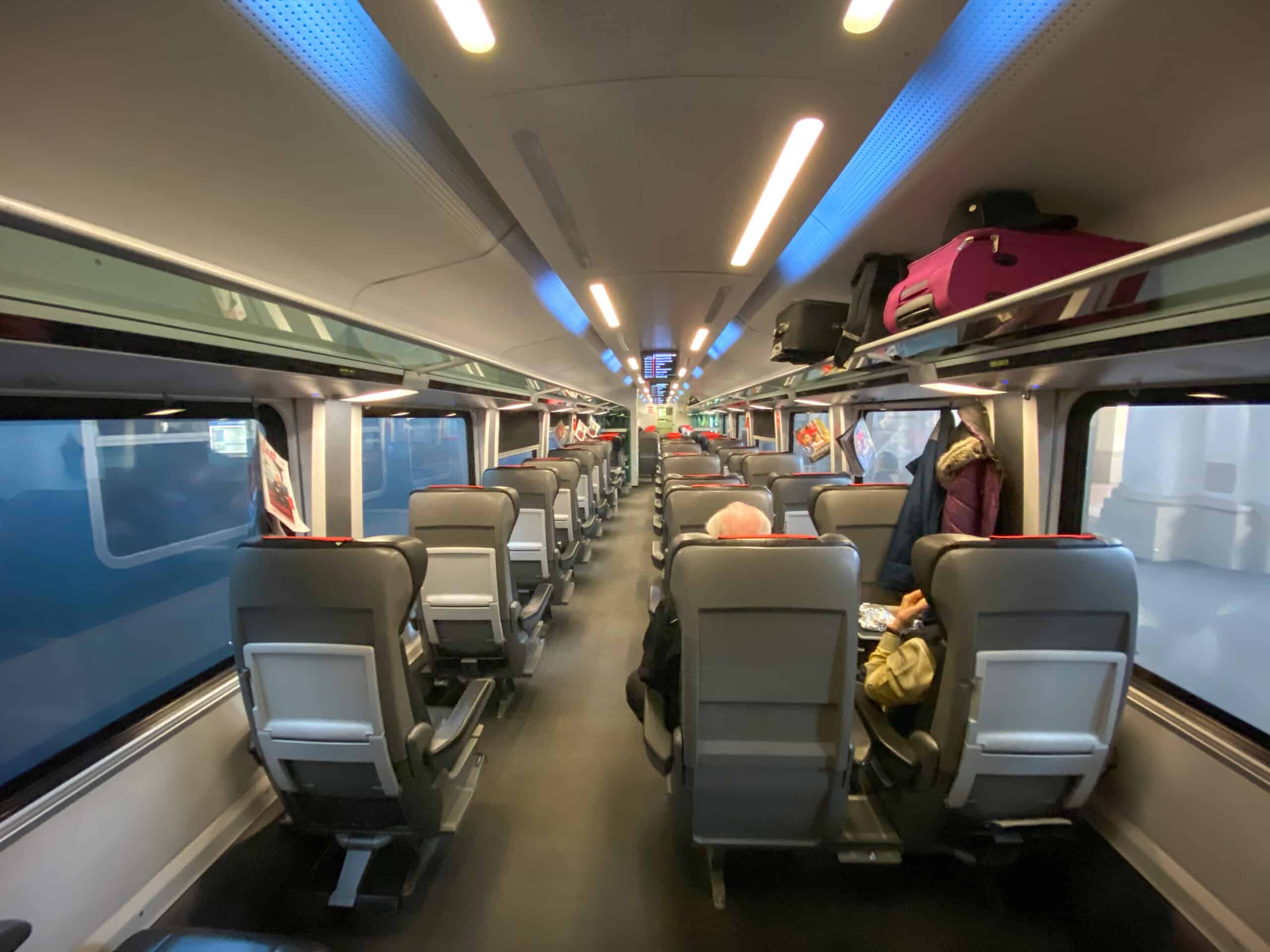
Whenever advance START Europa First Class tickets are still sitting around €29 (~11,600 HUF), this is the cabin we book for ourselves. Instead of four seats across, First Class uses a generous 2+1 dark leather layout: solo travelers get a private window-and-aisle armchair down one side, and couples can reserve face-to-face seats across a wooden table. As you can see in our First Class photo below, cabin bags and medium hard-shell suitcases slide flat onto the heavy glass racks directly overhead, so your luggage stays right in view the whole way to Austria.
3. ÖBB Railjet Economy Class & the Green “Ruhezone” Quiet Car (From €13)
Second Class (labeled 2 economy on the sliding glass doors) is bright, clean, and comfortable for a two-and-a-half-hour ride, with 2+2 grey fabric seats split between airline rows and four-person table bays. Glance at the headrest covers before sitting down: bright lime-green covers printed with Ruhezone / Quiet Zone (like Car 23 in our photo below) mark the silent coach where phone calls and speaker audio are frowned upon. We love Car 23 when working on a laptop, while families with kids will be happier in a standard red-trimmed Economy coach or the Family Zone toward the rear. Big 28-inch checked suitcases fit into floor racks near the doors; keep your passport, laptop, and wallet on you rather than in a bag by the exit during stops at Győr or Wien Meidling.

Riding yellow RegioJet from Déli or Kelenföld instead? RegioJet splits its trains into four tiers: Low Cost (open coach with non-reclining seats, €11–€15), Standard (6-seat compartments or open seating with free bottled water, complimentary illy coffee, and €2–€4 cakes or sushi ordered from your phone), Relax (2+1 leather armchairs), and Business (quiet 4-seat compartments with free prosecco, orange juice, and coffee for roughly €25–€29).
How We Book the Cheapest 2026 Tickets (and Four Traps to Dodge)
Never buy this route through third-party resellers like Omio, Rome2Rio, or Rail Europe. Aggregator sites tack on 8% to 18% booking fees, hide coach seat maps, and routinely miss Hungary’s cheapest discount pool. Even though MÁV-START and ÖBB share the exact same hourly Railjet Xpress trains, each railway sells its own separate quota of cheap seats. Whenever ÖBB’s Sparschiene jumps to €34.90 on a busy Friday morning, we check the MÁV+ smartphone app first: MÁV’s START Europa allocation often still has the exact same train for €13 to €19, and booking inside the MÁV+ mobile app throws in a €0 free seat reservation (buying on desktop web or ÖBB adds €3 / ~1,200 HUF).
If you are traveling with kids, MÁV’s family rules are generous too: children under 6 ride free on a lap, and up to three kids aged 6 to 14 pay a flat €5 (~2,000 HUF) each in 2nd class (€10 in 1st class) alongside an adult START Europa ticket. Because international round-trip discounts no longer beat advance singles, we always buy two separate one-way tickets, say an early €13 Railjet out of Keleti and an evening €14 RegioJet back into Kelenföld. Prefer paying cash or card in Hungarian Forints (HUF) for paper tickets? Head to the International Ticket Office (Nemzetközi pénztár) beside Platform 6 inside Keleti at least 35 minutes before departure.
Before you board, keep four practical quirks in mind that trip up travelers every week:
- Never play seat roulette without a reservation between Friday morning and Sunday evening. An unreserved Railjet ticket is legal, and plenty of seats look free at Keleti, right until reserved commuters climb aboard at Kelenföld and Győr matching the little overhead LED displays (
Budapest - Wien) and send unreserved passengers out into the vestibule for two hours. - Do not confuse Wien Hauptbahnhof (Wien Hbf) with Wien Mitte. Direct trains from Budapest call at Wien Meidling and Wien Hbf, never at Wien Mitte. Flying out of Vienna Airport (VIE)? Stay right on the platform at Wien Hbf and catch an ÖBB Railjet straight to Flughafen Wien in 15 minutes.
- Keep your physical passport in your daypack for Hegyeshalom. Even inside Schengen, Austrian border officers walk through carriages right after the border checking original passports (or EU national ID cards); phone photos and driver’s licenses are turned down.
- Remember that €13 MÁV START Europa and €19.90 ÖBB Sparschiene saver tickets lock you onto one specific train. Miss that departure and you have to buy a ~€47 walk-up ticket, whereas RegioJet lets you cancel or swap trains online free up to 15 minutes before departure.
Arriving at Wien Hauptbahnhof & Doing Vienna as a Day Trip
All direct trains from Budapest glide into modern Wien Hauptbahnhof (Vienna Main Station) just south of the Ringstraße, with RegioJet and select ÖBB trains also pausing five minutes earlier at Wien Meidling (handy if Schönbrunn Palace is your first stop via U-Bahn Line U6). From Wien Hbf, follow the red U signs downstairs to Südtiroler Platz – Hauptbahnhof and hop on the Wiener Linien red U1 metro toward Leopoldau. Three stops and 6 minutes later, with zero transfers, you walk up the steps right beside St. Stephen’s Cathedral at Stephansplatz.
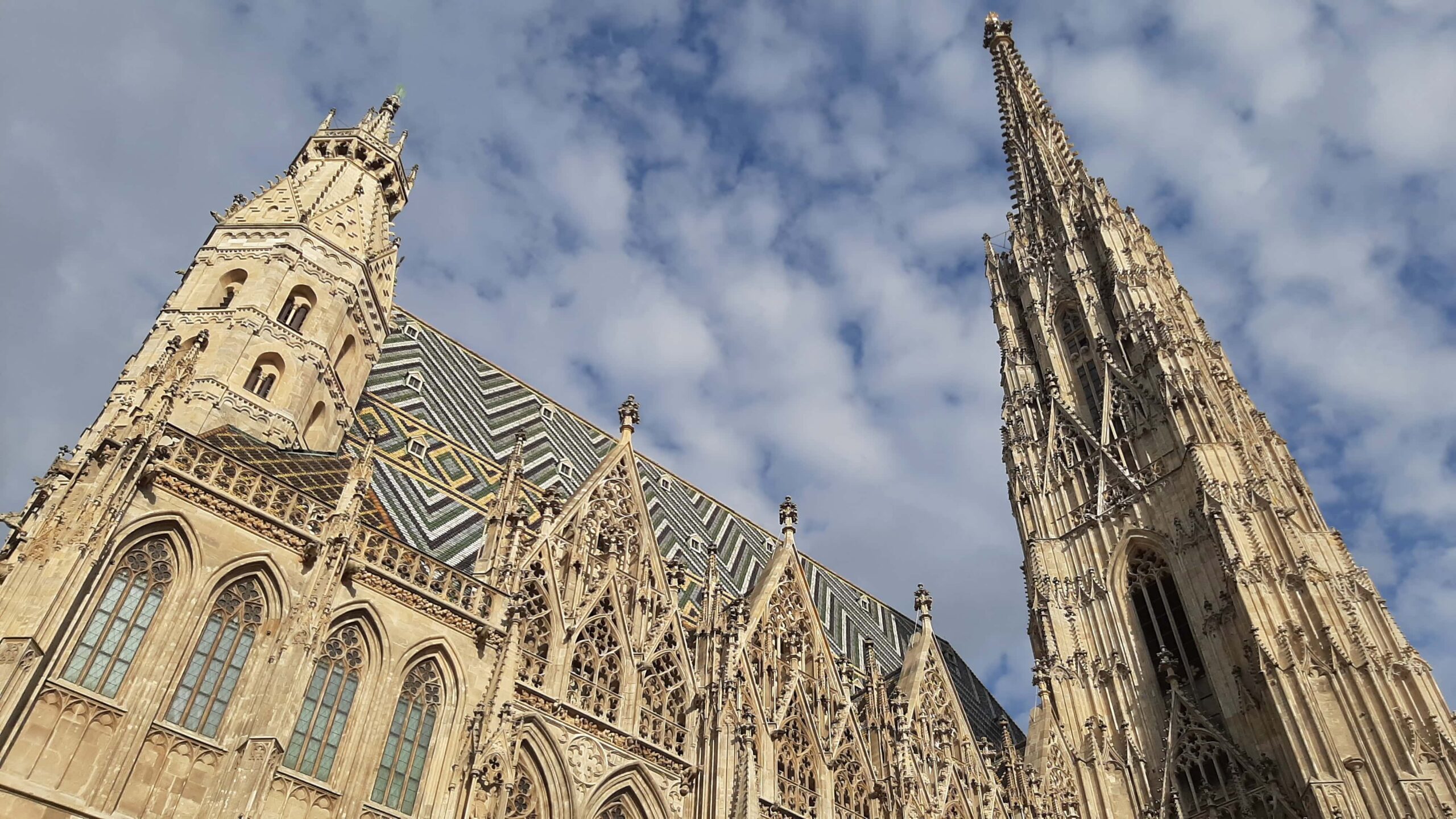
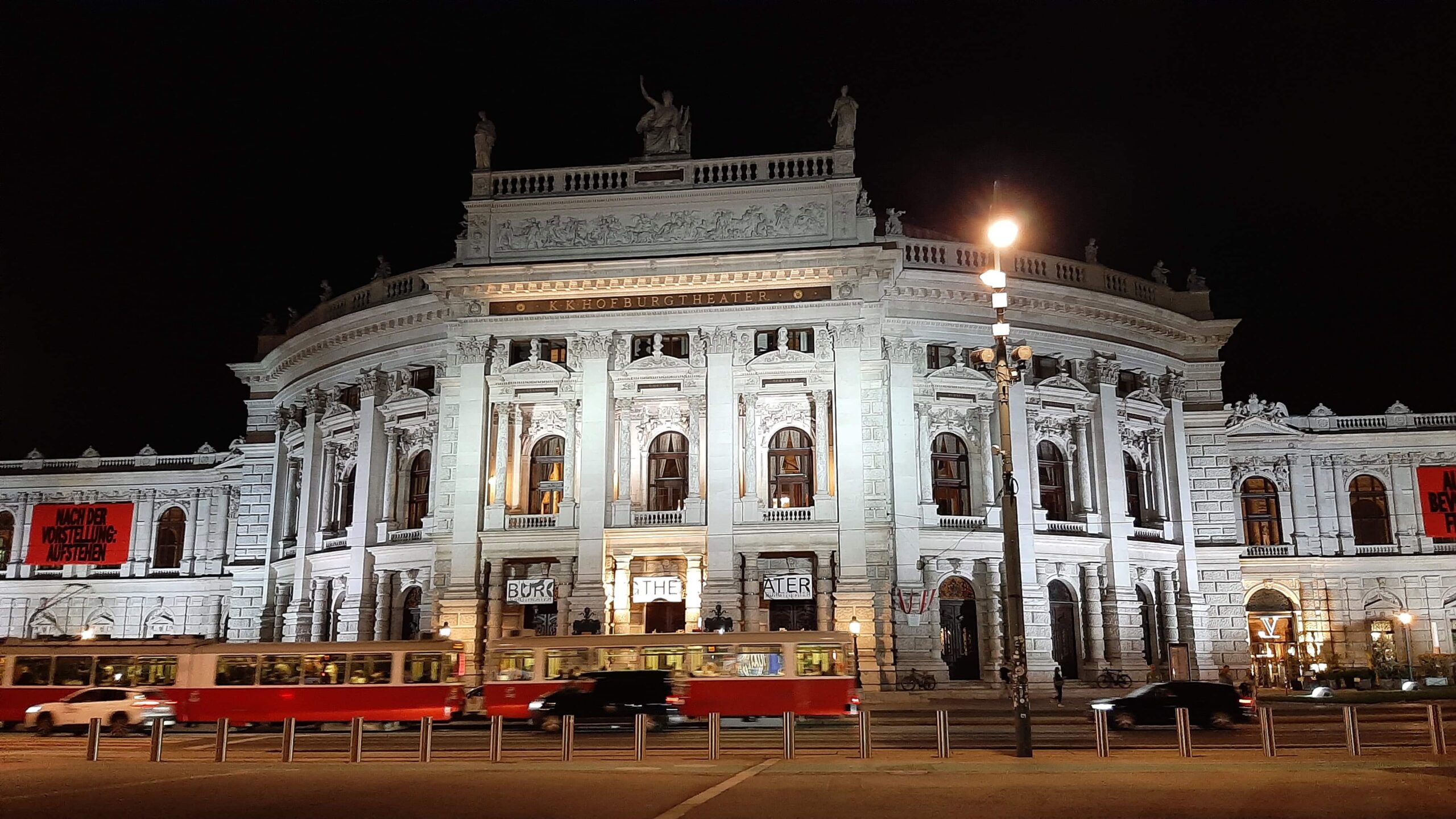
Can you visit Vienna as a day trip from Budapest? Easily, and we have done it plenty of times with visiting family. Catching the 06:40 or 07:40 Railjet Xpress out of Keleti (06:53 or 07:53 at Kelenföld) puts you at Stephansplatz with a melange in hand before 10:30, leaving nine to ten unhurried hours for the Hofburg, Belvedere, Sachertorte, and an evening walk past the lit-up Ringstraße before taking the 19:40, 20:40, or ~21:40 direct train back to Budapest. If you are booking at the very last minute and walk-up rail fares top €45, compare highway coaches in our bus from Budapest to Vienna guide, or continue north with our Budapest to Prague by train guide. Just note that Budapest to Vienna trains run west through Győr rather than Slovakia; if you want a lunch stop in Bratislava, take the separate hourly EuroCity line from Budapest-Nyugati instead.
Common Questions About the Budapest to Vienna Train
How long is the train from Budapest to Vienna, and what is the distance?
A direct train from Budapest to Vienna covers roughly 243 km (151 miles) and takes about 2 hours and 40 minutes from Budapest-Keleti to Wien Hauptbahnhof (Wien Hbf). Boarding on the Buda side at Budapest-Kelenföld trims the rail travel time down to 2 hours and 25 minutes.
Which train station in Budapest goes to Vienna?
ÖBB Railjet Xpress and MÁV EuroCity trains depart from Budapest-Keleti on the Pest side and stop 13 minutes later at Budapest-Kelenföld. Private yellow RegioJet trains start at Budapest-Déli and stop at Budapest-Kelenföld, never serving Keleti. Budapest-Kelenföld (Metro Line M4) is the only station served by every Vienna train operator.
How much does a train ticket from Budapest to Vienna cost in 2026?
Booked 2 to 6 weeks ahead, promotional one-way 2nd class fares start at €11 to €15 (~4,400–6,000 HUF) on RegioJet, €13 (~5,200 HUF) on MÁV START Europa, and €19.90 (~7,960 HUF) on ÖBB Sparschiene. Same-day flexible walk-up tickets at the station cost €44 to €52 (~17,600–20,800 HUF) in second class.
Is a seat reservation mandatory on Budapest to Vienna trains?
On ÖBB Railjet and MÁV EuroCity daytime trains, a seat reservation is optional for cross-border passengers (€0 free when booked inside the official MÁV+ app, or €3 on jegy.mav.hu and oebb.at), though weekend trains fill up fast. On RegioJet, a free seat reservation is mandatory and bundled automatically into every ticket.
Do I need a passport to travel from Budapest to Vienna by train?
Yes. Even though Hungary and Austria are both inside the Schengen Area, Austrian border police conduct regular onboard spot-checks right after crossing Hegyeshalom. Non-EU visitors (US, UK, Canadian, Australian) must carry their physical passport, while EU/EEA citizens need a physical passport or national ID card.
Does the Budapest to Vienna train go to Wien Mitte or Vienna Airport?
All direct trains from Budapest arrive at Wien Meidling and Wien Hauptbahnhof (Wien Hbf), not Wien Mitte. Select ÖBB Railjet Xpress departures continue straight from Wien Hbf to Vienna International Airport (Flughafen Wien) in 15 minutes; on other runs, a quick cross-platform change at Wien Hbf gets you to the airport.
How much luggage can I bring on ÖBB Railjet and RegioJet trains?
Passengers travel free with standard luggage: neither ÖBB, MÁV, nor RegioJet weighs bags or charges airline-style cabin fees. Cabin and medium hard-shell suitcases fit flat on the overhead glass racks above your seat, while bulky 28-inch suitcases go into open floor racks at the ends of each carriage.
Is it better to travel from Budapest to Vienna by train or bus?
Taking the train is faster, smoother, and drops you right above Vienna’s U1 metro line in 2h 40m with a restaurant car, 230V sockets, and free Wi-Fi. Highway coaches take roughly 3h to 3h 20m depending on M1 motorway border traffic, making buses worthwhile only if last-minute rail fares exceed €45.