Top 10 Art Nouveau Buildings and Monuments in Budapest
Budapest is famous for its stunning Art Nouveau buildings, so to get you inspired for your trip, here are the top 10 to check out.
- • Hungarian Art Nouveau is defined by the use of colorful Zsolnay ceramic tiles and folk-inspired floral motifs.
- • Ödön Lechner, known as the ‘Hungarian Gaudí,’ is the architect behind the city’s most iconic buildings like the Postal Savings Bank.
- • Key sites range from the luxurious Gresham Palace to hidden gems like the Schmidl Mausoleum in the Jewish Cemetery.
Budapest is an architecture lover’s dream destination. If you love art nouveau architecture, you may want to add Budapest to the list. As you walk around the city, remember to look up and spot flowers, faces, and Zsolnay tiles staring back at you, but if you want a primer for the best art nouveau monuments, then you may want to tick the list below. Many of the sites are located in the city center, while others are out in the suburbs (but worth the trek if you are a true aficionado). So, once you’re done seeing Budapest’s main sites from the Hop-On Hop-Off tour, here are our recommendations for the top 10 art nouveau buildings and monuments in Budapest.
1. The Postal Savings Bank
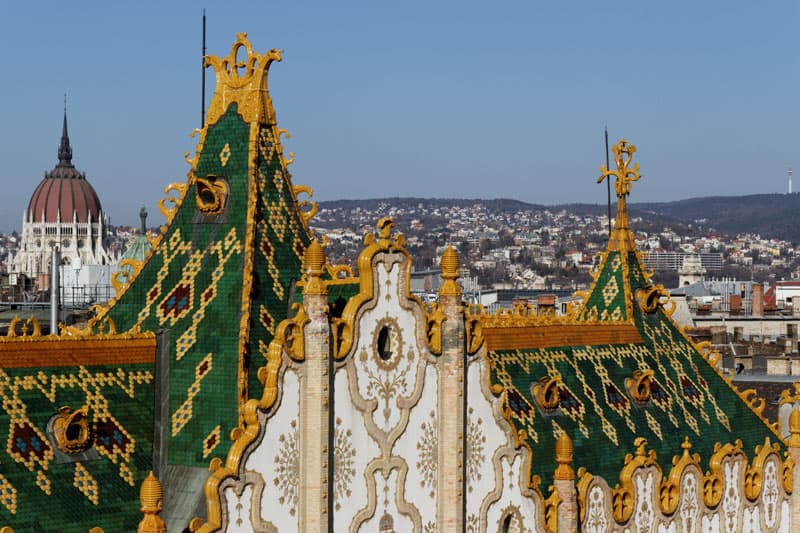
It’s no coincidence that Ödön Lechner gets the nickname “The Hungarian Gaudi.” Take a look up at his buildings with their colorful tiles and intricate motifs, and you can see a similarity between the two. The Postal Savings Bank resides at the heart of the city, in the V District and is an exquisite example of Hungarian art nouveau. It’s a blend of colorful Zsolnay tiles and architectural porcelain inspired by folk art and nature (see if you can spot the busy little bees making their way up to the hives). The best place to appreciate this building is from the rooftop terrace bar of the President Hotel opposite.
2. The Gellért Thermal Baths

You can’t visit the city without paying a visit to one of Budapest’s famous thermal baths. The good news is you can both take the waters and admire stunning architecture at the same time at the Gellért Thermal Baths. The most beautiful part of the baths is in the indoor thermal baths, where turquoise and emerald Zsolnay tiles cover the room, from the base of the pools up until the glass ceiling. Then you have the main pool, with its colonnade of art nouveau columns, which is definitely the most beautiful place in the city to swim.
3. Gresham Palace

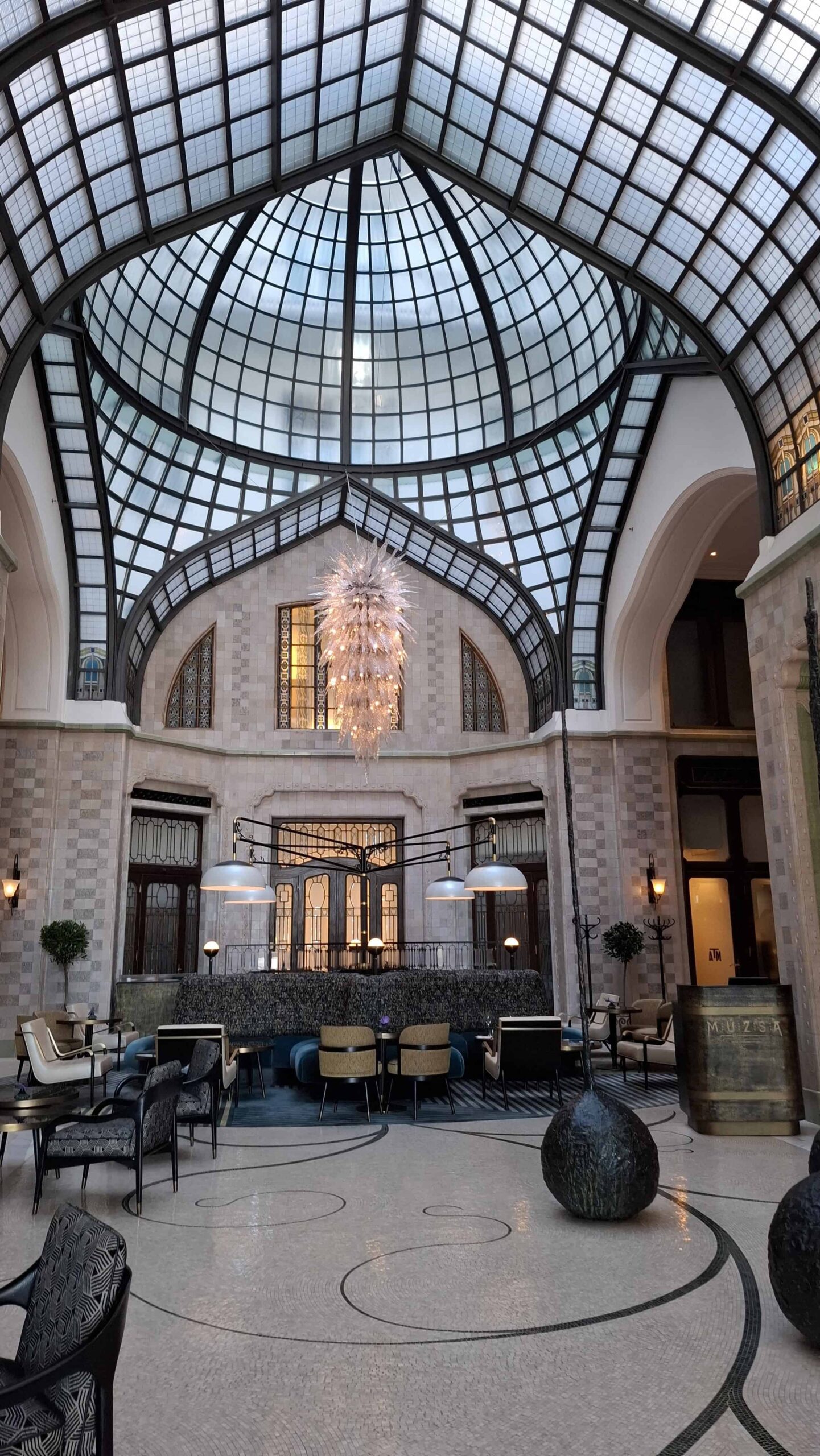
The Four Seasons Hotel resides in the stunning Gresham Palace, a former palatial apartment block that once housed the Gresham insurance company and other shops in its gorgeous arcade. Even if you are not staying here, you can come inside and admire the beautiful atrium with its lead glass windows. There is a bar in here belonging to the hotel, so come in for a drink and admire the architecture while doing so.
4. The Institute of Geology and Geophysics
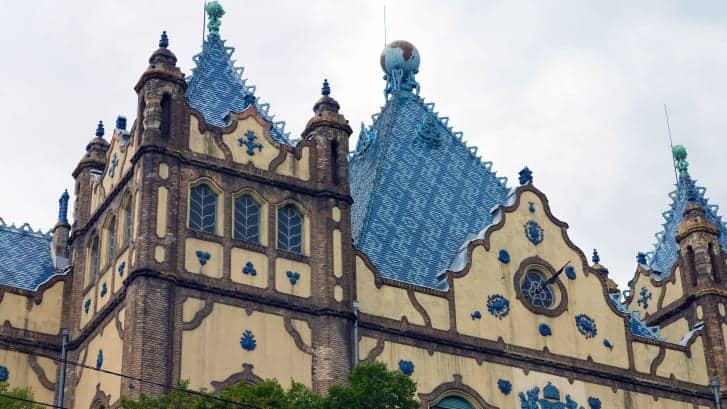
Located close to City Park in a neighborhood populated by embassy villas and a new football stadium, the Institute of Geology and Geophysics is one of the most beautiful buildings by Ödön Lechner. The blue tiles of the rooftop, accented by an Atlas figure holding up a globe, can be spotted at the end of the street and it’s a spectacular sight even from afar. From close up, details of the building echo geological themes, like the blue roof is meant to symbolize the Tethys Sea, while ceramic fossils adorn the walls and the interior mimics the stalactites of a cave in its mosaics.
5. Bedő House

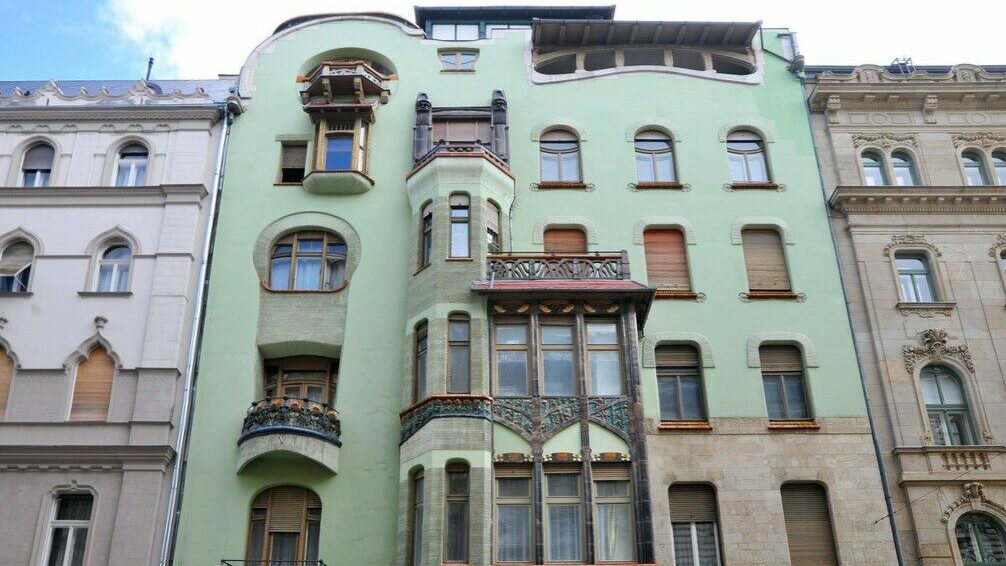
This green-pastel-colored house is certainly a pretty sight from the outside, but it’s also home to the Museum of Art Nouveau, where you can see an interesting collection of art nouveau furniture and décor from the turn of the century apartments. Perhaps you could even stop by for a coffee in the small café in the museum.
6. The Museum of Applied Arts
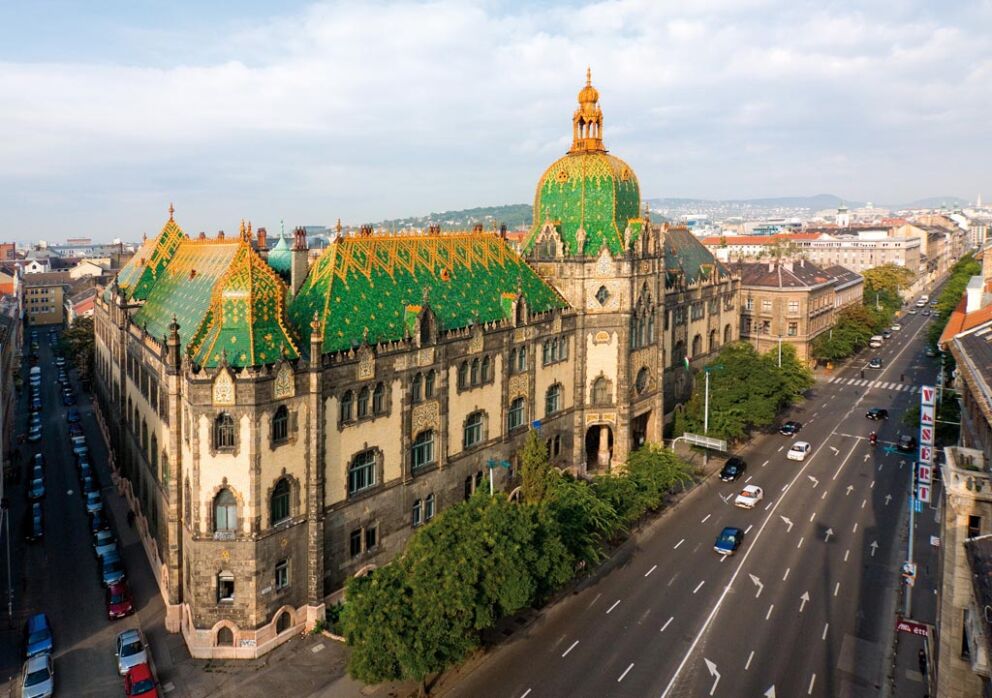
This famous building by Ödön Lechner draws inspiration from eastern architecture, as Lechner wanted to find a style that was truly Hungarian. He followed the theory that the Hungarians came from Asia, so he turned to India and Iran as influences in the style of the building, but also combines Hungarian folk art and colorful ceramics in the building which houses the Museum of Applied Arts.
7. The Elephant House at the Zoo
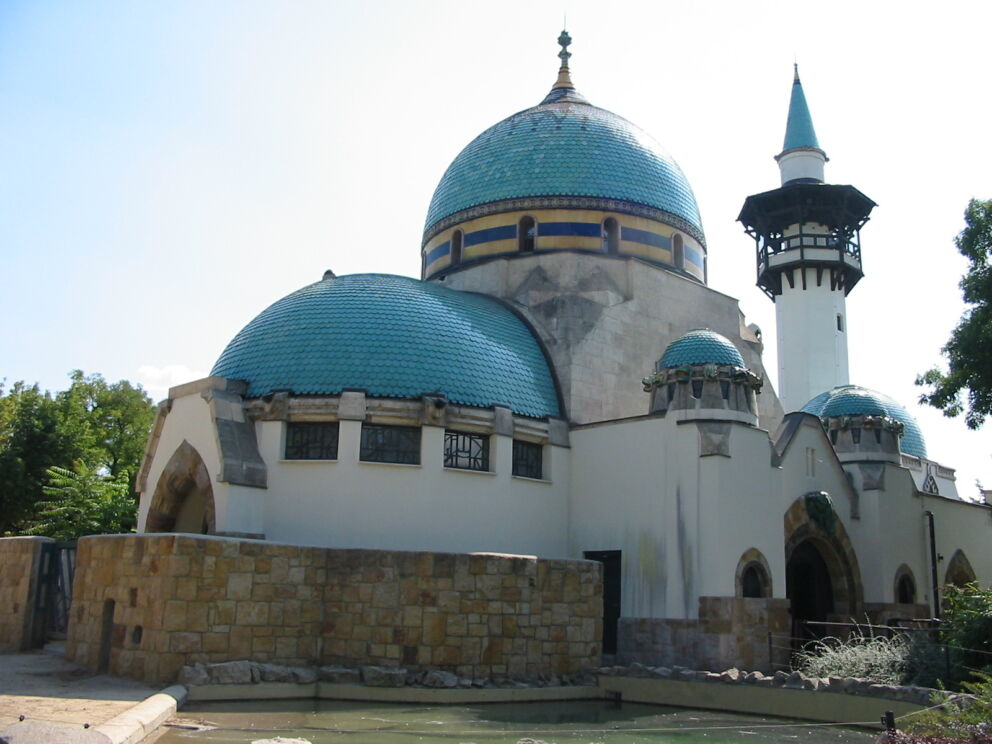
If you pay a visit to the Budapest Zoo, you’ll get to see more than just the animals. The Elephant House, designed by Kornél Neuschloss-Knüsli, resembles a mosque more than a building you’d find at the zoo. But its beautiful, blue-tiled domes, elephant sculptures, and oriental design has made it the architectural star of the zoo.
8. Sipeki Villa
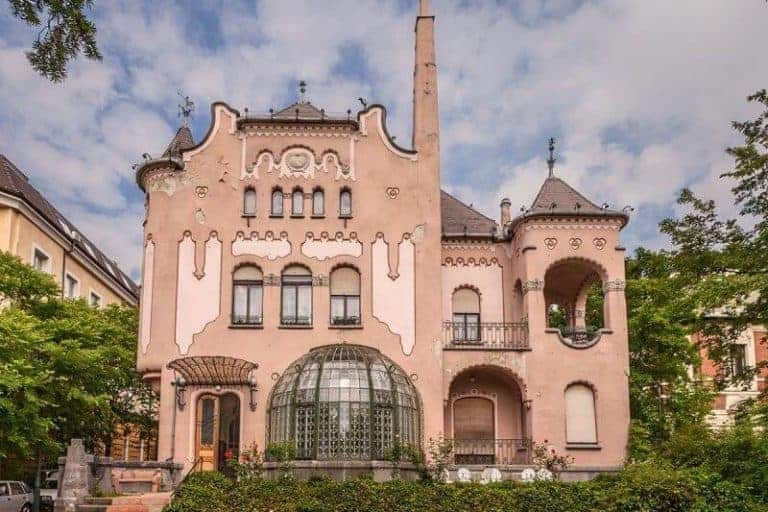
If you’re taking a stroll through City Park, try to make a detour to the edge to see this stunning villa by Ödön Lechner. Although you won’t be able to go inside, you can snap a photo for the gram from the outside, as it’s a very photogenic building.
9. The Tomb of the Schmidl Family

This incredible art nouveau mausoleum for the Schmidl Family by Béla Lajta is worth the long trek out to the Jewish Cemetery in the X District. Although this is the most striking, you’ll find many other gorgeous art nouveau mausoleums and graves in this vast and curious cemetery.
10. Szénes House
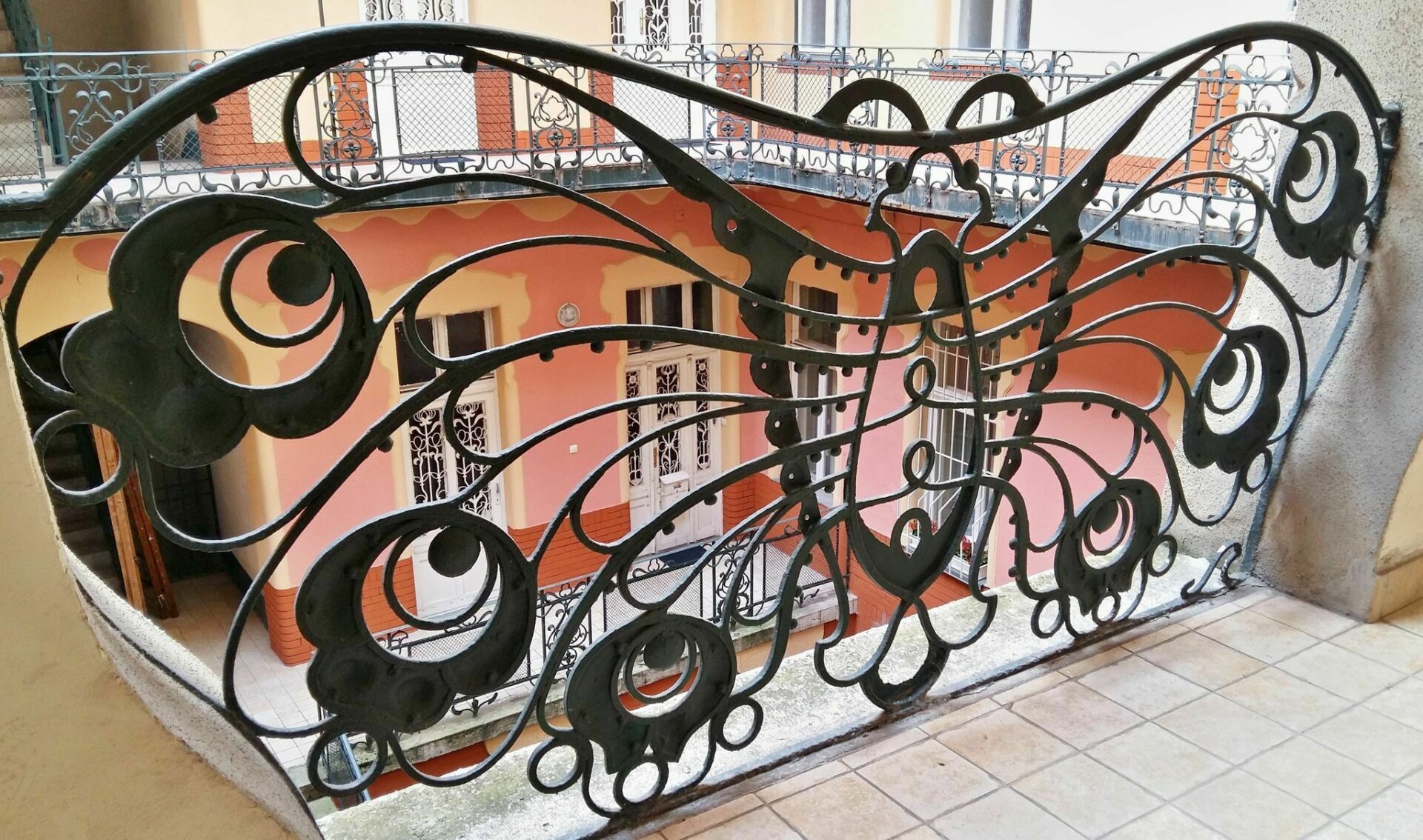
This residential house, with its blue pastel hues, is pretty from the outside, but if you can sneak in through the front door into the courtyard, you’ll be treated to stunning wrought-iron balconies shaped like butterflies. A true hidden gem and a thrilling reward for any art nouveau lover that makes it inside.