
Attention fish lovers: the Hungarian fisherman’s soup guide is here!

If you like fish and paprika, you’ll love Hungarian fisherman’s soup! It’s spicy, delicious, and has a fiery red color – learn more on JustBudapest.
- • Halászlé, or Hungarian Fisherman’s Soup, is a brilliant red, fiery, and incredibly rich soup made with generous amounts of Hungarian paprika and various freshwater river fish, typically carp.
- • It is historically cooked outdoors over an open fire in a traditional cauldron called a ‘bogrács’, which gives the broth a distinct, smoky depth of flavor.
- • There is a fierce, ongoing cultural debate between the two main regional styles: ‘Szeged-style’ which is thick and passed through a sieve, and ‘Baja-style’ which is clear broth served with special matchstick pasta.
When we talk about Hungarian cuisine, the first thing that comes to people’s minds is usually goulash. However, the more experienced epicures have probably heard of (or even tasted) other culinary wonders of the Magyars, such as red wine beef stew, lángos, and the heavenly chimney cake. If you’re in Hungary, you should definitely try one of the locals’ favorite and special desserts, the chimney cake. It is one of the most delicious treats which is available in many flavors -it is definitely a must try!Still, there’s one more worthy mention when it comes to Hungarian cuisine: fisherman’s soup – a dish that will make even those people lick their fingers who are not fans of fish!
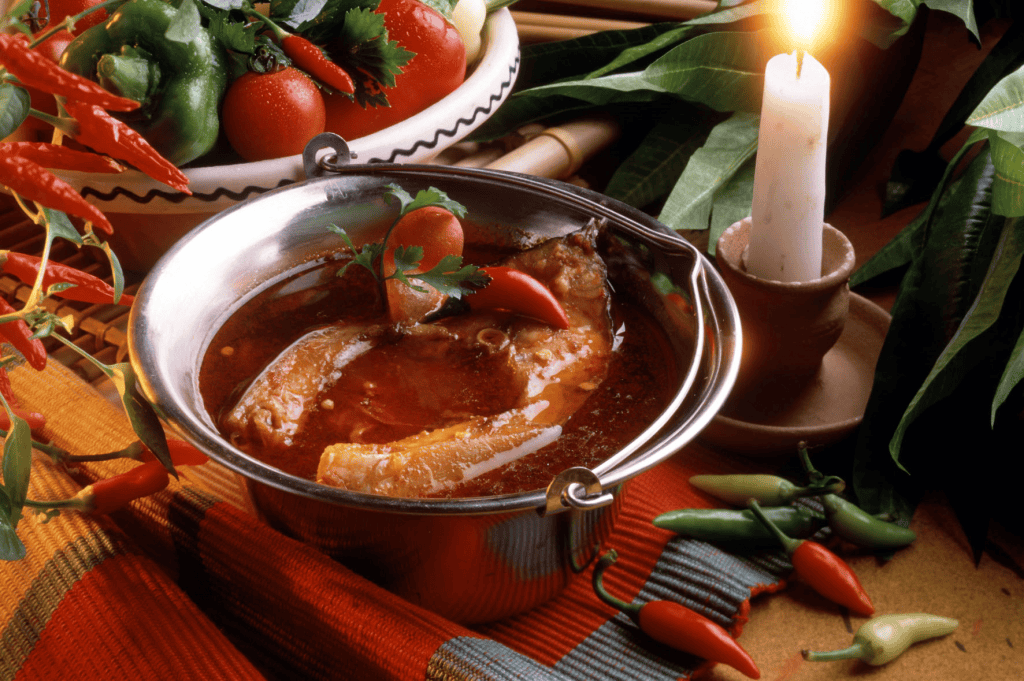
The history of fisherman’s soup
Thanks to its many rivers and lakes, Hungary is rich in sweet-water fish, so it’s no wonder that Hungarians have come up with an easy and delicious way to cook them – and thus fisherman’s soup was born. Depending on the region, you can come across multiple variations of it, but there’s one thing they all have in common: they’re absolutely delicious! The first written proof of this dish dates back to a travelogue written by Earl Hoffmansegg at the end of the 18th century, who mentions that at one time in Hungary, he was served a meal made from carp cooked in pepper juice (paprika was called “Turkish pepper” back in those days) for lunch. By the next century, fisherman’s soup had appeared in many recipe books in many forms, but in all cases, the three main ingredients were: fish, onion, and paprika.
The different types of fisherman’s soup are categorized regionally, based on the origin of the fish, to be more exact. The fish can come from the two large rivers of Hungary, the Tisza and the Danube, or from the largest lake of Central Europe, the Balaton. We’ll stick with the first two, as the Bajai (Baja is a town by the Danube) and the Szegedi (Szeged is a town by the Tisza) fisherman’s soups are the most famous ones. The names themselves are descriptive: fishermen from these regions started to cook these fish soups as easy and tasty meals that can be prepared anywhere using a cauldron and a bonfire. According to anecdotes, it was so popular that in 1854, the people of Baja celebrated the city’s merger by eating fisherman’s soup and túrós csusza (another traditional Hungarian dish made of savory curd cheese and noodle). To this day, this town loves fish so much that the people here consume the most sweet-water fish per person in all of Europe: 28-32 kg per year!

How to make fisherman’s soup
‘Take a lot of fish, onions, and paprika’ is what all fisherman’s soup recipes start with. However, what comes after contains significant differences that might be hidden to the untrained eye, but severely divide true fisherman’s soup lovers. When we’re looking at our main contestants (Bajai vs. Szegedi), there are two major differentiating factors between the two. The simpler and more evident one is the fact that Bajai has noodles in it and is served without slices of white bread. The other big difference lays in the making of the broth. With Bajai, it’s pretty simple: chop the onion, put it in a cauldron, add the fish – mainly carp, and occasionally some pike or walleye for maximizing the flavor –, the water, and the paprika and cook it until it’s done. Then, add the noodles, serve the fish on a separate plate and voilà: you got your easy but delicious Bajai fisherman’s soup!
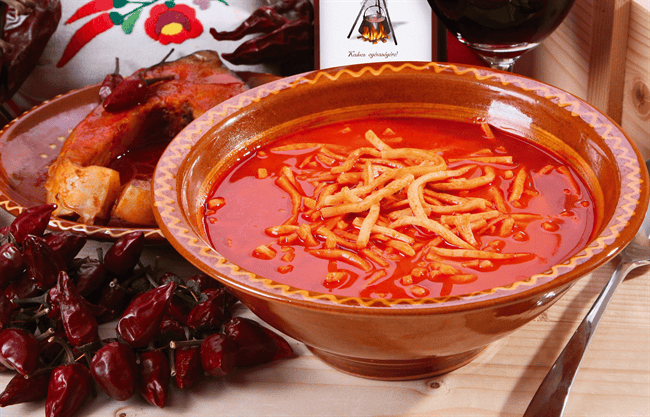
The broth of the Szegedi, on the other hand, is a bit more complicated. First, you need to boil paprika, onions and all kinds of fish trifle together for hours to get a paste-like consistency. Then comes the niggling part: push the paste through a fine strainer to get rid of the fishbones and other solid parts. The result is a perfectly smooth fish cream that gives the Szegedi fisherman’s soup its unique thickness. Finally, add some water, spices, and carp slices to the mix, and cook it until it’s done. Serve it with a slice of gorgeous white bread and some Erős Pista (Strong Steve – a spicy, Hungarian paprika paste) and enjoy the hot, thick, and red culinary masterpiece!
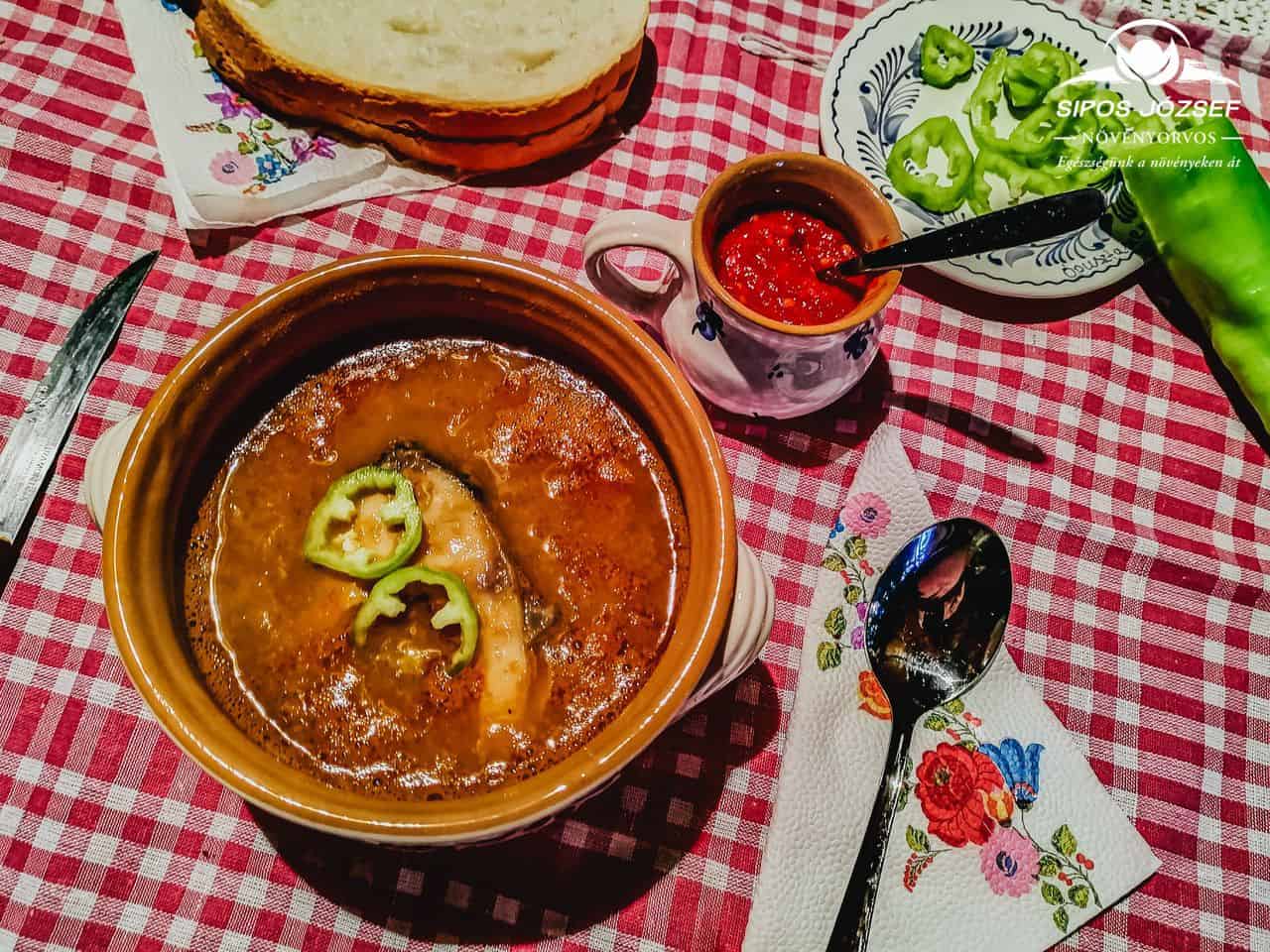
Now that you’re a fisherman’s soup expert, you can show off to your friends what you learnt. Just remember these unique identifiers:
- The surface of the Bajai soup is clear while the Szegedi is muddy looking
- The color of the Bajai is bright red while the Szegedi’s is deep red
- Bajai is made with noodles, without bread and the fish is served on a separate plate
Where to have fisherman’s soup in Budapest?
Szegedi Halászcsárda
As the name implies, this is the place for you if it’s the Szegedi-style fisherman’s soup that stole your heart. Having Tisza-style fish soup by the Danube might cause a tiny bit of cognitive dissonance, but the amazing view from the balcony and the authentic gipsy music will compensate you for sure.
Halkakas halbisztró
If you’re looking for a modern approach to fisherman’s soup, this will be you place. Halkakas only uses Hungarian fish and maintains a “keep the traditions but experiment with new dishes” recipe-wise. Everything is served boneless and paired with Hungarian wines or refreshments made from homemade fruit syrups.
Pro tip: If you want to work off all that fisherman’s soup, check out the best outdoor places for a good run in Budapest.
After a heavy, spicy bowl of authentic fisherman’s soup, the perfect way to finish your meal is by visiting the historic Cafe Ruszwurm in the Castle District for a slice of traditional Hungarian cake.
FAQ
What is the main difference between Bajai and Szegedi fish soup?
Bajai halászlé features a clear broth made by cooking fish, onions, and paprika together without straining, and includes noodles while serving fish separately without bread. Szegedi halászlé uses a thick, creamy broth created by boiling fish scraps and onions into a paste, straining it smooth, then adding carp slices, and pairs it with white bread.
What are the key ingredients in Hungarian fisherman’s soup?
The essentials are freshwater fish like carp, onions, and generous amounts of ground paprika for the spicy red color and flavor. Regional variations may include pike or walleye, but no oil or fat is added as flavor comes from the fish itself.
Where can I try authentic fisherman’s soup in Budapest?
Szegedi Halászcsárda offers the Szegedi style with river views and live music, while Halkakas halbisztró provides a modern, boneless version using only Hungarian fish paired with local wines.