Széchenyi Chain Bridge and others – 8 beautiful and famous bridges of Budapest
The bridges of Budapest are inseparable from the Hungarian capital. Join us down memory lane and find out their unique histories on JustBudapest.
- • Budapest is home to eight major vehicular bridges that span the Danube, with the Széchenyi Chain Bridge being the oldest and most iconic, first opened in 1849.
- • Each bridge has a unique architectural style, from the industrial Art Nouveau of the Liberty Bridge to the sleek, modern white suspension of the Elisabeth Bridge.
- • Tragically, all of Budapest’s bridges were blown up during the Siege of Budapest in 1945, but they were carefully reconstructed or redesigned in the following decades to restore the city’s vital transport links.
One of the first things tourists get to know about Budapest is that the Hungarian capital is made up of Buda and Pest (and Óbuda as the lesser-known third sibling) with the heavy waters of the Danube river running between them. Since the opening of the first stone bridge in Budapest in the mid-19th century, the stories and fates of bridges got tangled with that of the city. After the successful construction of the first 5 crossings, the turmoil of World War II left them all in ruins. Today, altogether 8 vehicular and 2 railway bridges cross over the Danube in Budapest.
Let’s follow them along and learn about the stories of the beautiful eight bridges over the centuries.
1. Széchenyi Chain Bridge – the pearl of the Danube
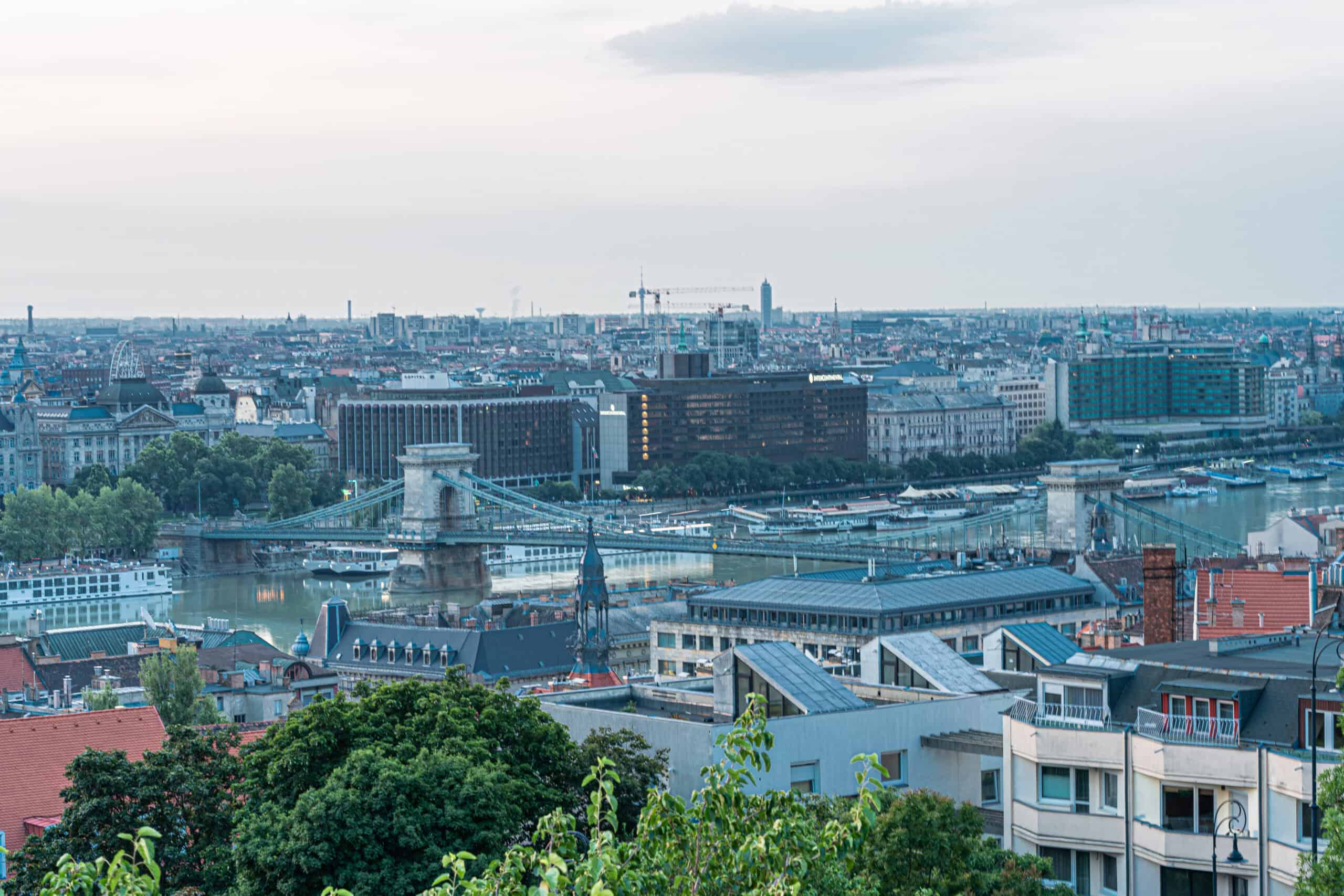
Grand and stunning, the Chain Bridge (or as the locals call it, Lánchíd) is undoubtedly the most famous of Budapest’s bridges. Guarded by two majestic lions, it was the first permanent stone bridge connecting Buda and Pest. The Chain Bridge Budapest was inaugurated in 1849 (the bridge was designed by William Tierney Clark, the famous English engineer and also Scottish engineer Adam Clark) in a mournful time of the Hungarian history, ten years after its construction got started upon a proposition by Count István Széchenyi, one of the prominent figures of the 18th century Hungary.
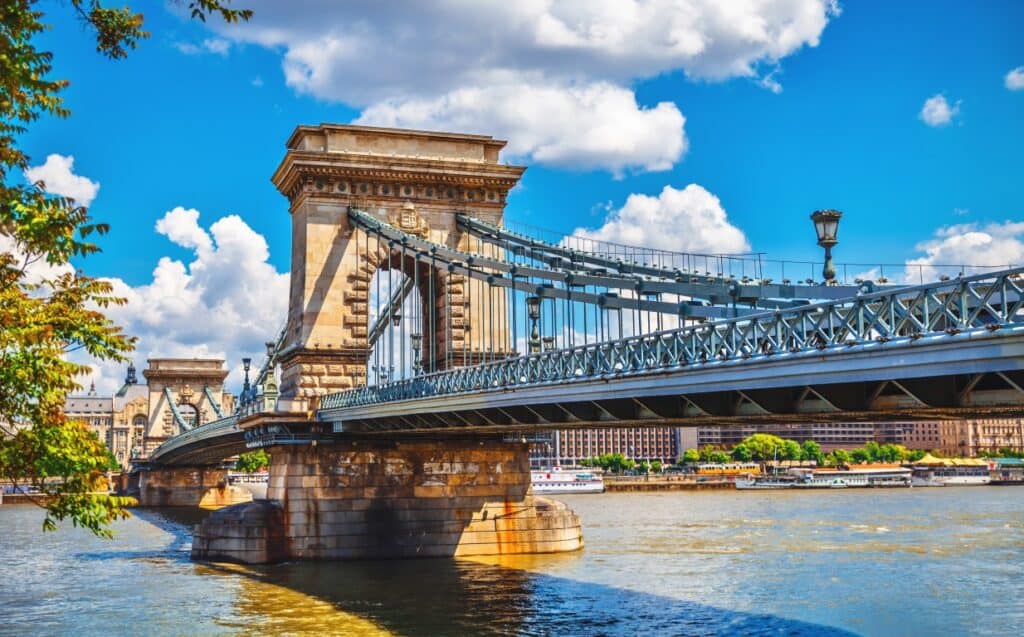
Built in classical style, the bridge got its name from the iron chains on which the road-bed hangs. Lit by night, they look just like majestic pearls on the neck of the river, no wonder it became one of the most stunning symbols of Budapest. After its tragic destruction during World War II, it was rebuilt in a slightly wider form and opened exactly on the 100th year anniversary of its original construction.
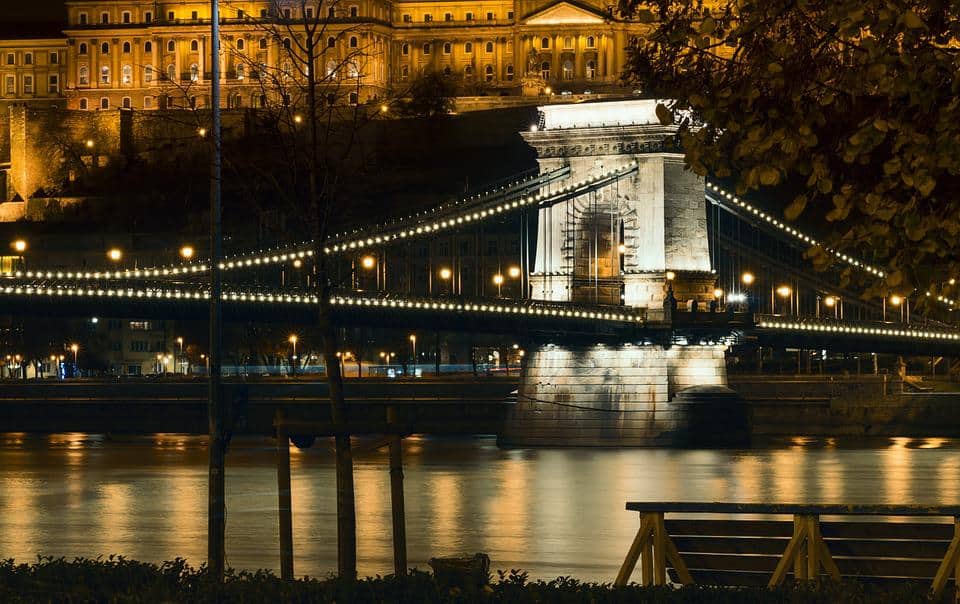
Our detailed Article about the Chain Bridge.
2. Margaret Bridge
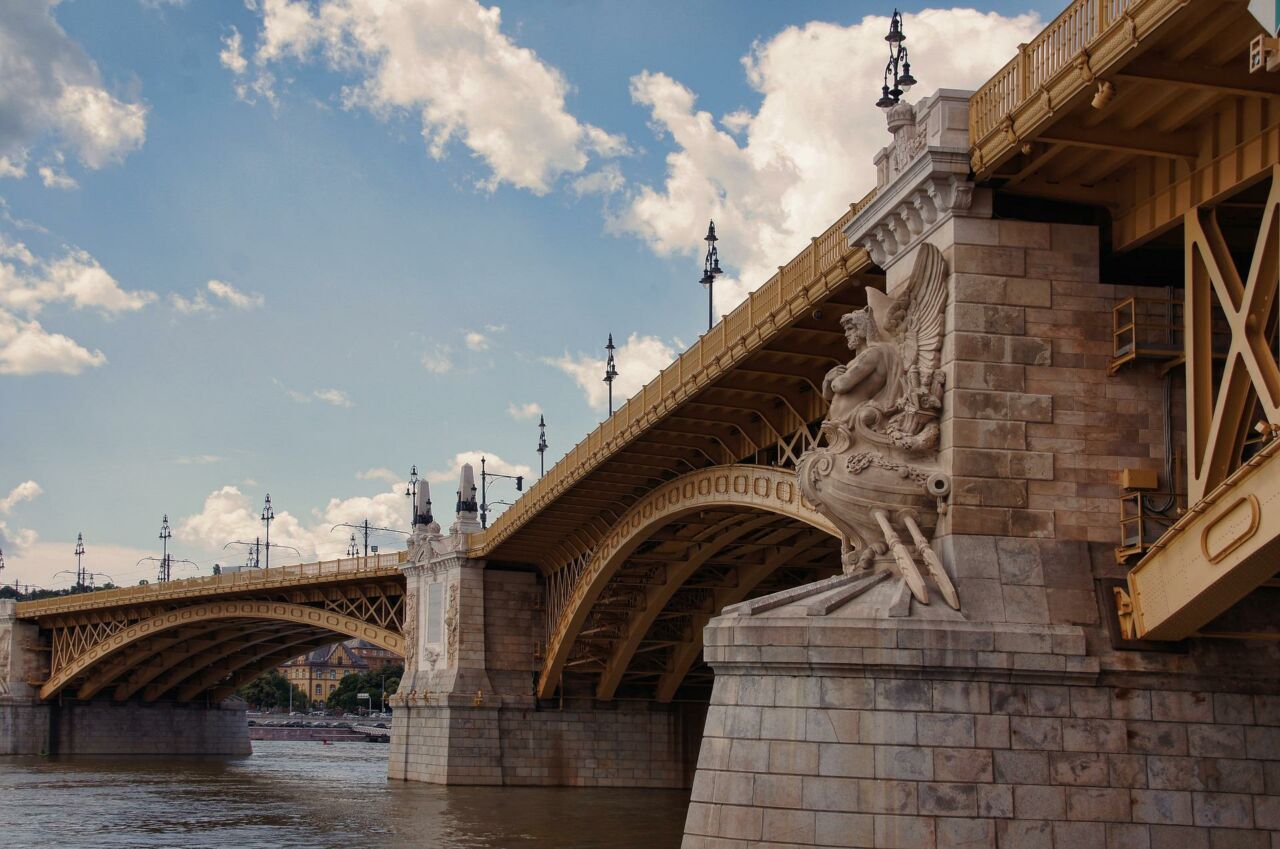
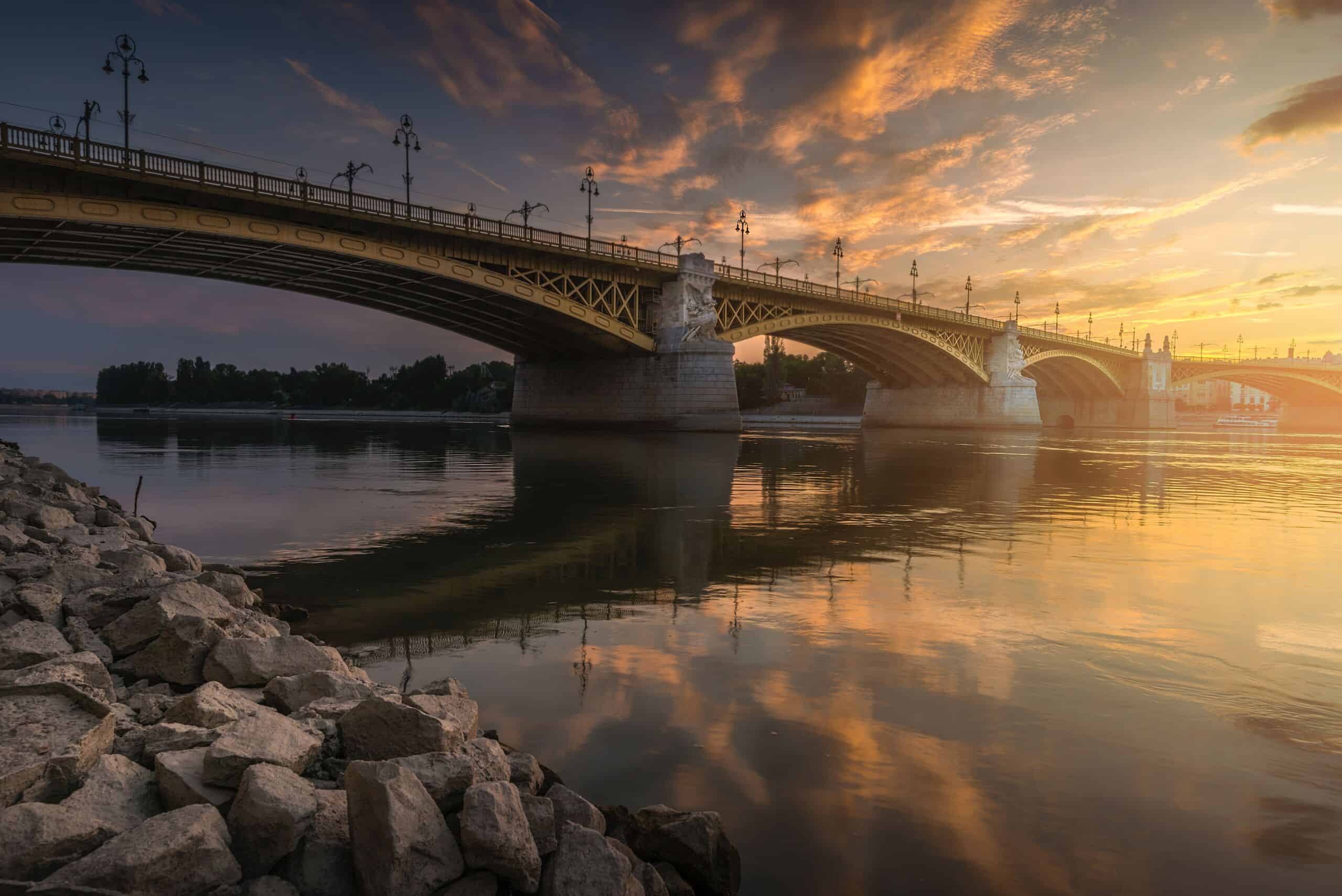
The construction of the second permanent stone bridge of Budapest went much faster. Built in just 4 years, Margaret Bridge opened in 1876 – with the extension to Margaret Island in 1900, making it finally accessible on foot. The neo-baroque Margaret Bridge is the only bridge of the city that exploded twice during World War II. The first happened by accident during rush hours, while the second one was a planned action. On the bright side, Margaret Bridge was the second to be rebuilt just 3 years after its destruction.
3. Liberty Bridge
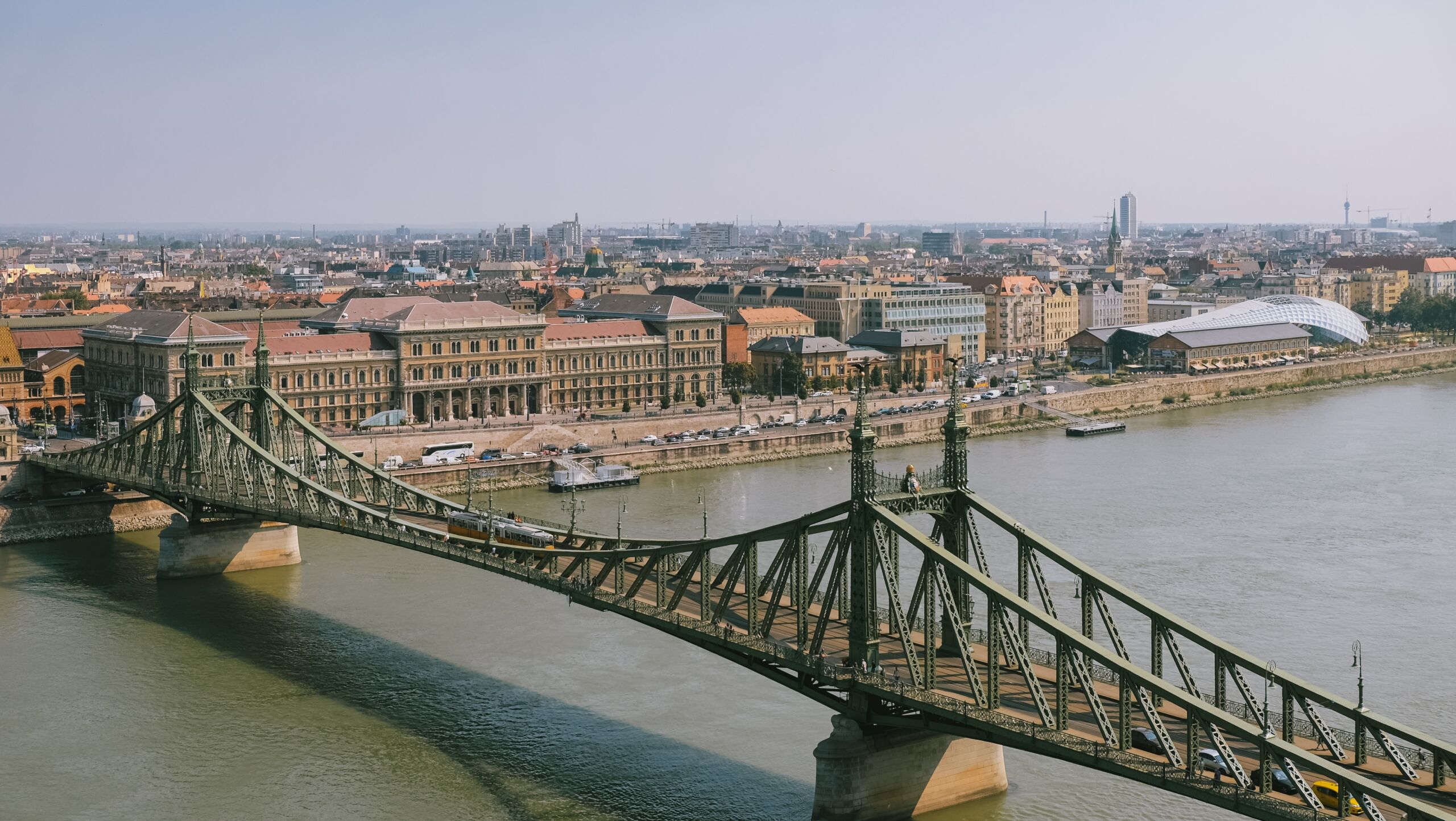
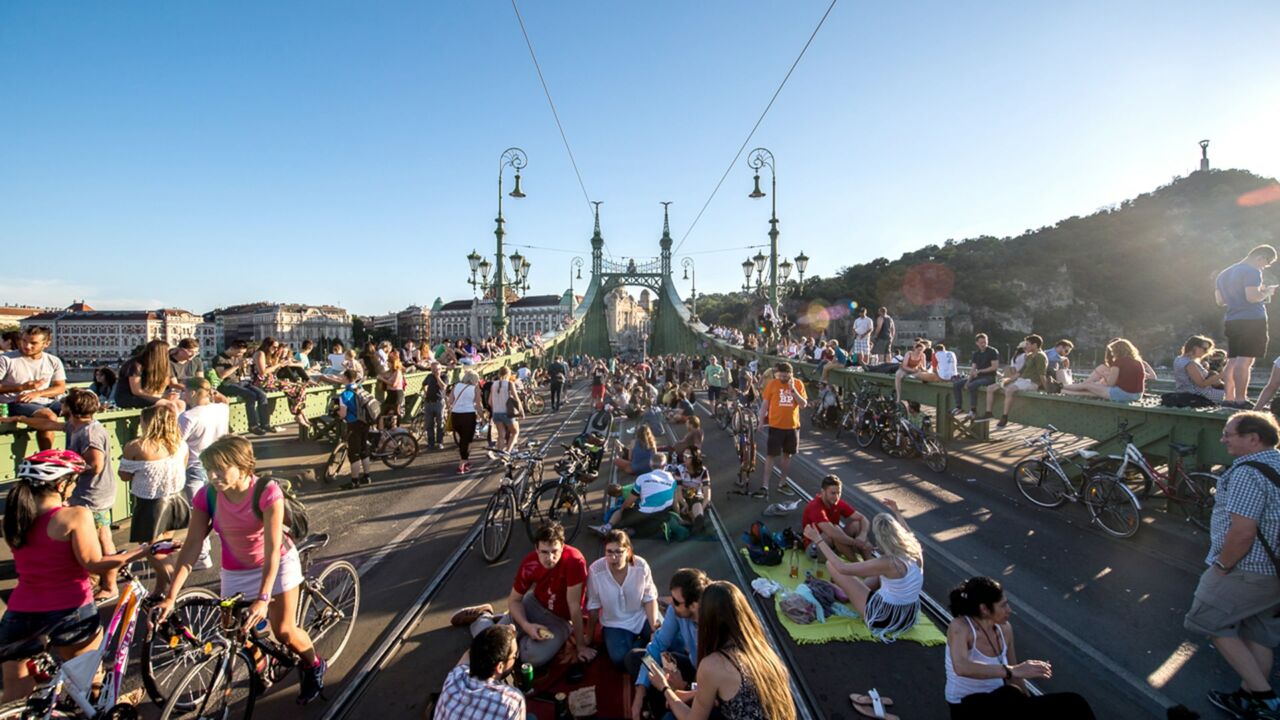
Connecting two of the iconic sights of the city, the Great Market Hall and the Gellért hill, Liberty Bridge is Budapest’s shortest bridge. Finished by the 1000th birthday of Hungary in 1896, this stunningly colored structure was first named after the Austro-Hungarian Emperor Franz Joseph. But just like all the other bridges of Budapest, World War II meant the end for Franz Joseph Bridge as well. Luckily, only the name got lost, and the bridge itself remained. As the structure was only partially destroyed, reconstruction went quickly and the bridge was renamed to Liberty Bridge.
4. Elisabeth Bridge – the beautiful link between Buda and Pest
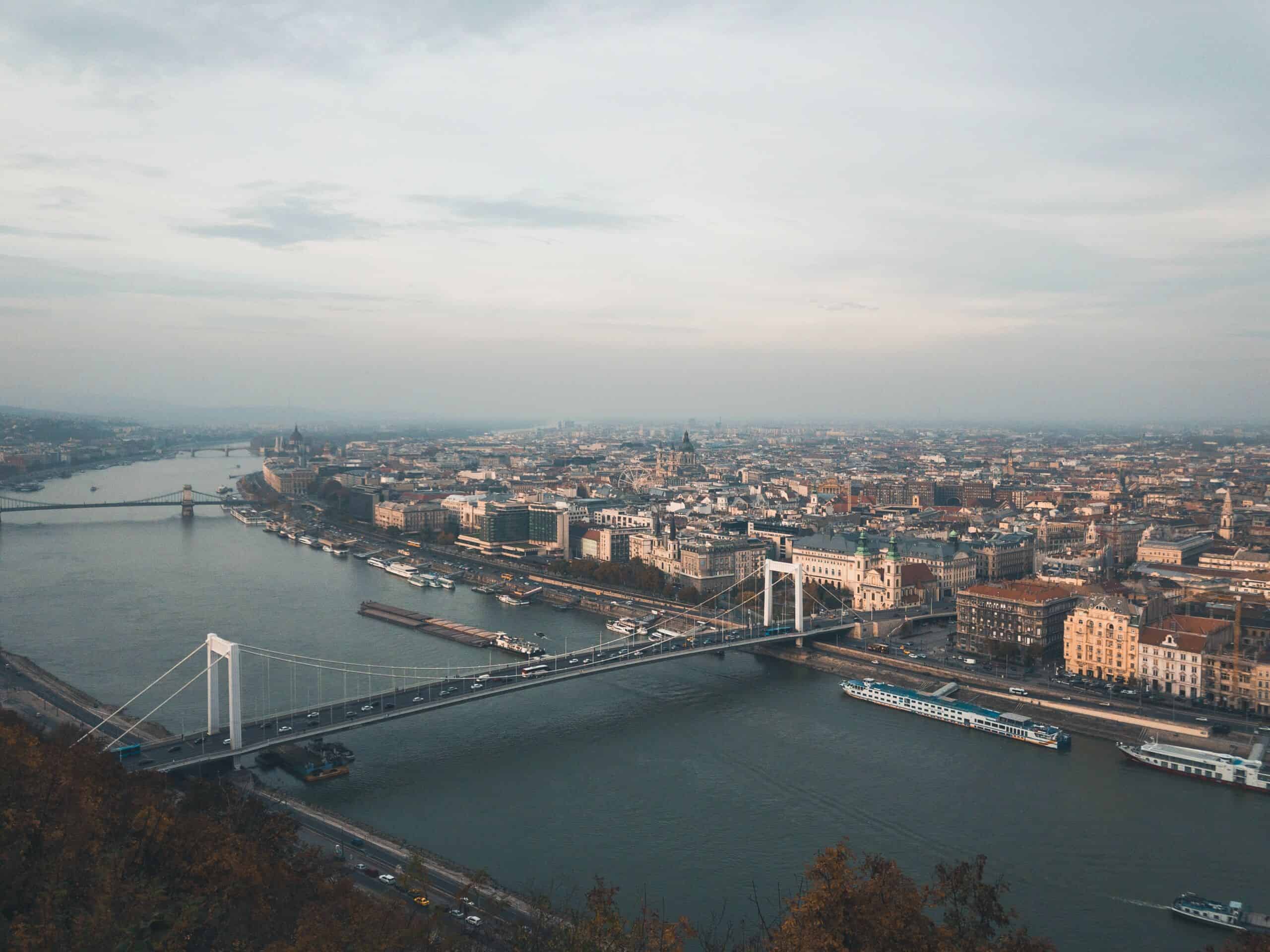
Fair and elegant, Elizabeth Bridge was built to be the pair of Liberty Bridge and named after Empress Elizabeth of Austria, the wife of Emperor Franz Joseph. Contrary to its neighboring crossing, the Elizabeth Bridge kept its name but not its original structure. Originally built as a suspension bridge, it first opened in 1903, but after the destruction of World War II, it came back to life in a new style: as a cable bridge. Its reconstruction, however, was not as quick as that of Liberty Bridge. In the midst of heated debates on how to renovate this bridge, the damaged Pest side pillar stood as a sad reminder of the war for nearly 15 years. The newly built Elisabeth Bridge reopened only in 1964.
5. Petőfi Bridge – one of the famous bridges of Budapest
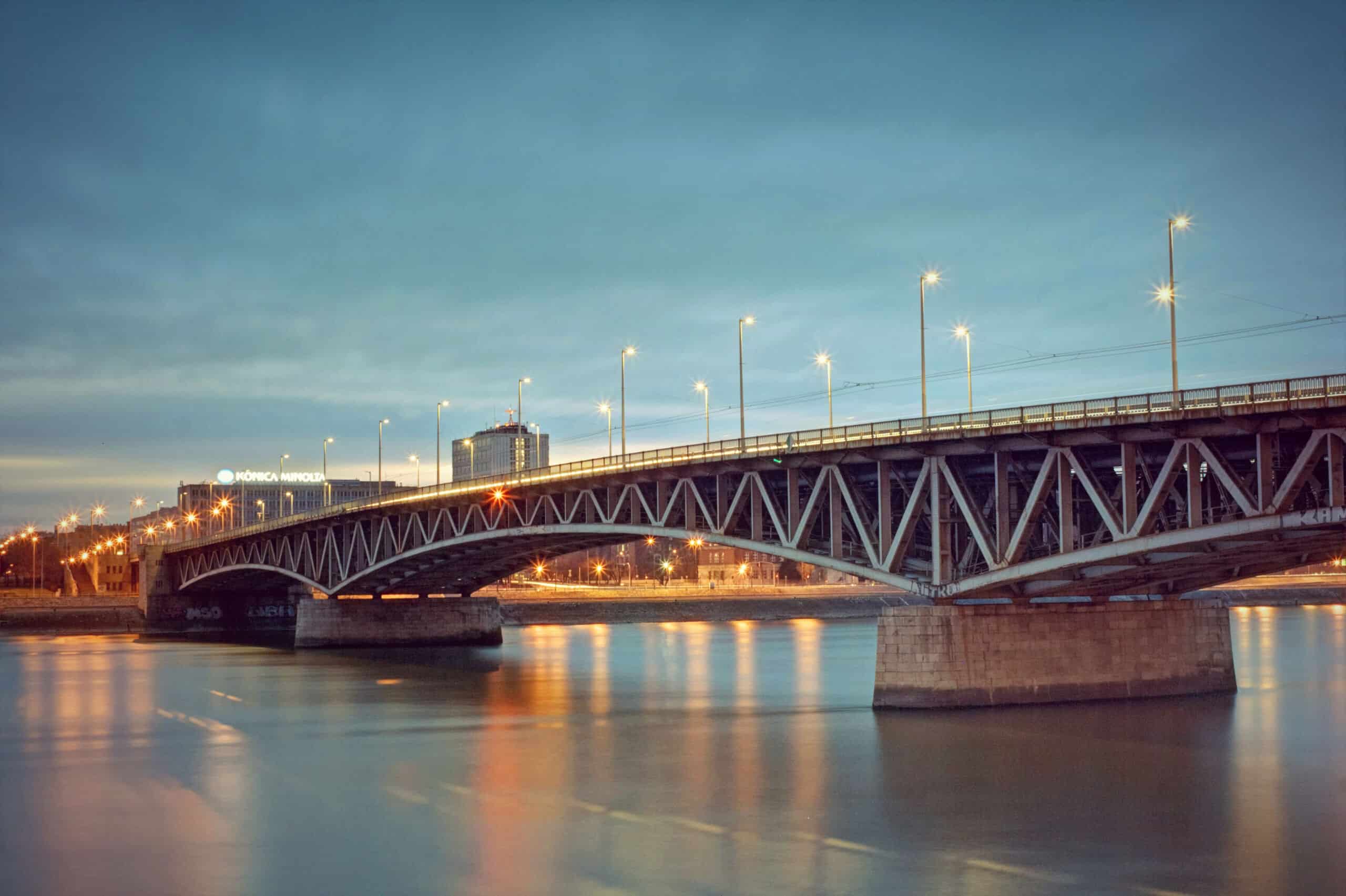
Built to be simple and practical during the global economic crisis, Petőfi Bridge is the least spectacular of the Budapest bridges. In 1937, at the time of its opening, the southern Buda side of the city was practically empty. It was pretty much thanks to the newly built crossing that the territory soon became a vibrant residential area. Originally named Horthy Miklós Bridge, it was also renamed after its post-World War II reconstruction: it got its new name from a well-known Hungarian poet, Sándor Petőfi.
6. Árpád Bridge – beautiful bridge across the Danube
Arpad Bridge is, without doubt, the busiest bridge of Budapest today. Its construction started in the 1930s and probably thanks to its unfinished state, it was the only bridge in the city that was left unharmed during World War II. It was not until 1984 that it achieved its full size when the previously built narrow crossing got expanded and modernized to suit the heavy traffic. After bearing the name Sztálin Bridge for a short period of time during the communist regime, the bridge was renamed after Grand Prince Árpád, the forefather of Hungary.
7. Rákóczi Bridge – one of the newest bridge in the capital of Hungary
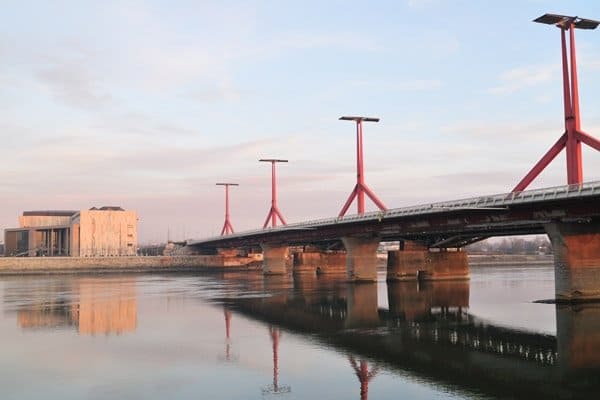
Acting as the southernmost bridge of Budapest since 1995, Rákóczi Bridge is one of the newest additions to the crossings over the Danube in the capital. Although named after the noble Rákóczi family, you can still catch locals referring to it by its original name, Lágymányosi Bridge.
8. Megyeri Bridge in Budapest
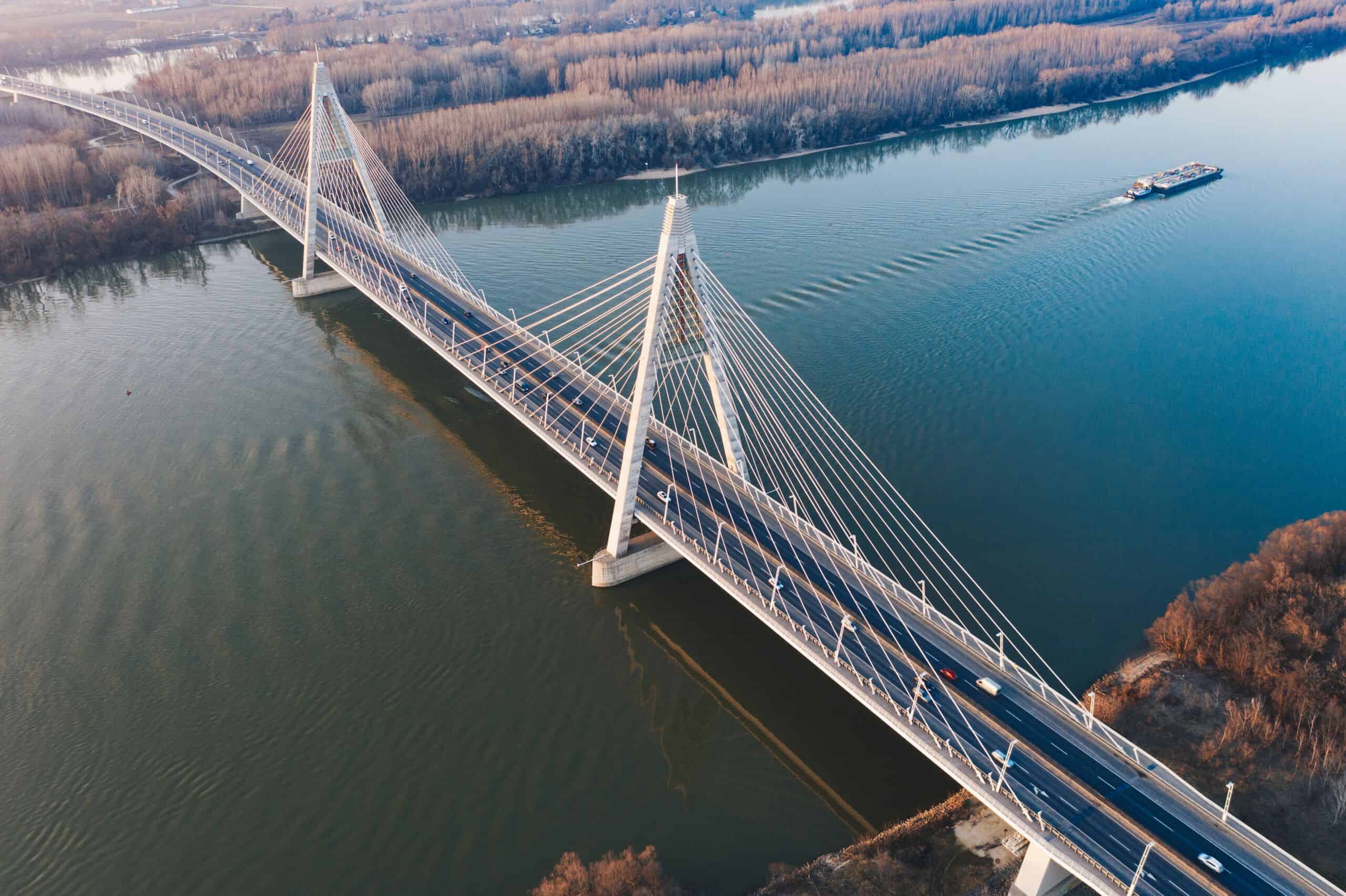
The newest and longest bridge in Hungary, Megyeri Bridge was opened in 2008. Situated at the northern edge of the city, this bridge was created to be a symbol of modernization – partly because of its looks, and partly because it was built to relieve the city from transit traffic.
Fascinated by the bridges in Budapest?
We don’t blame you. Why don’t you go on a river cruise and adore the city’s magnificent crossings and beautiful panorama while rocking gently on waves of the Danube? Food and drinks included!