Unforgettable top 100 things and attractions you can’t miss in Budapest (2026 updates)
Planning to visit Budapest, Hungary and need a few tips on what to see and do? Why not make it a hundred? Read on to learn about the top 100 things this city has to offer.
- • Budapest’s top sights include the Hungarian Parliament, Buda Castle, and the historic thermal baths like Széchenyi and Gellért.
- • The city is world-famous for its unique ruin bars, diverse local cuisine (Langosh, Goulash), and scenic Danube river cruises.
- • Efficient public transport, including the historic M1 metro and scenic tram line 2, makes exploring both the Buda and Pest sides easy and enjoyable.
Collecting all the things to see and do in Budapest may very well be an impossible task, but in this 100-item list, we tried. From historic landmarks and iconic sights, through captivating museums and cultural venues, to staple Hungarian foods and entertainment recommendations, we took a shot at giving you an all-around summary of what you can discover in the beautiful capital of Hungary during your stay, for however many days it is. So, get comfortable and prepare to be overwhelmed by the wonders of Budapest – 100-fold.
1. Hungarian Parliament Building

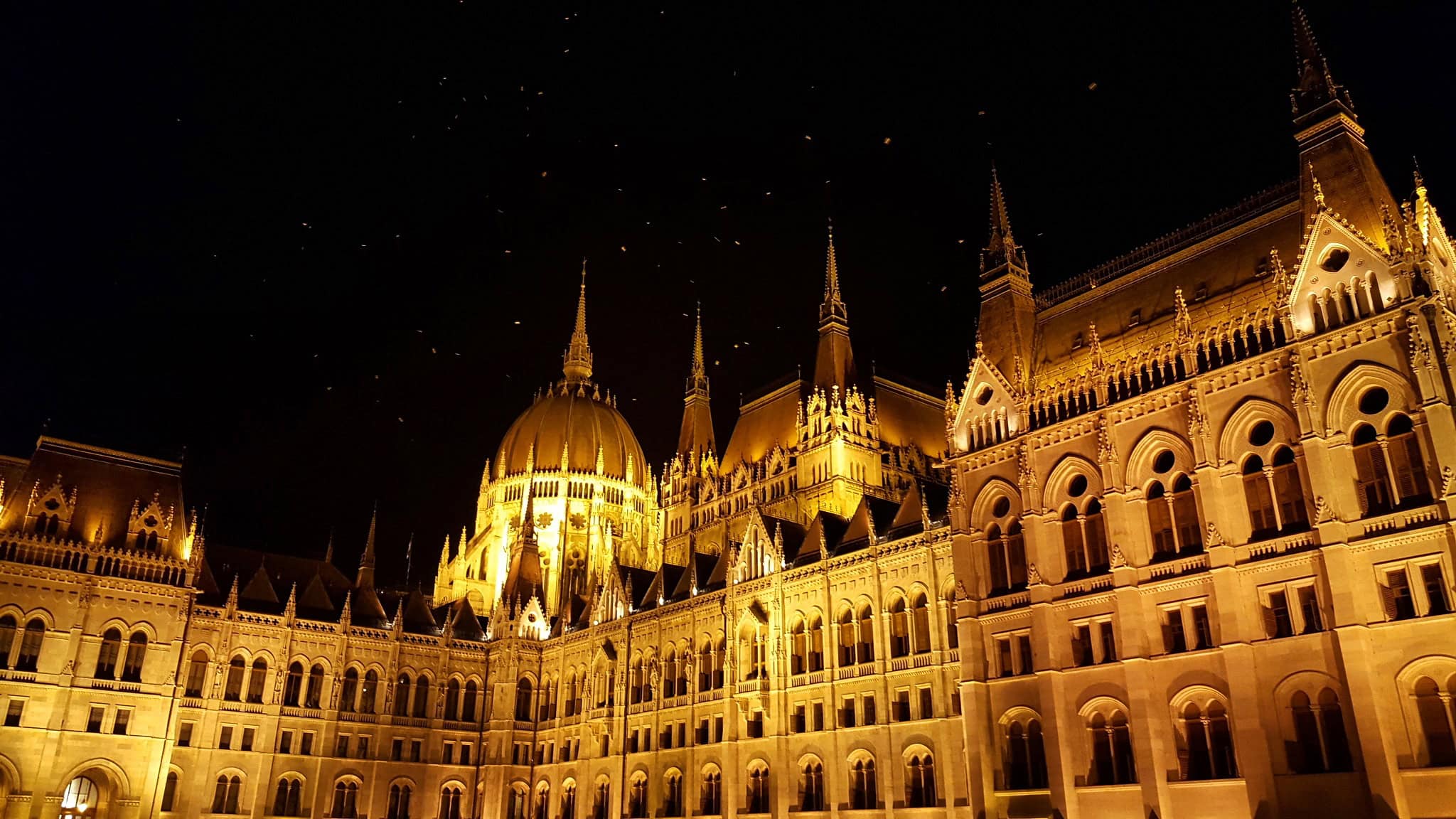
The Hungarian Parliament Building is one of the most recognizable landmarks of this beautiful country. At 96 meters, it’s one of the two tallest buildings in Budapest – the other being St. Stephen’s Basilica – and it was mainly built in Gothic Revival style. And if you’re wondering about the number 96, they didn’t just pick it randomly: it refers to the nation’s millennium (the building was augmented in 1896) and the conquest of the later Kingdom of Hungary in 896. Due to the building’s enormous size and elaborate handiwork, the Parliament is almost constantly under renovation.
Guided tours are available inside the building, which is a must for visitors in the city: apart from the breath-taking interior of the Parliament, you can also check out the Holy Crown of Hungary which has been displayed in the central hall since 2000. For more info, visit the official Hungarian National Assembly website.
2. Heroes’ Square
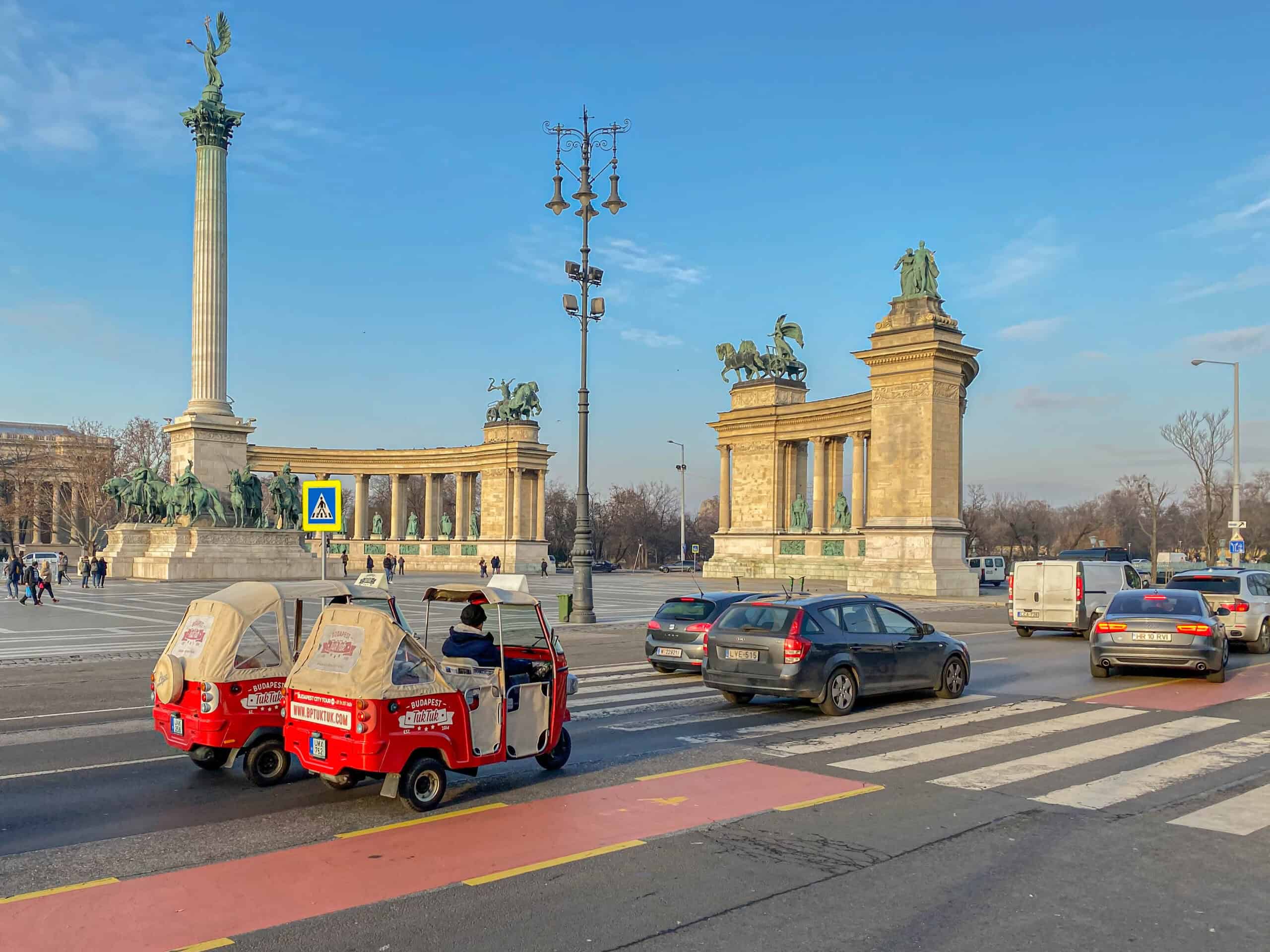
Heroes’ Square is also an iconic landmark of Budapest and Hungary. Featuring statues of the Seven chieftains of the Magyars, as well as Hungary’s most prominent kings and other important leaders, the central element of the square is the Millenium Monument.
The construction of Heroes’ Square began in 1896 in memory of the 1000th anniversary of the Hungarian conquest of the Carpathian Basin and the foundation of the Hungarian state. Since then, Hősök tere, as the Hungarians call it, has played a major role in many historical events.
3. St. Stephen’s Basilica

St. Stephen’s Basilica is the largest church in Budapest, and at 96 meters, it’s exactly the same height as the Parliament, which symbolizes the balance between church and state. As magnificent as it is on the outside, it’s also worth checking out from the inside: the Basilica is home to the Holy Right, the mummified right hand of St. Stephen, the first king of Hungary. In addition, the dome of the Basilica also functions as a viewpoint with a breathtaking panoramic view of the city which you won’t want to miss.
4. Hungarian State Opera
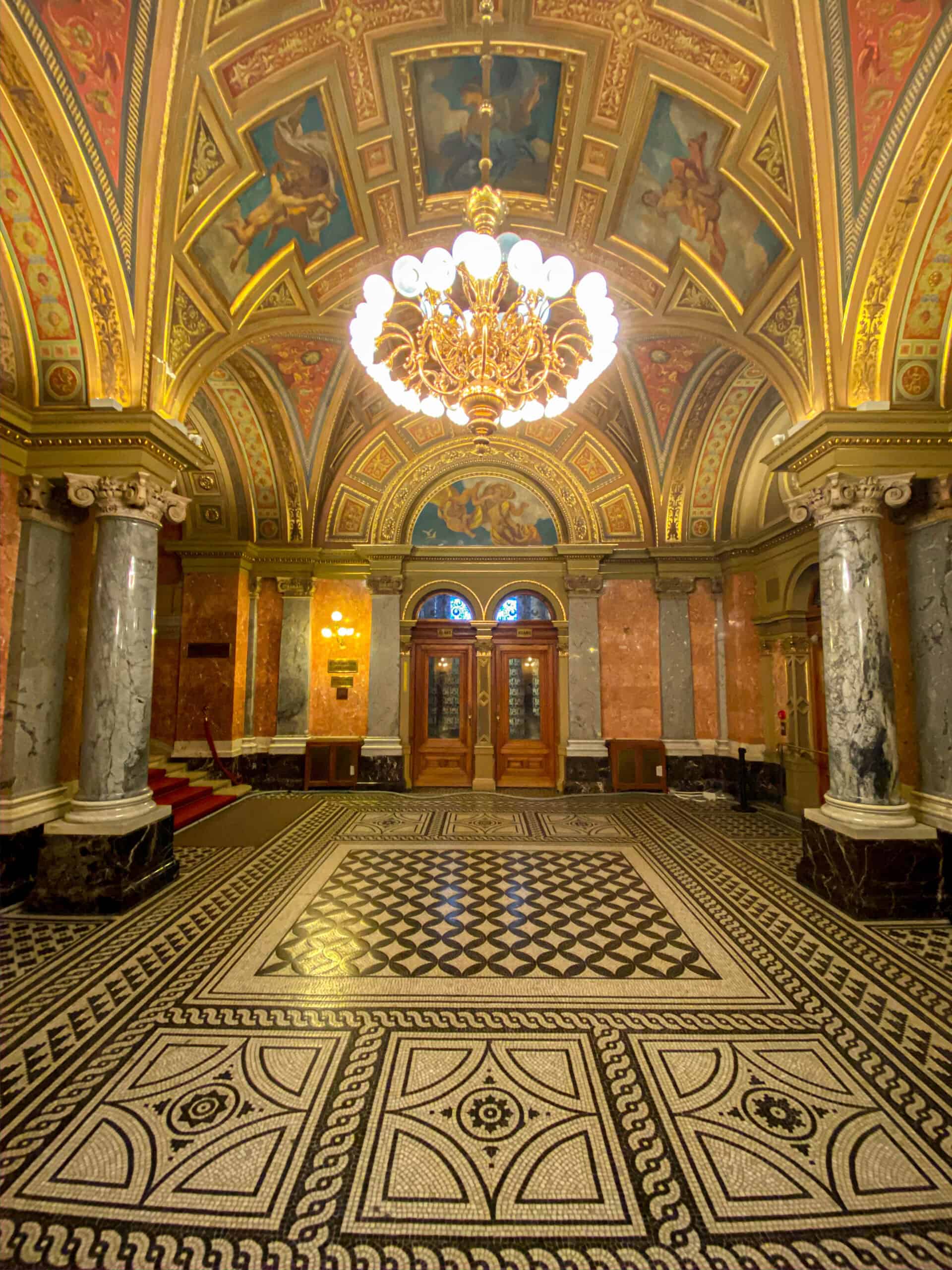
Built in late-19th century neo-Renaissance style by Miklós Ybl (who also designed St. Stephen’s Basilica), the Hungarian State Opera is a gorgeous piece of architecture commemorating the Austro-Hungarian Empire. Among many others, the Opera House was once managed by Ferenc Erkel, none other than the composer of the Hungarian anthem.
5. Gellért hill
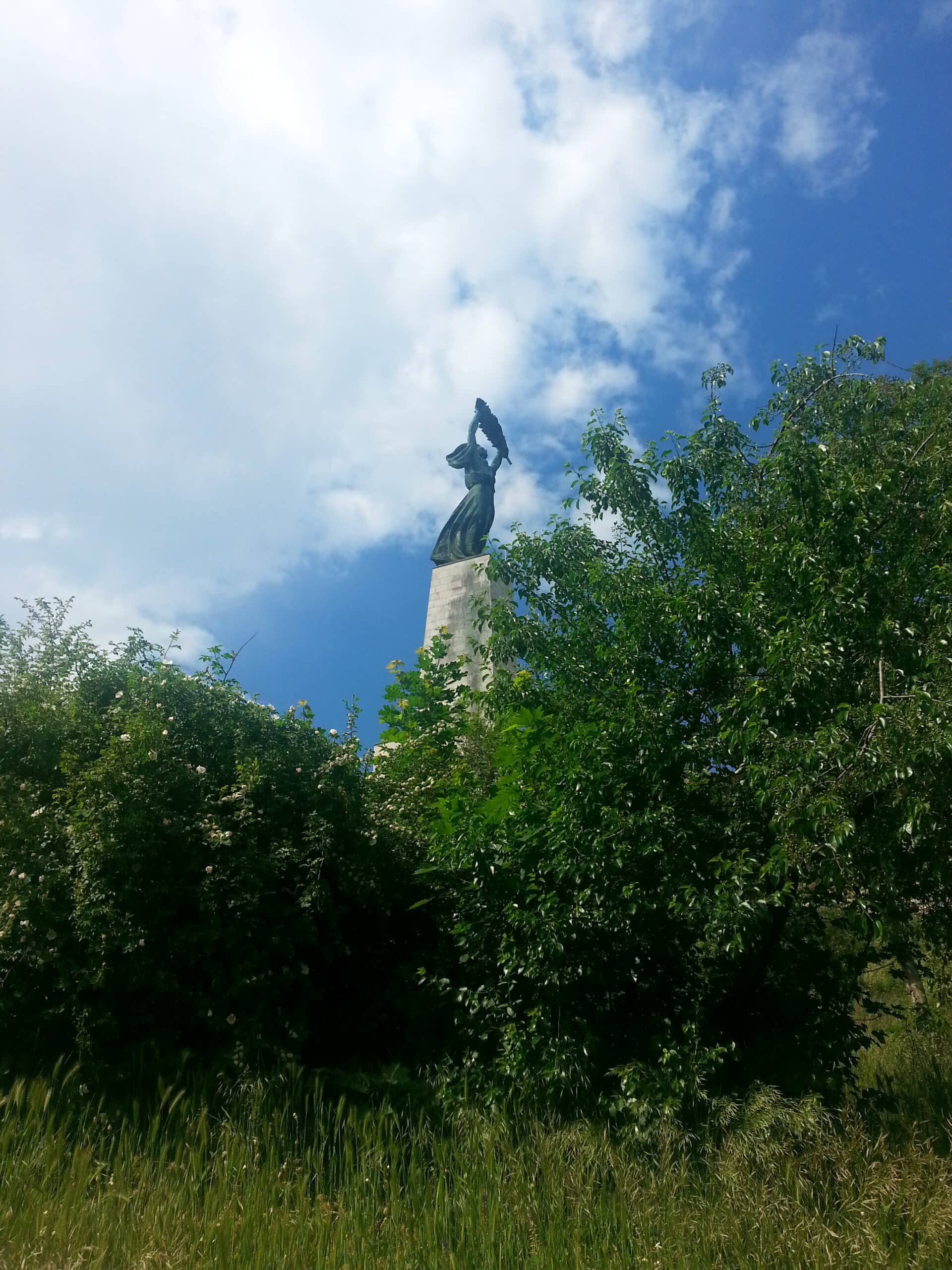
Towering over Budapest on the Buda side, Gellért Hill is a highly popular lookout spot among locals, and home to many historic and iconic sights in itself, such as the Liberty Statue and the Citadel.
There are numerous walking paths leading up the hill that touch many sights along the way, but if you don’t feel like walking, you can also take bus 27 departing from Móricz Zsigmond körtér.
9. Castle District, Castle Hill

Home to some of Budapest’s oldest buildings, most magnificent historic sights, as well as classiest restaurants and hotels, Castle District is a tourist’s must in Budapest. Encompassing Buda Castle, Fisherman’s Bastion, Matthias Church, and a long list of other gems – which you’ll see in a minute if you keep reading – this part of Budapest outweighs the rest of the city in the number of things to see and do in such a small area.
10. Buda Castle

Buda Castle is another famous landmark and popular tourist attraction of Budapest. Having served as home to kings for hundreds of years, the castle played an important part in Hungarian history from as early as the 13th century. From the beginning of the 16h century, however, fate was unkind to the castle.
First, it was severely damaged and captured by the Ottoman army, and – despite multiple recapture attempts – it remained in their hands until 1686, when the Holy League finally took it back. Unfortunately, during its recapture, the castle exploded and was completely destroyed. It was rebuilt a few decades later in Baroque style and became a World Heritage Site in 1987.
11. Fisherman’s Bastion
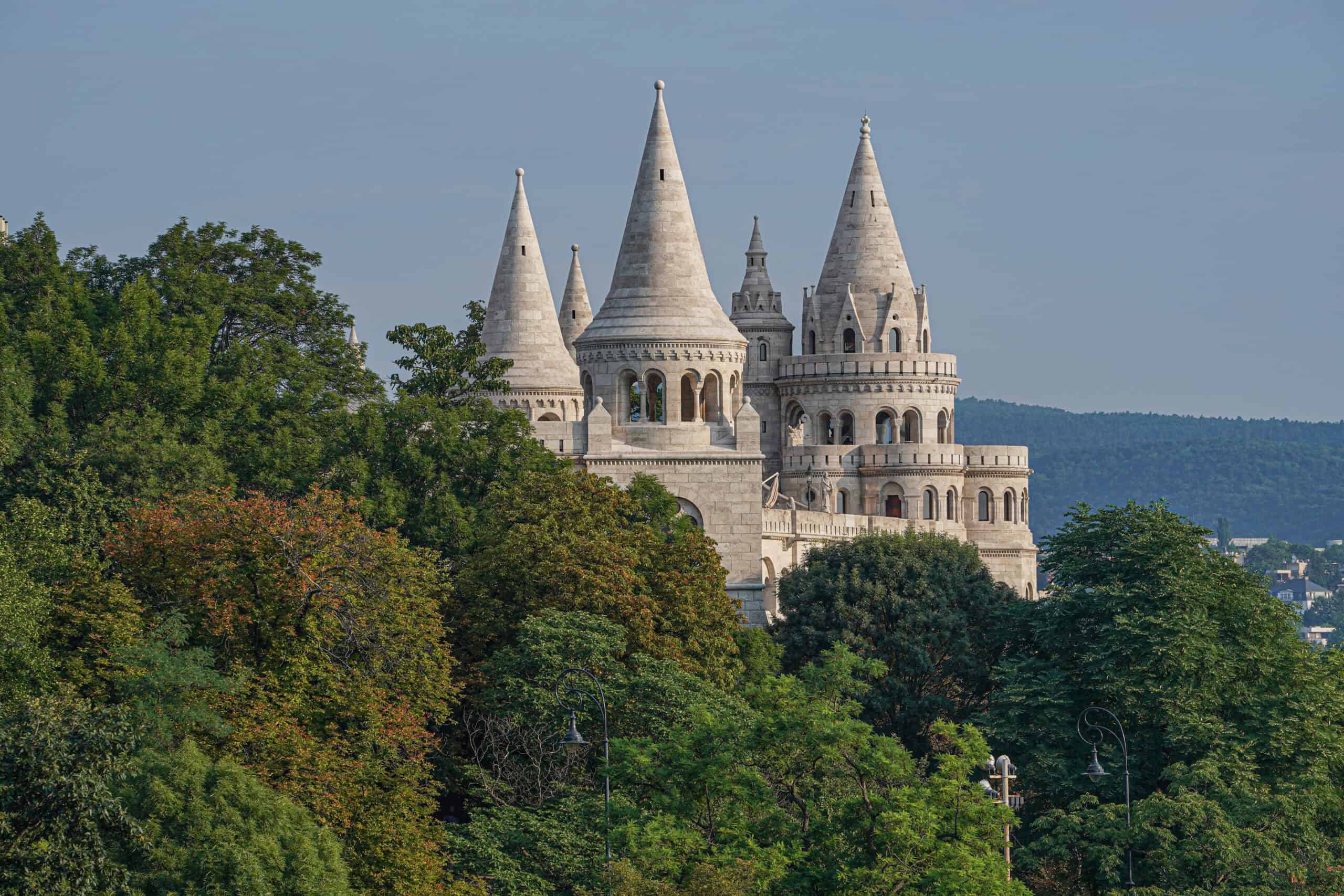
Built in the middle of the 19th century, the Fisherman’s Bastion is a magnificent neo-Romanesque fortress which offers a breathtaking view of Budapest and is a highly popular attraction of the city. Want to know something interesting about the monument that not many know? The seven towers bear a significant meaning: they represent the leaders of the seven Hungarian tribes that settled down in the Carpathian Basin, which eventually led to the birth of the Hungarian Kingdom.
12. Matthias Church

Matthias Church is a Roman Catholic church built in the 11th century. Although it was originally built in Romanesque style, it was reconstructed in the 14th century and got a Gothic look. Through the many centuries it has existed, it has served as a coronation church for kings (including King Matthias who it was named after), and it was also turned into a mosque during the Turkish occupation in the country. It was restored to its current image in the late 19th century. It also functions as a viewpoint, so if you want to marvel at the stunning panorama of the city, be sure to check it out.
13. Labyrinth of Buda Castle
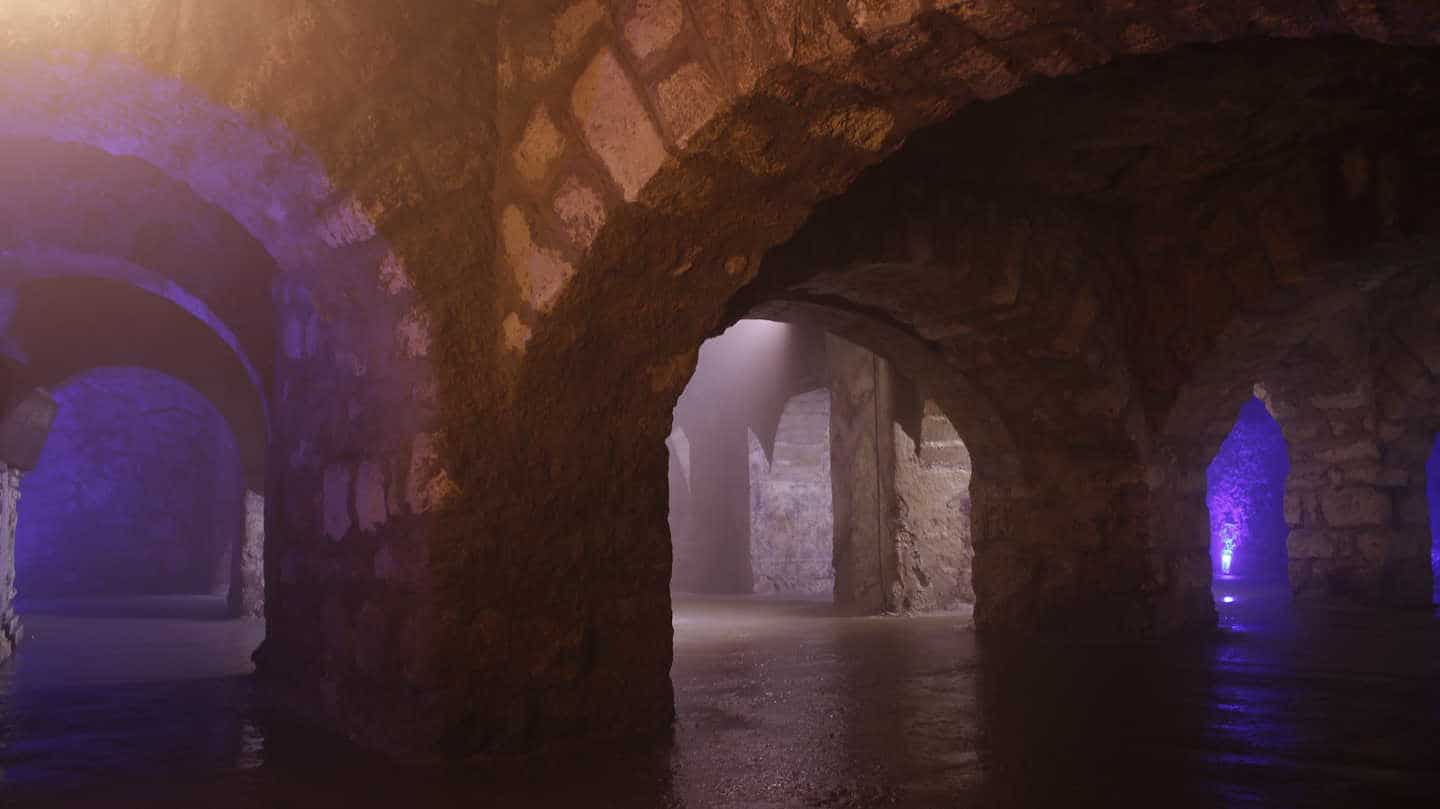
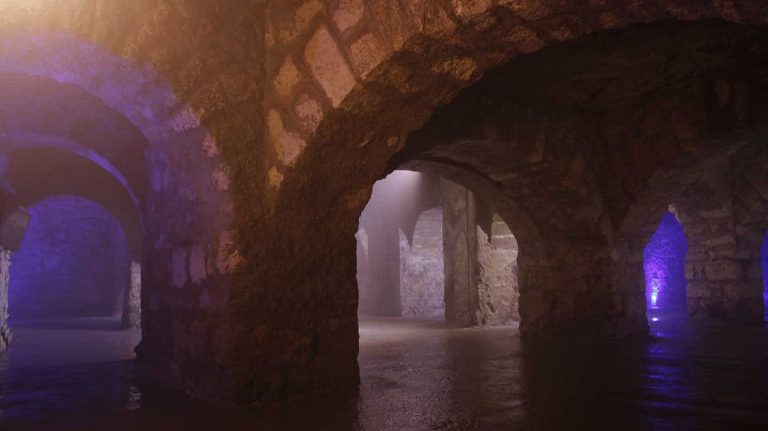
Complete with its own waxworks, the Budapest Castle Labyrinth is located deep in the caves of Castle Hill. Having served as dungeons, a 16th century Turkish harem, and war bunkers, the 1000-meter long tunnels have a varied history. Today, they’re home to one of the most peculiar selections of exhibitions in Budapest, maybe even the world.
Let us give you a little teaser for what you can expect: The Masked Ball of the Black Count, (with creepy, dusty mannequins dressed in 18th century clothing), Dracula’s Dungeon and his coffin, where legend says Vlad the Impaler (the original Dracula) was imprisoned by King Matthias I for 14 years.
14. Museum of Military History
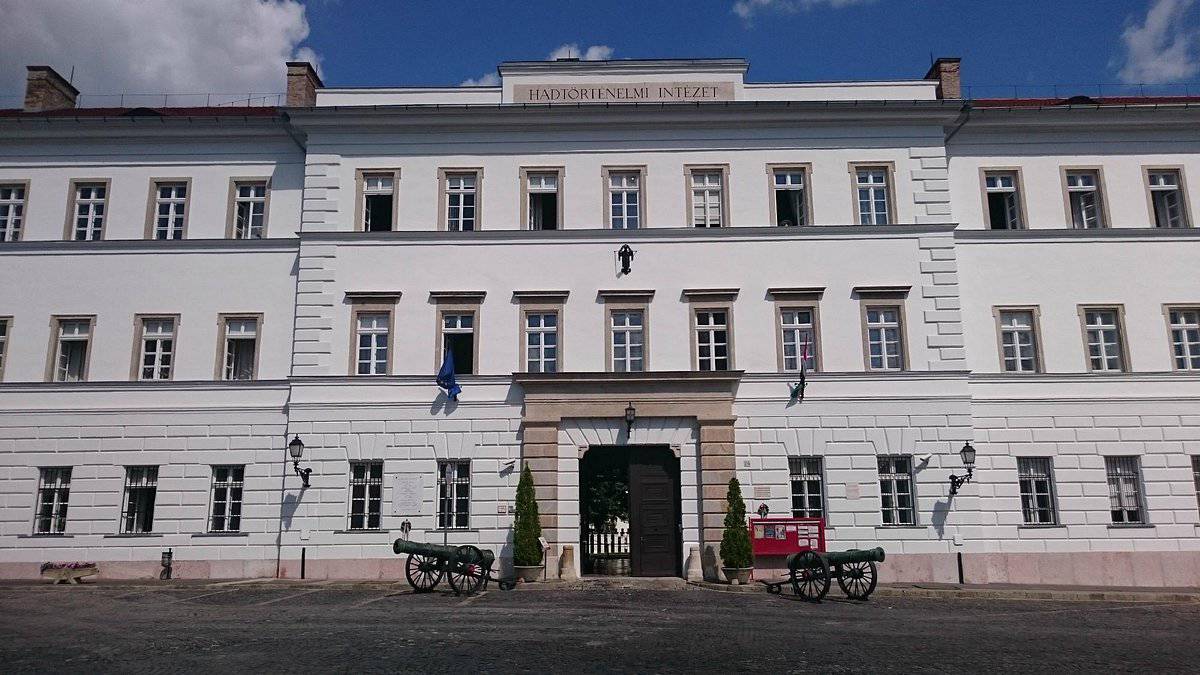
Located in the northeastern corner of Buda Castle, the Museum of Military History holds invaluable memorabilia from Hungary’s military history. In addition to managing its exhibitions, the institute also undertakes research, exploration and systematization duties, as well as other important academic responsibilities, such as organizing scientific conferences.
15. Hospital in the Rock

The Hospital in the Rock was built in the caves under Buda Castle in the 1930s in preparation for World War II. As the castle was used by the government at the time, the hospital was also made bomb-proof to ensure the treatment of government officials in the event of an emergency. During the war, the hospital was heavily used as an urgent treatment center.
After the war ended, it was used as a vaccine production facility, then it opened its doors to wounded soldiers and civilians once again when the revolution began in 1956. Between 1958 and 1962, in response to the cold war, the hospital was reconstructed to double as a nuclear bunker as well. It was not until 2007 that it was opened to the public as a museum.
16. Vienna Gate
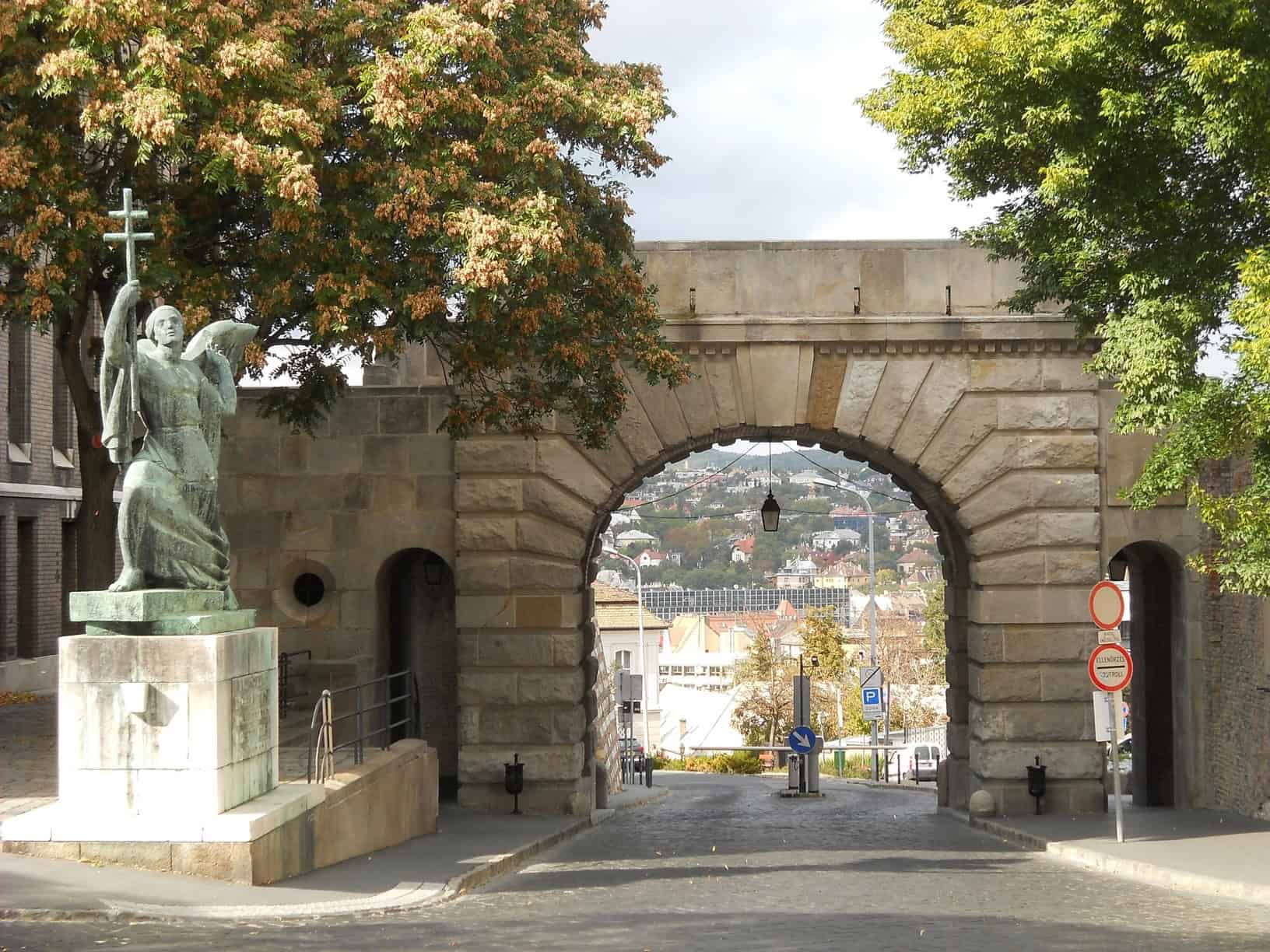
The Vienna Gate is the northernmost entrance to Buda Castle. Although the current gate was built in 1936 (to mark the 250th anniversary of recapturing Buda from the Turks), it was already in place in the middle ages – albeit it was called Saturday Gate at the time, because markets used to be held in front of it every Saturday.
17. Buda Castle Funicular
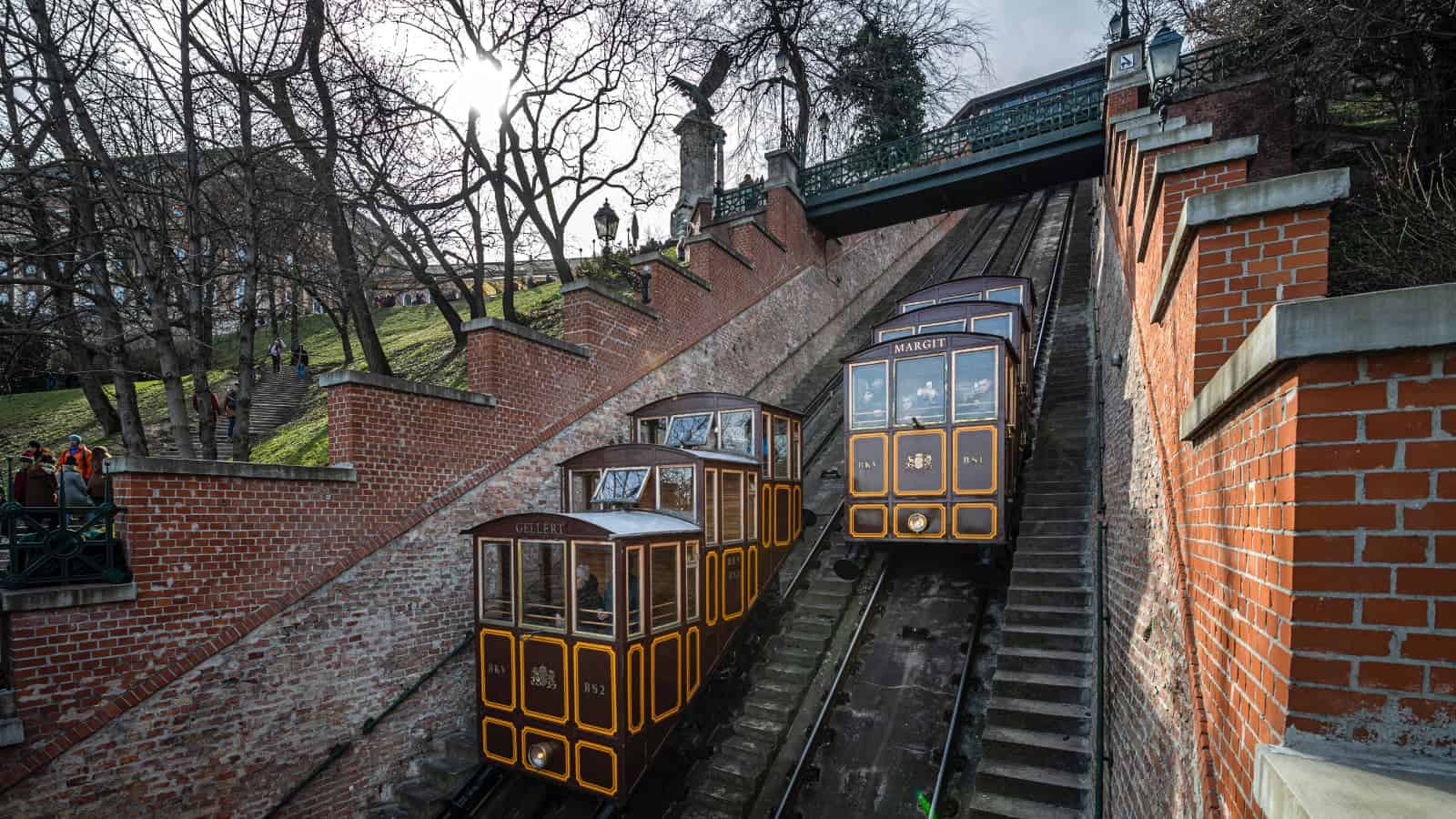
If you’re looking for the most scenic way up to the castle, look no further than the Funicular. As these nostalgic little toy-like cars leave Clark Ádám square behind (the Buda end of the Széchenyi Chain Bridge) and ascend slowly to the castle atop the hill, they’ll have you pressed up against the window gawking at the view in a matter of seconds. If we were you, we wouldn’t miss it.
19. Széchenyi Chain Bridge

Guarded by two majestic lions, the Chain Bridge is undoubtedly the most iconic bridge of Budapest. It was named after the iron chains on which the road-bed hangs and it’s illuminated at night, creating one of the most majestic sights in Budapest at night. At the time of its inauguration, 1849, it was the first permanent bridge that connected Pest and Buda. Sadly, the Chain Bridge was destroyed during World War II, but it was completely rebuilt for the 100th anniversary of its original construction.
20. Liberty Bridge

Completed on the 1000th birthday of Hungary in 1896, Liberty Bridge was originally named Franz Joseph Bridge after the prominent Astro-Hungarian Emperor. Even though the bridge was damaged during WWII, it was not nearly as bad as the Chain Bridge, so it could be quickly reconstructed and opened with a new name. As of 2016, Liberty Bridge is closed off from car and tram traffic every summer, which gives locals a unique place for social gatherings such as picnics, performances, yoga classes, and more.
21. Elizabeth Bridge
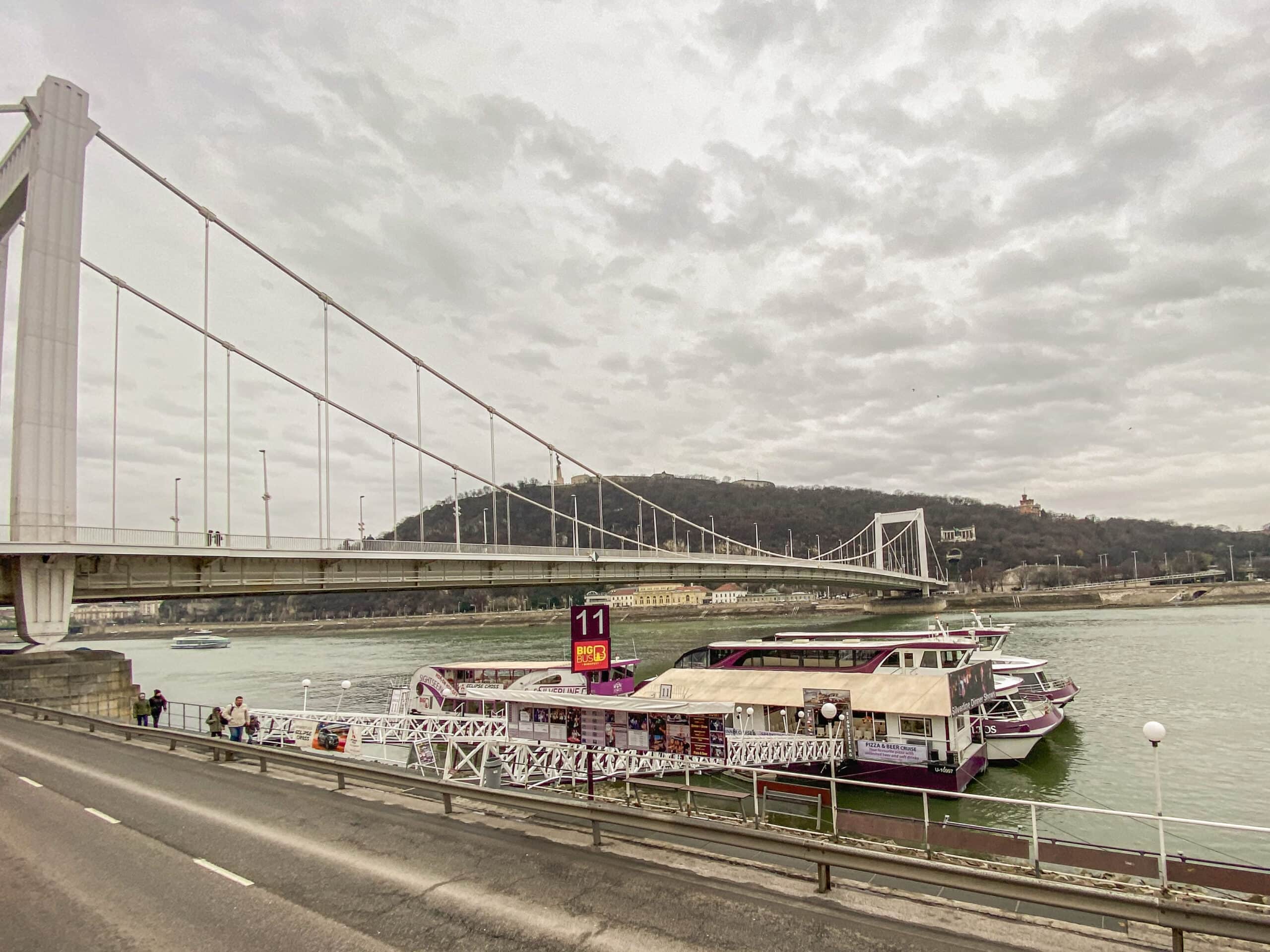
Originally built as a suspension bridge in 1903, Elizabeth Bridge was named after Empress Elizabeth of Austria (who was the wife of Emperor Franz Joseph), and it was meant to be the pair of the then-Franz Joseph Bridge. However, like many bridges in Budapest, Elizabeth Bridge also fell victim to the destruction of WWII. Eventually, it was rebuilt as a cable bridge and, unlike Franz Joseph Bridge, it held onto its name.
22. Margaret Bridge

Margaret Bridge was the second-ever permanent bridge connecting the two sides of the city, following the Chain Bridge. During WWII it was bombed not once, but twice, but luckily, it was rebuilt in just 3 years after its destruction. Margaret Bridge also connects the city with Margaret Island, which, thanks to tram 4-6 running across the bridge, makes it quickly and easily accessible from most of inner Budapest.
23. Margaret Island

Margaret Island is one of the largest most popular green areas of Budapest – if not the most popular one. One of the biggest advantages of Margaret Island is that it has a direct connection to Margaret Bridge, making it easily accessible both on foot and by public transportation (it has its own stop on tram lines 4-6 in the middle of the bridge).
In addition to the huge green areas that make perfect picnic and hang-out spots, the island also offers a bunch of places to go and things to do, such as a musical fountain, outdoor bars and restaurants, a swimming pool, an open air theater, and a 5-km something running track around it.
24. Margaret Island Musical Fountain

One of the most popular attractions of Margaret Island is its Musical Fountain which puts on a hell of show on the hour from 10 AM to 10 PM every day (when the weather’s nice, of course). So what exactly does it do? Prepare to hear a selection of musical pieces written by artists ranging from Mozart to Ed Sheeran as the fountain sprays water completely in sync with the rhythm of the track being played. And if that weren’t enough, after sundown, the performance is further enhanced with a colorful lightshow. Yes. All by a fountain.
25. Japanese Garden
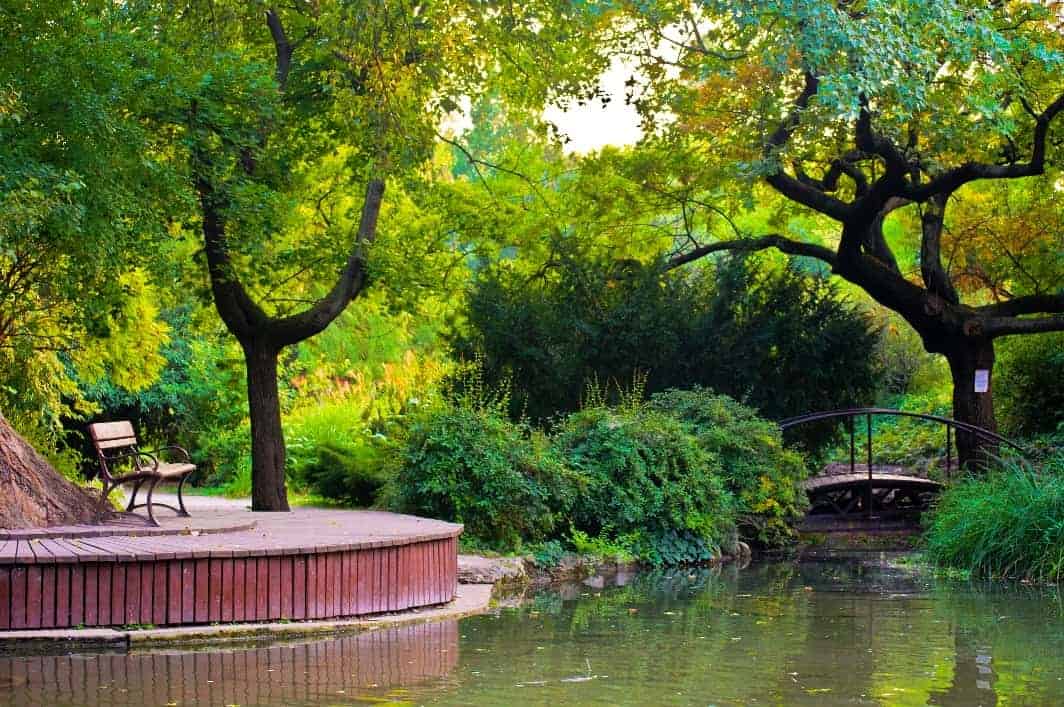
The Japanese Garden is located on the northern end of Margaret Island on the left side. With its little koi fish pond, bamboo grooves and small wooden bridge, this hidden gem is the perfect get-away spot if you want to spend some romantic quality time with your significant other.
26. Óbudai Island / Hajógyári Island
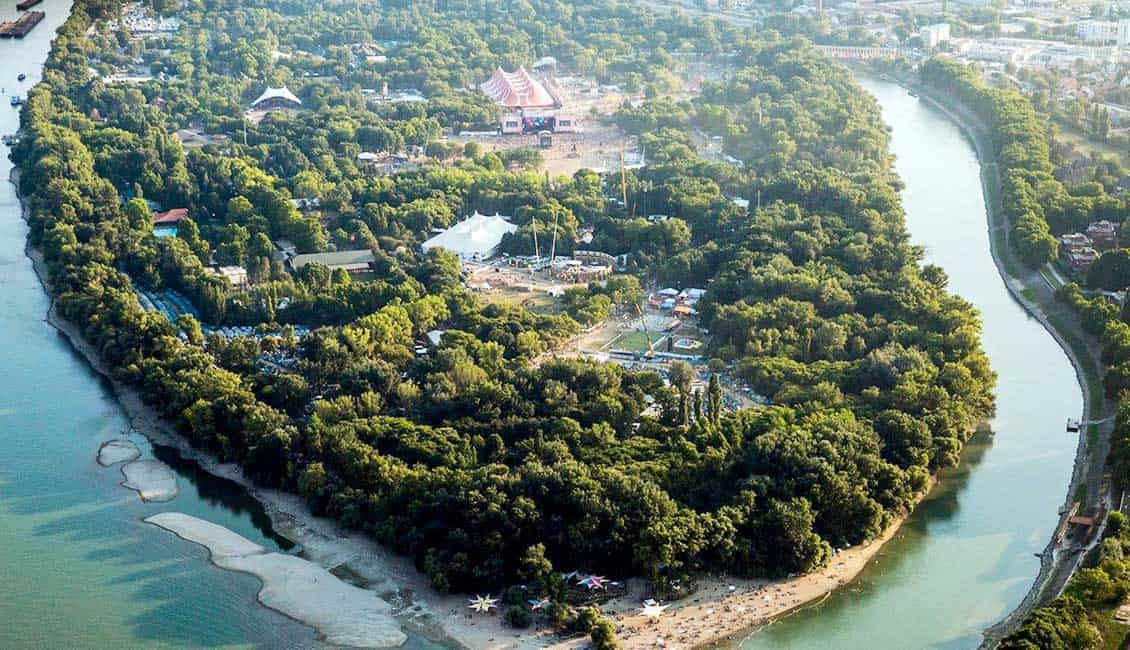
Although Óbudai Island (aka Hajógyári Island) is mostly famous for hosting Sziget Festival in early August, it is a popular recreational area for locals all year round. One of its biggest perks is its huge slide park and playground which is highly popular with kids.
To reach Óbudai Island, take suburban railway line (HÉV) 5 to Filatorigát.
27. Danube Promenade
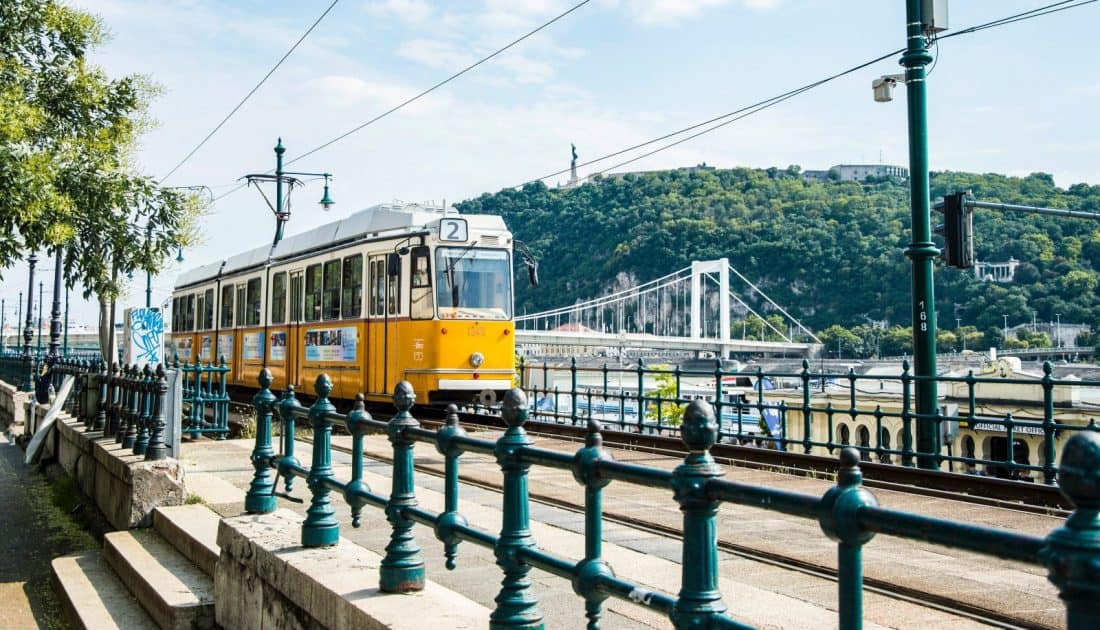
The Danube Promenade (or Dunakorzó as we call it in Hungarian) is the name given to a section of the bank of the Danube between Széchenyi Chain Bridge and Elizabeth Bridge on the Pest side. It began receiving special attention in the middle of the 19th century, when the city center started developing at a fast pace, and hotels started popping along the riverbank. The most important landmarks along the Promenade are Contra-Aquincum (a 4th century Roman fortress next to Elizabeth Bridge), the Inner City Parish Church, Vigadó Concert Hall, and the Gresham Palace.
28. Shoes on the Danube Bank
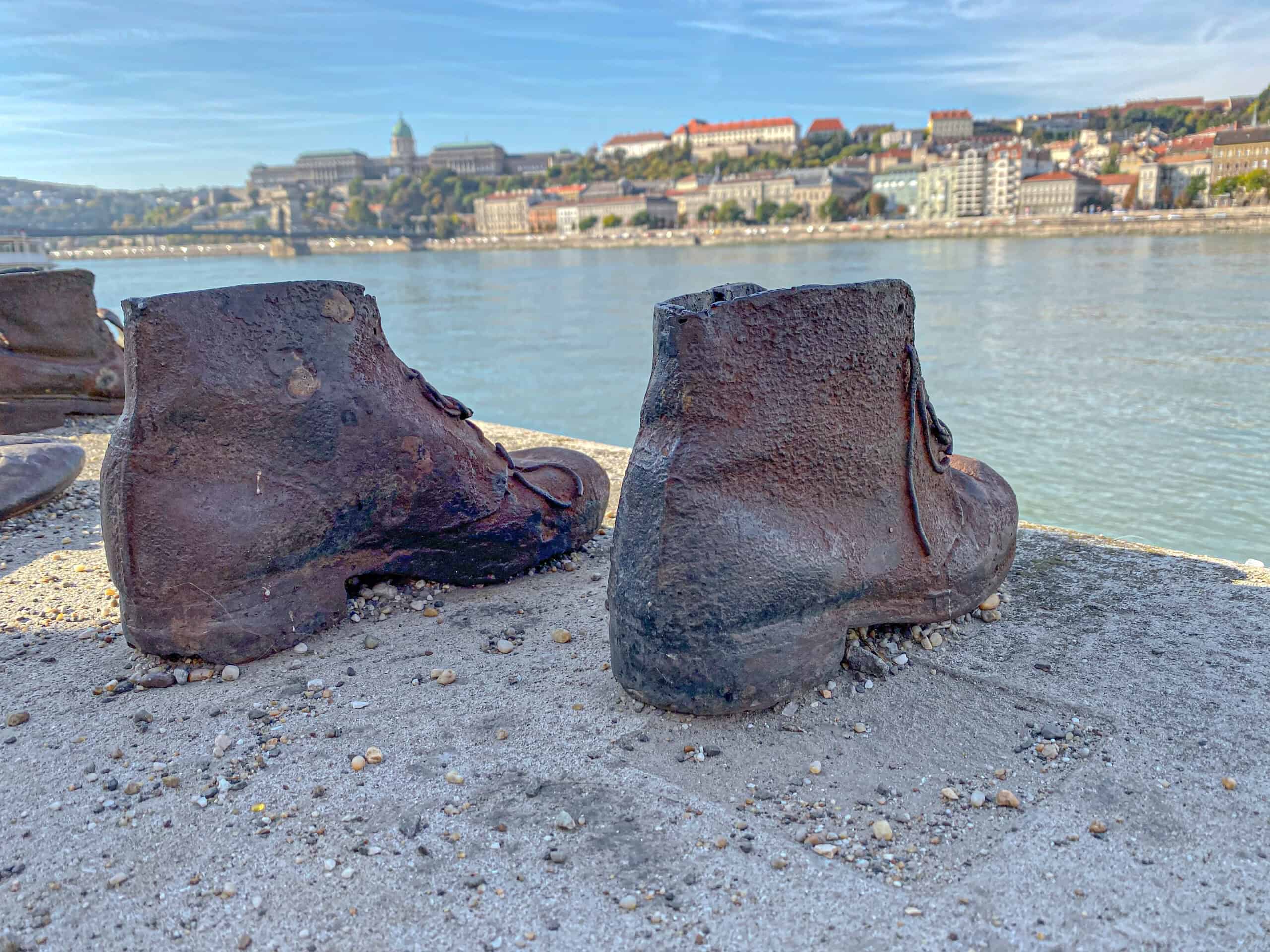
This heart-wrenching monument was erected to commemorate the 20,000 Jewish people who were executed on the bank of the Danube. Although these bronze shoes are arguably the most unique mementos of the Holocaust in Budapest, check out our article on the Holocaust Memorial if you’d like to learn more about the sad story of Jews in Hungary.
29. House of Terror
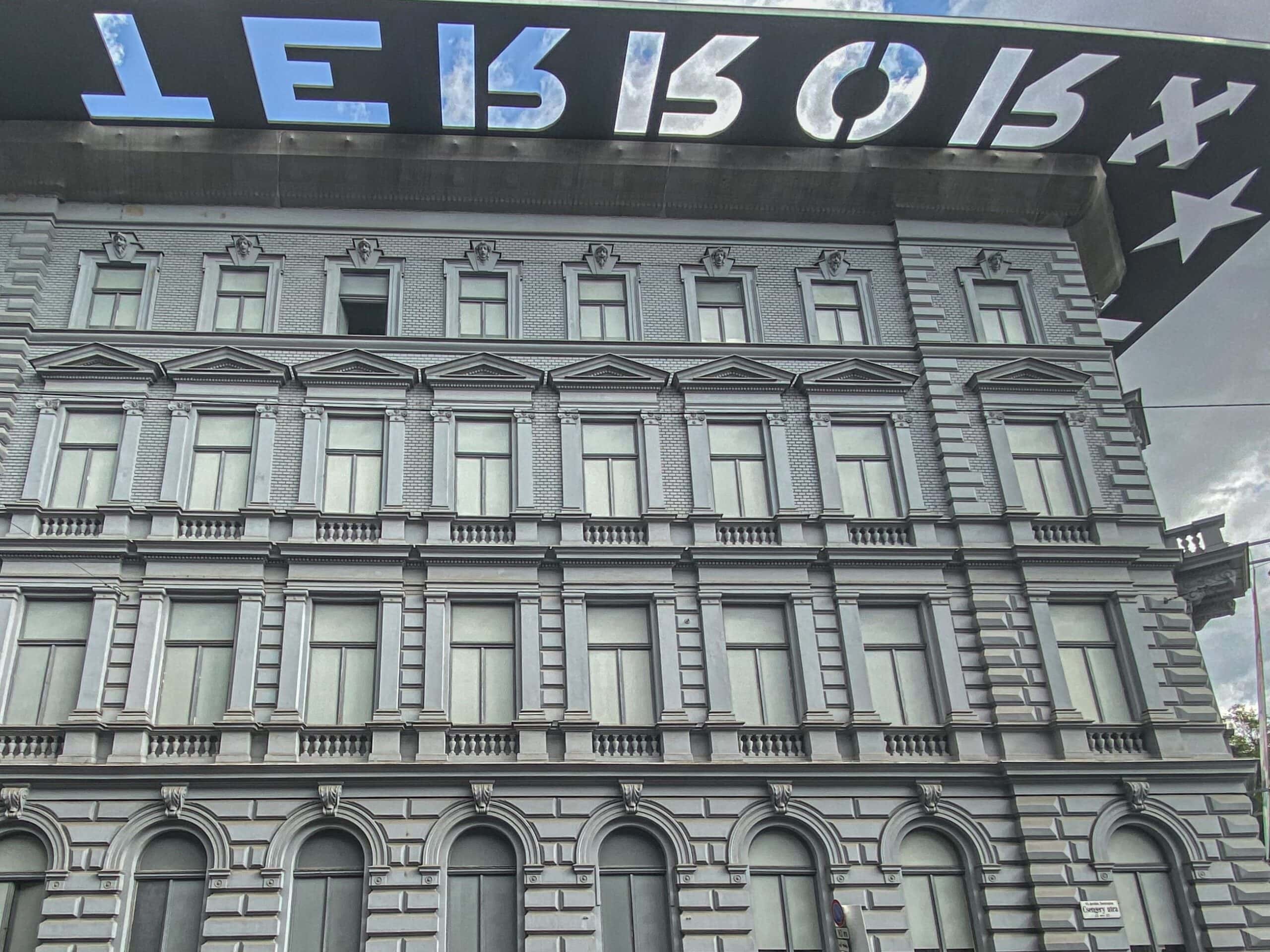
The House of Terror is a unique museum with exhibits on the fascist and communist regimes of the 20th century, and a memento for those who were interrogated, tortured, and killed in the building which was once used by the fascist Arrow Cross Party and KGB-like communist secret police ÁVH (State Protection Authority).
Even on the outside, the House of Terror creates a menacing atmosphere: with photos of victims covering the streetfront of the building and huge symbols of dictatorship looking down at the sidewalk from the top of the facade, visitors and bywalkers are reminded of the darkest times of modern Hungarian history and prepared for the gruesome exhibition within. It is truly an intense experience.
30. Memento Park
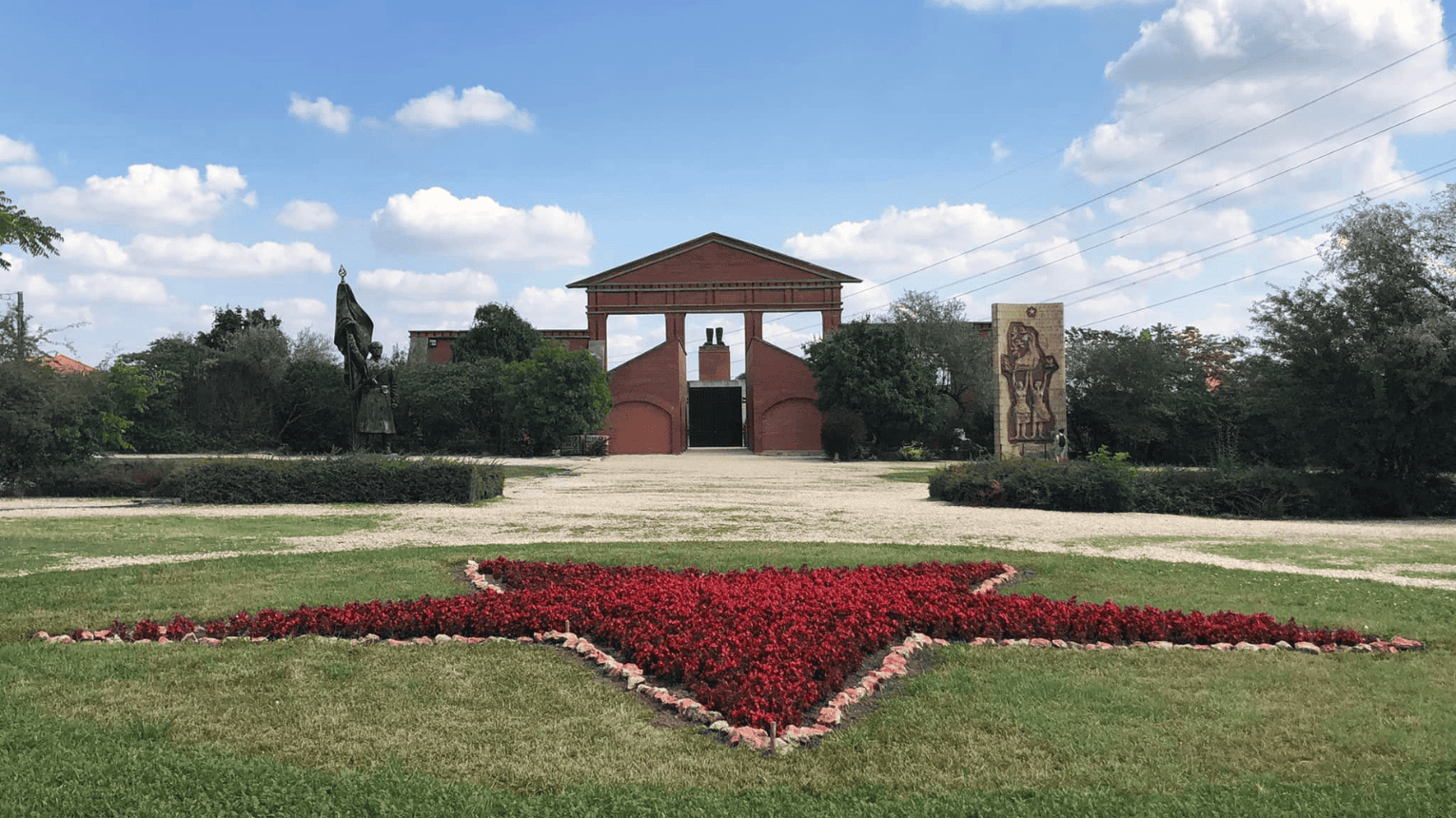
Memento Park is an open-air museum mostly filled with statues and sculpted plaques that were removed from the streets of Budapest after the fall of the Communist regime. The park is divided into two parts: Statue Park and Witness Square – the latter featuring a monument called Stalin’s Boots, a replica of the boots of the monumental Stalin statue that was erected “as a gift to Stalin” for his 70th birthday and torn down by anti-Sovier crowds during the Hungarian revolution in 1956.
31. Dohány Street Synagogue
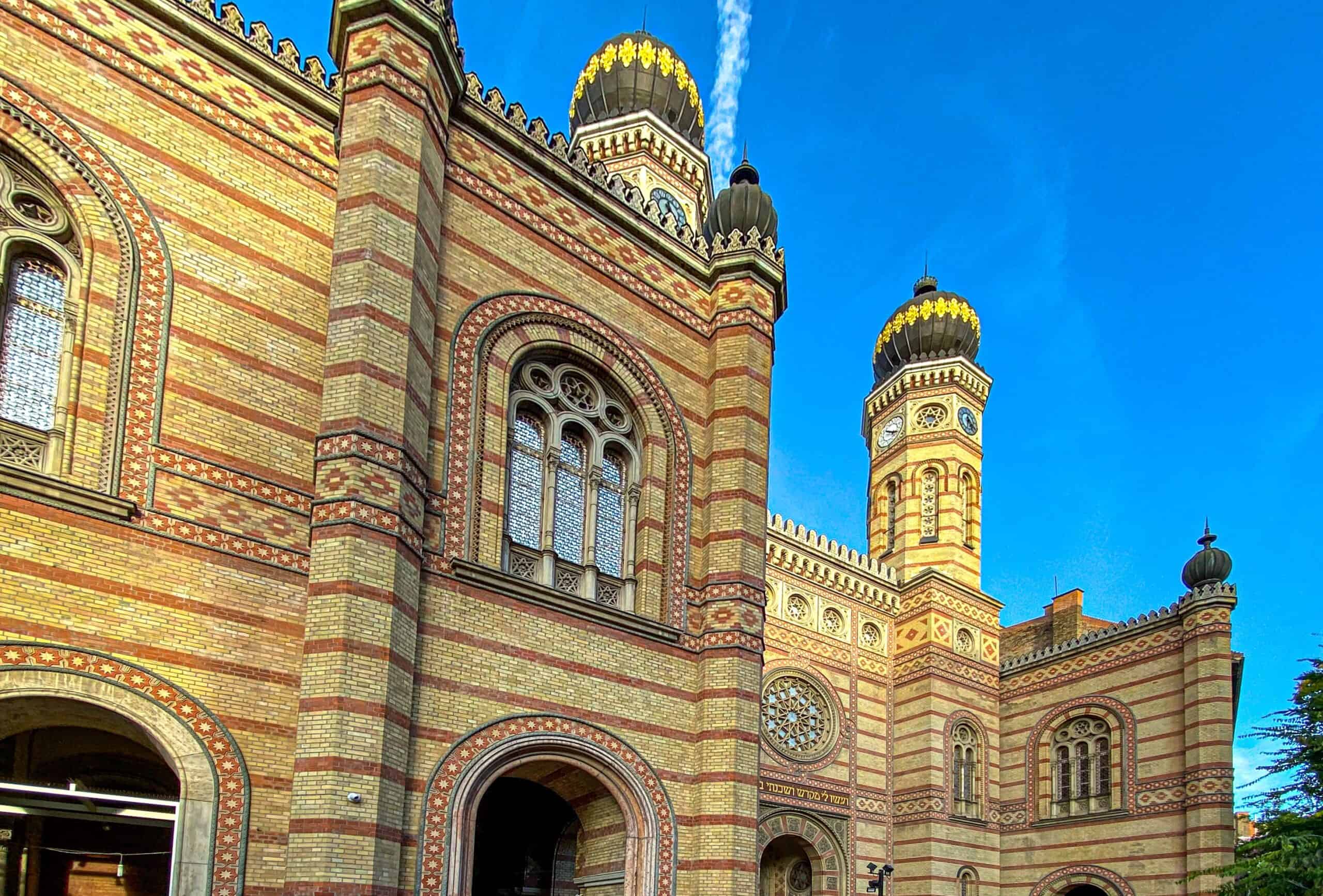
Also known as the Great Synagogue Budapest, the Dohány Street Synagogue is the largest synagogue in Europe, and it was built in the mid-19th century in Moorish Revival style. It’s in the 7th district between Astoria and Deák Ferenc tér, and the building itself also hosts the Hungarian Jewish Museum, the Heroes’ Temple, the graveyard and the Memorial. It served as the border of the Budapest Ghetto between 1944 and 1945 and it’s recognized as a World Heritage Site.
32. Rumbach Street Synagogue
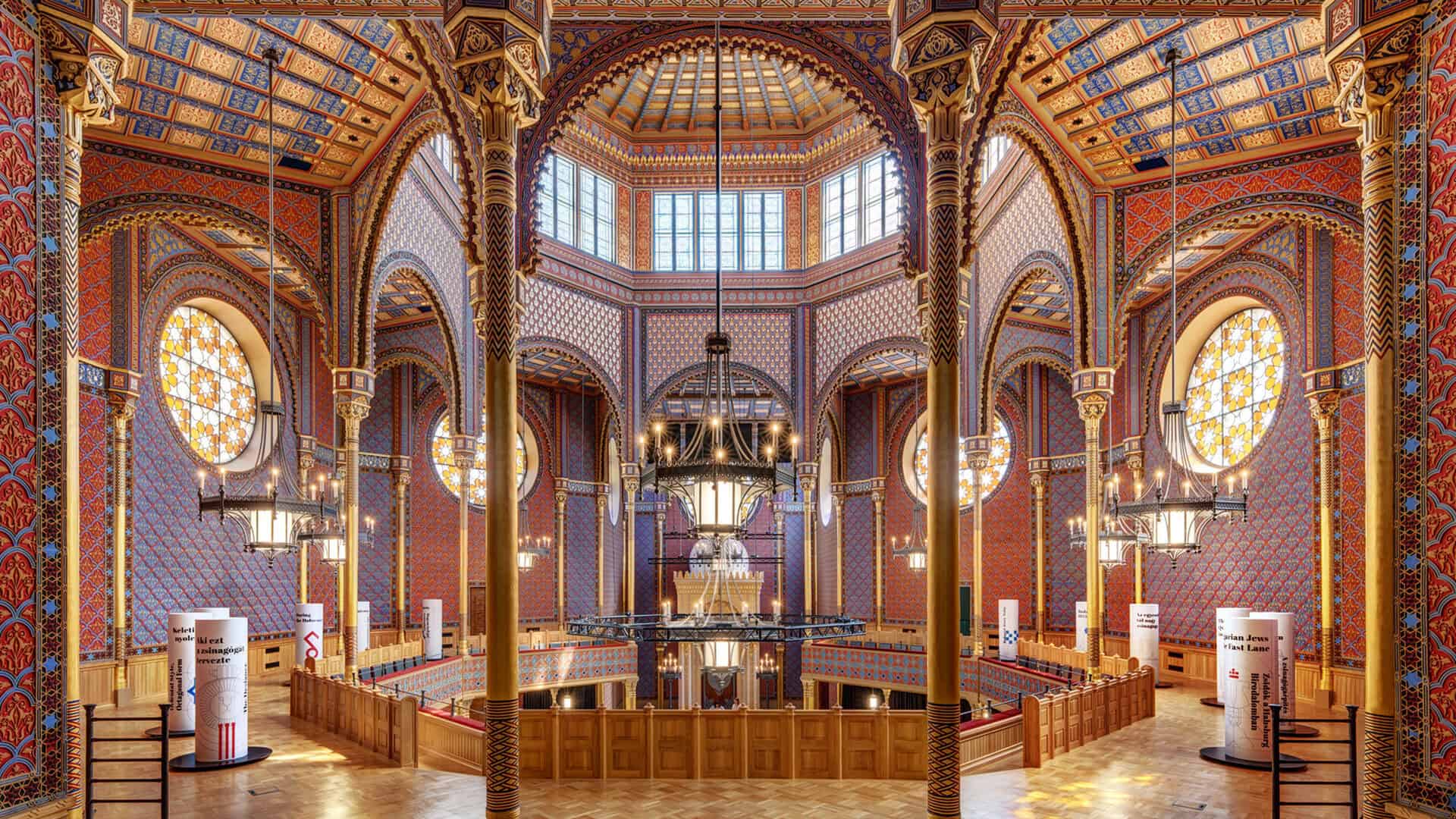
Similarly to the Dohány Street Synagogue, the Rumbach Street Synagogue was built in Moorish Revival style in 1872, and they’re only a few blocks away from each other on foot in the 7th district. It stopped being a place of worship in 1959, as it got severely damaged in World War II. It has been restored recently, and is planned to serve as a Jewish Ethnographic Museum. Its eight sides are reminiscent of Jerusalem’s Dome of the Rock, and its color pattern is similar to the Dohány Street Synagogue.
33. Holocaust Memorial Center
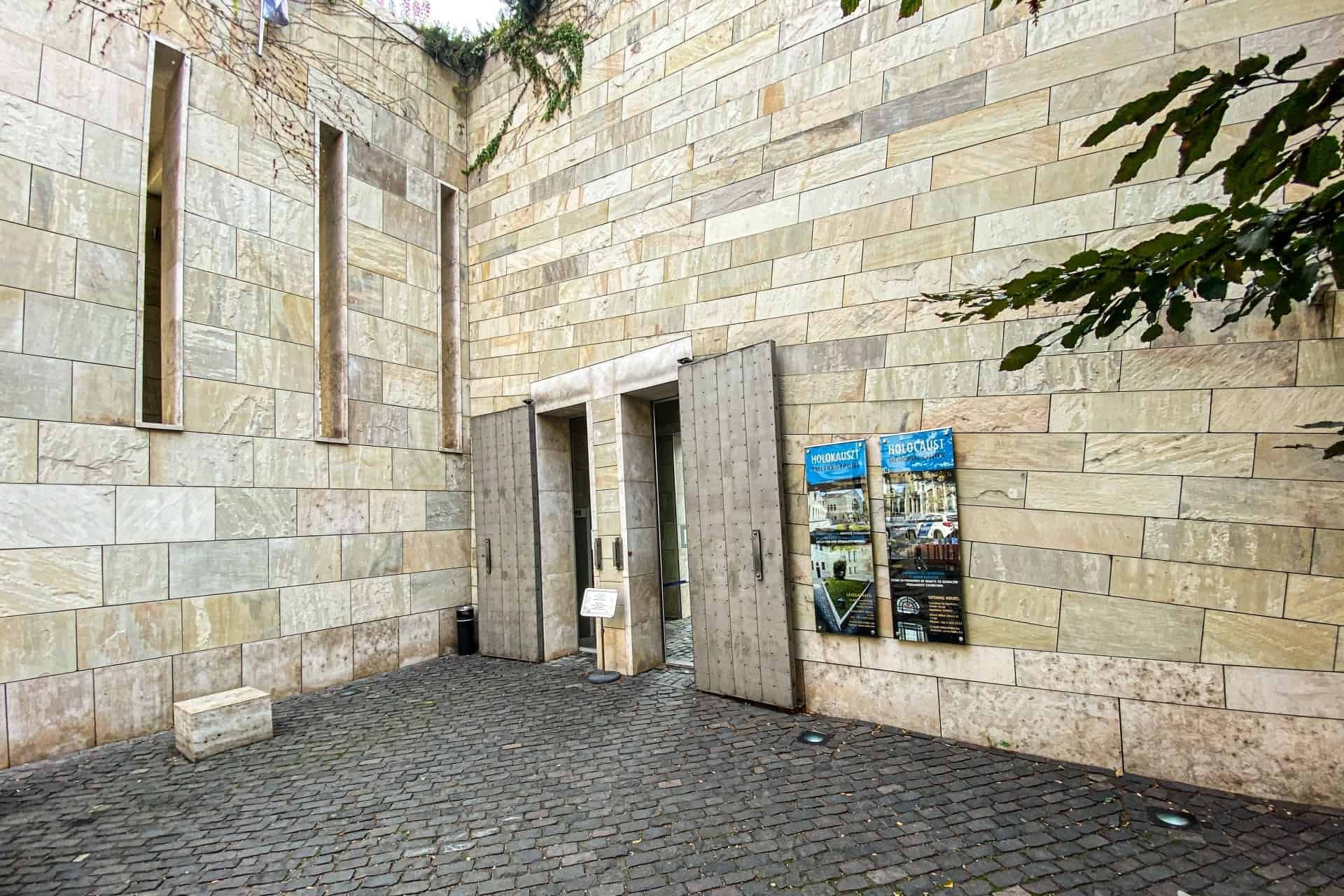
Built in the 9th district in Páva utca, the Holocaust Memorial Center is a national memorial. It was raised outside of the Jewish Quarter on purpose, signaling its national importance. The memorial is in the same building complex with the Páva Street Synagogue, and together they serve as a scientific, educational and cultural center.
34. Hungarian National Museum
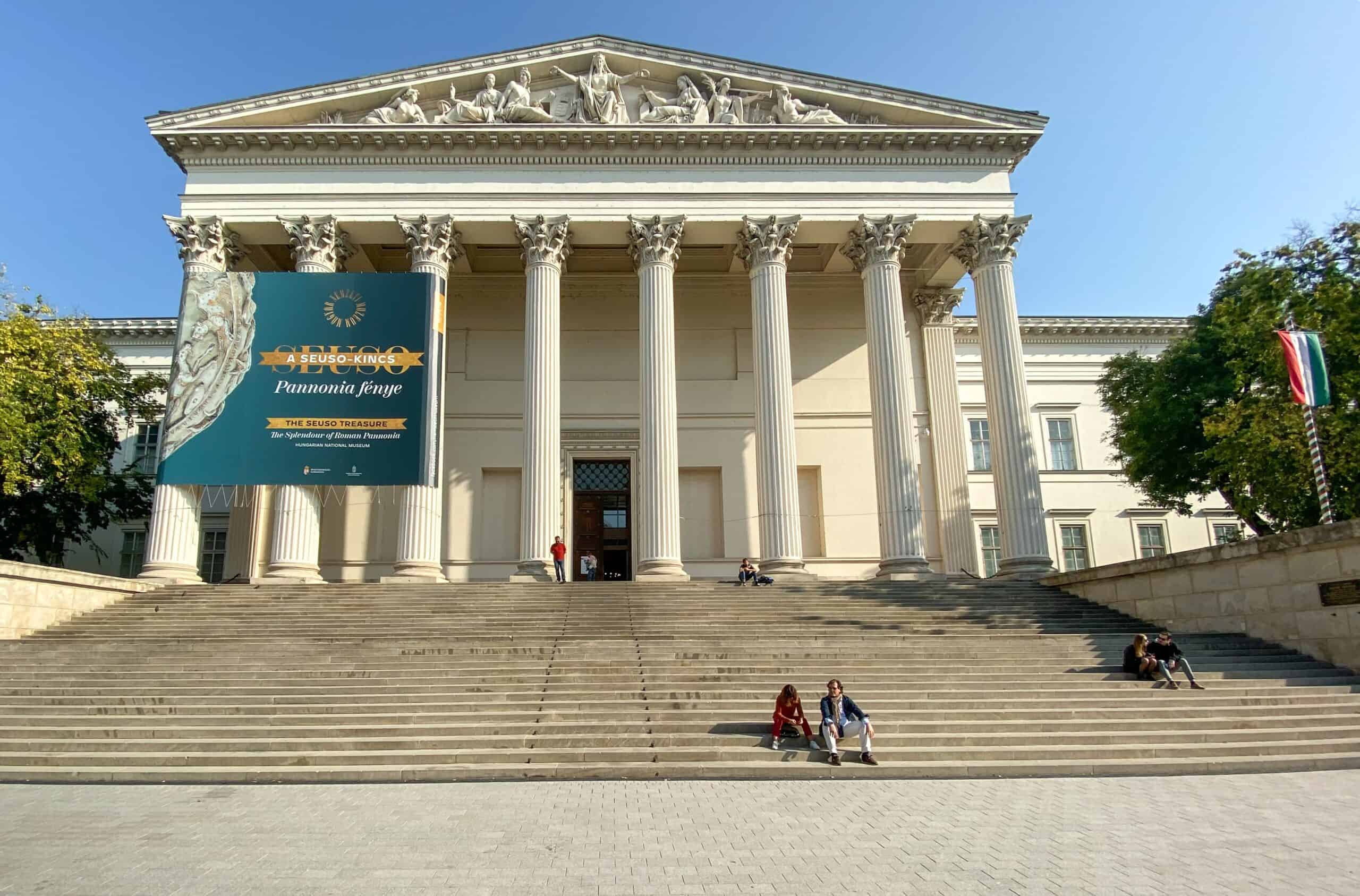
Founded in 1802, the Hungarian National Museum is a history, art and archeology museum for historical Hungary. The current home of the museum can be found in the 8th district, between Kálvin tér and Astoria in a neoclassical building. It served as an important location in the history of the Hungarian Revolution of 1848/49, as Sándor Petőfi recited the 12 points on what the Hungarian nation wants and his famous poem, Nemzeti dal (National song) on the steps of this building. At the moment the museum has 6 permanent exhibitions, 2 temporary ones and 2 virtual ones.
35. Hungarian National Gallery
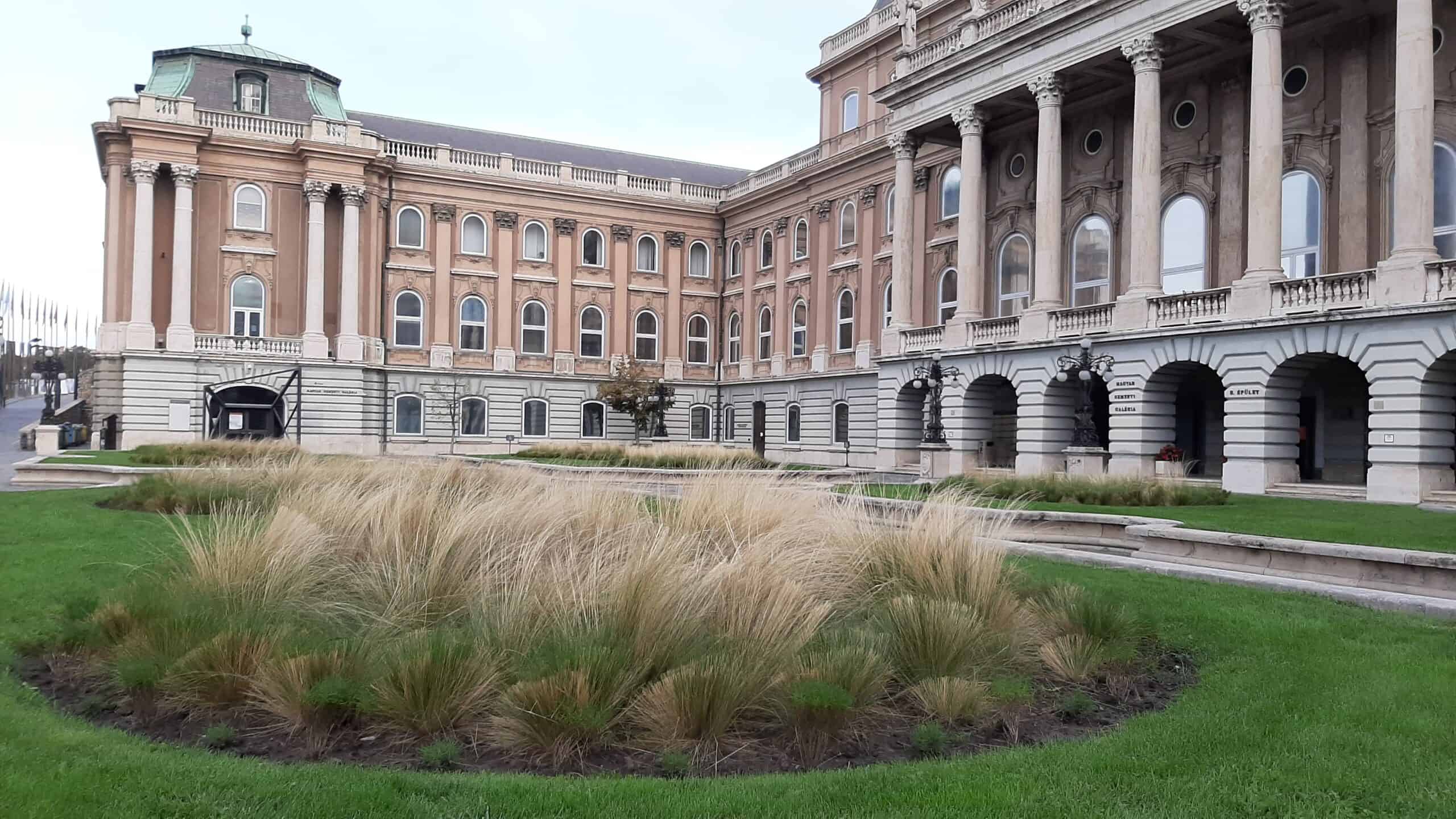
The national art museum of Hungary, the Hungarian National Gallery was founded in 1957, and its home is the Buda Castle. Its collections cover a whole millennium – from the state foundation to present day. Its permanent exhibitions provide a holistic view of how Hungarian art history developed throughout the centuries.
36. National Theater
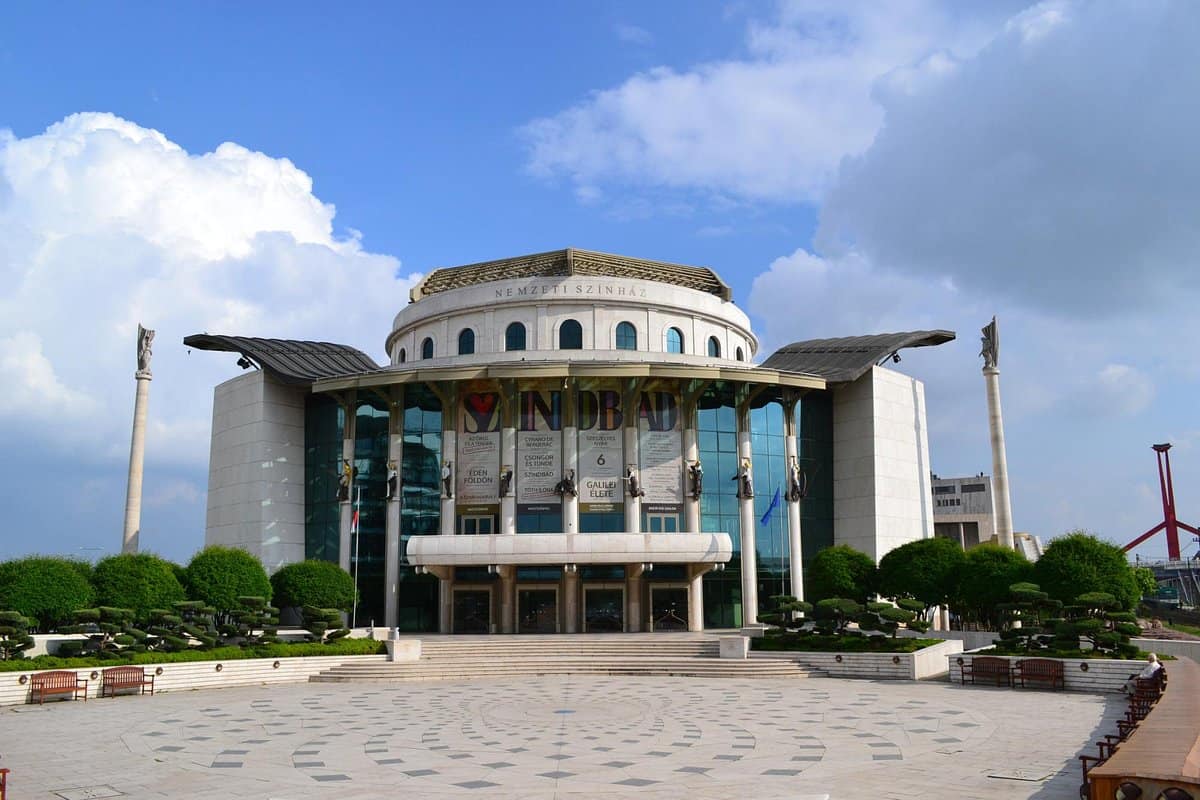
Originally opened in 1837, the National Theater found its current home in 2002 on the bank of the Danube, just a few steps from the Pest side of the Rákóczi bridge in the 9th district. It’s interior is high and spacious with several floors and a huge auditorium. The building is surrounded by a garden and a sculpture park, including a memento of the old National Theater building, half-submerged in water.
39. Budapest Palace of Arts
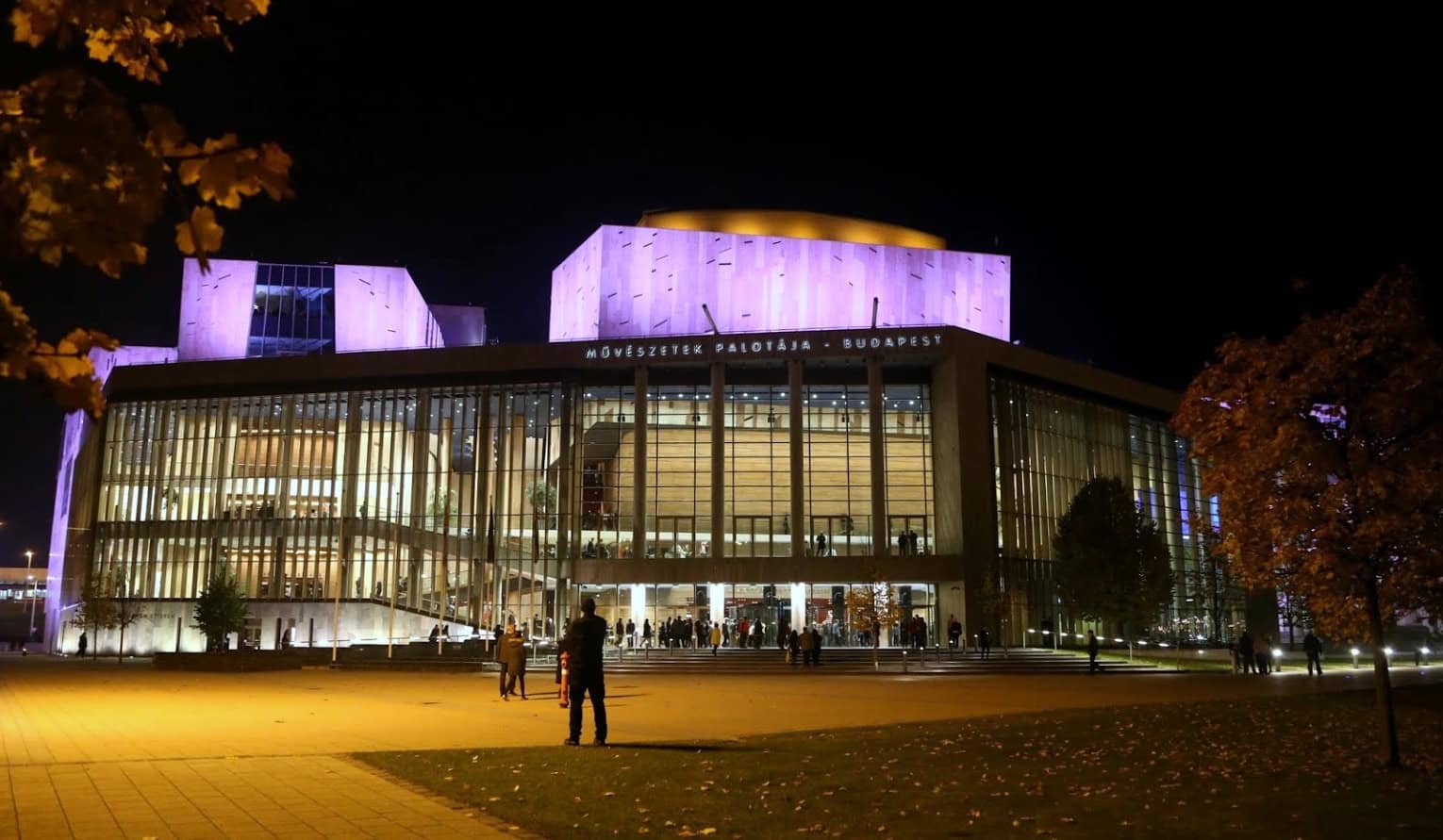
The Palace of Arts, or MÜPA in Hungarian (short for Művészetek Palotája) opened its doors in 2005 in a modern building next to the National Theater on the bank of the Danube. Just a few steps from the Pest side of Rákóczi bridge, the Palace of Arts is home to the gigantic Bartók National Concert Hall, the Ludwig Contemporary Art Museum and the Festival Theater.
40. Vigadó of Pest (concert hall)
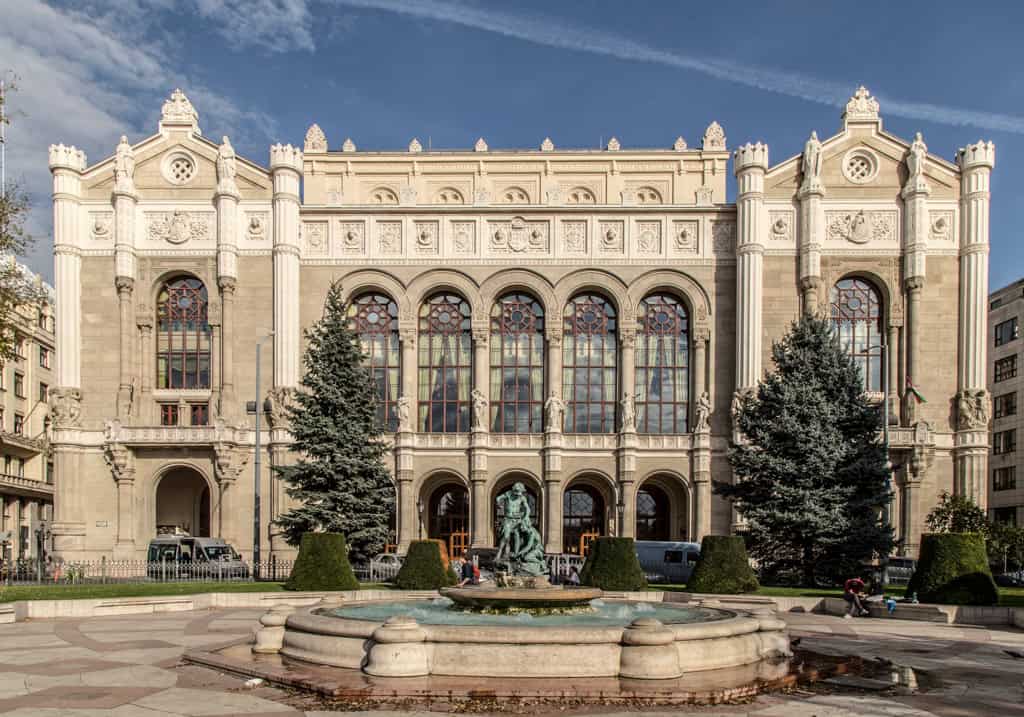
Vigadó (an old-school Hungarian word meaning “place for merriment”) is the second largest concert hall after the Palace of Arts. It can be found on the bank of the Danube, close to Vörösmarty tér, the final stop of metro line 1. Vigadó is a monument, a tourist attraction and an art event center at the same time. The building was damaged during World War II, but was reconstructed several times.
Ludwig Contemporary Art Museum is part of the Palace of Arts complex in the 9th district, on the bank of the Danube. It occupies four floors of the western side of the building and its exhibitions consist of significant Hungarian and international pieces of art. If you’d like to visit, make sure to book an appointment via their website, as currently this is how the museum ensures its visitors’ safety.
43. ELTE Botanical Gardens
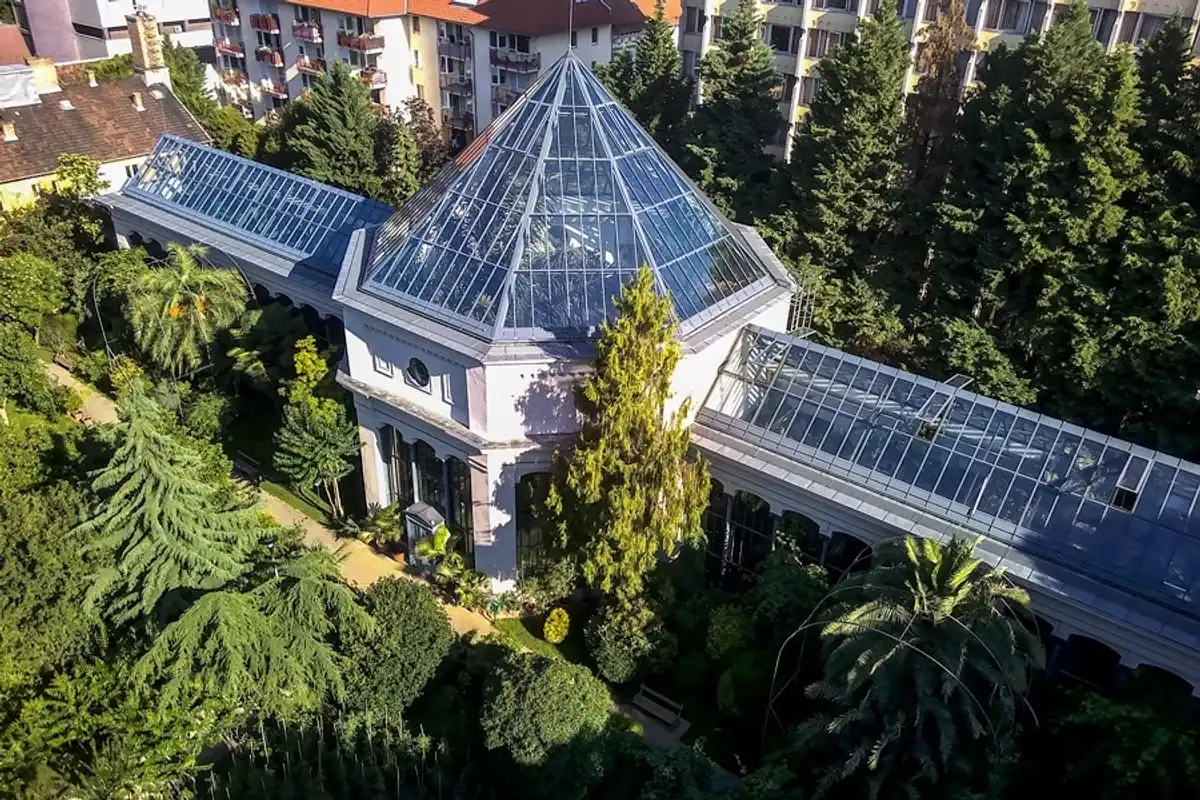
A true oasis in the heart of the 8th district, on Illés utca, ELTE Botanical Gardens is home to thousands of different species of orchids, water lilies, cacti and other interesting plants. Interesting fact: Ferenc Molnár’s novel, The Boys of Pál street is set among the trees of these botanical gardens. They organize about 20 events per year to show true biodiversity to visitors.
44. Gül Baba’s Tomb
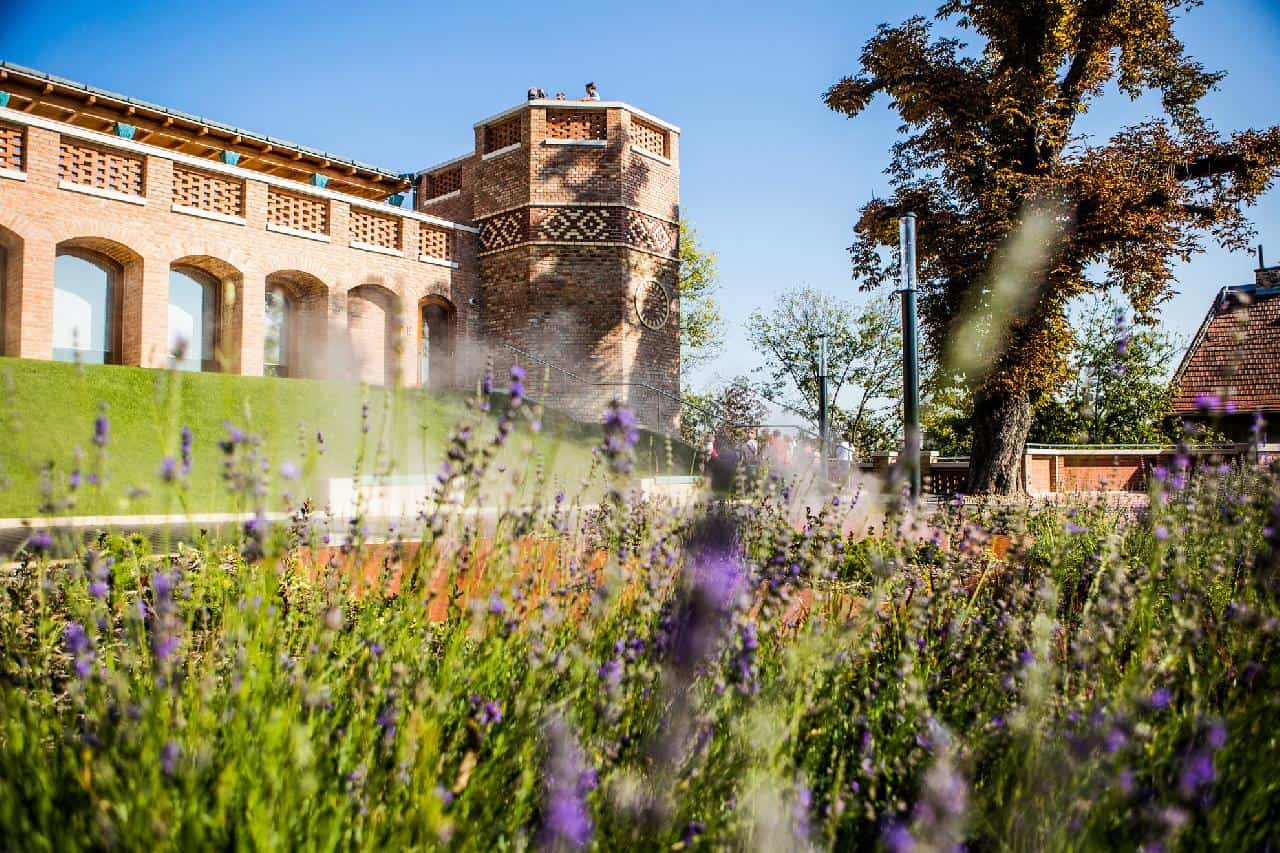
Gül Baba was a Turkish patron saint of Budapest after his death during the battle of Buda in 1541. His tomb is the world’s northernmost Islamic pilgrimage site, and it can be found in the 2nd district, on Mecset utca. The quickest way to reach it is to get off tram line 4-6 at the Buda side of the Margaret bridge, then have a short walk from there. Since it’s on the Buda side, the streets are fairly steep, but the view from the top of the hill will compensate for the out-of-breath experience.
45. Castle Garden Bazaar (Várkert bazár)
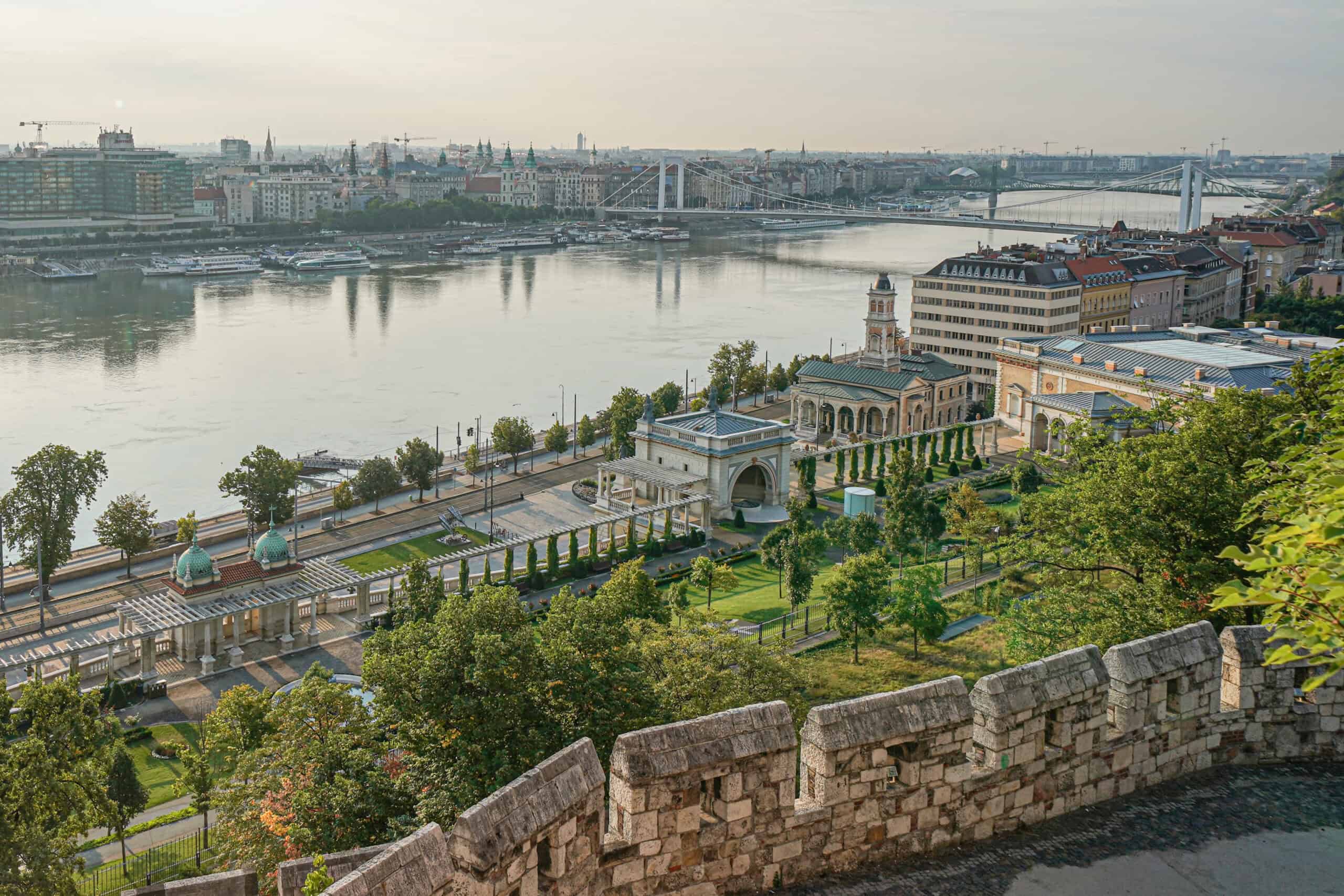
Located at the foot of Buda Castle, the Várkert Bazár (Castle Garden Bazaar) is a beautifully and newly restored neo-Renaissance complex overlooking the Danube. It was a royal garden and marketplace, today it’s a vibrant cultural space with galleries, cafés, and stunning terraces. Whether you’re there for an exhibition or just a riverside stroll, the views and architecture are absolutely worth it.
46. Erzsébet Square
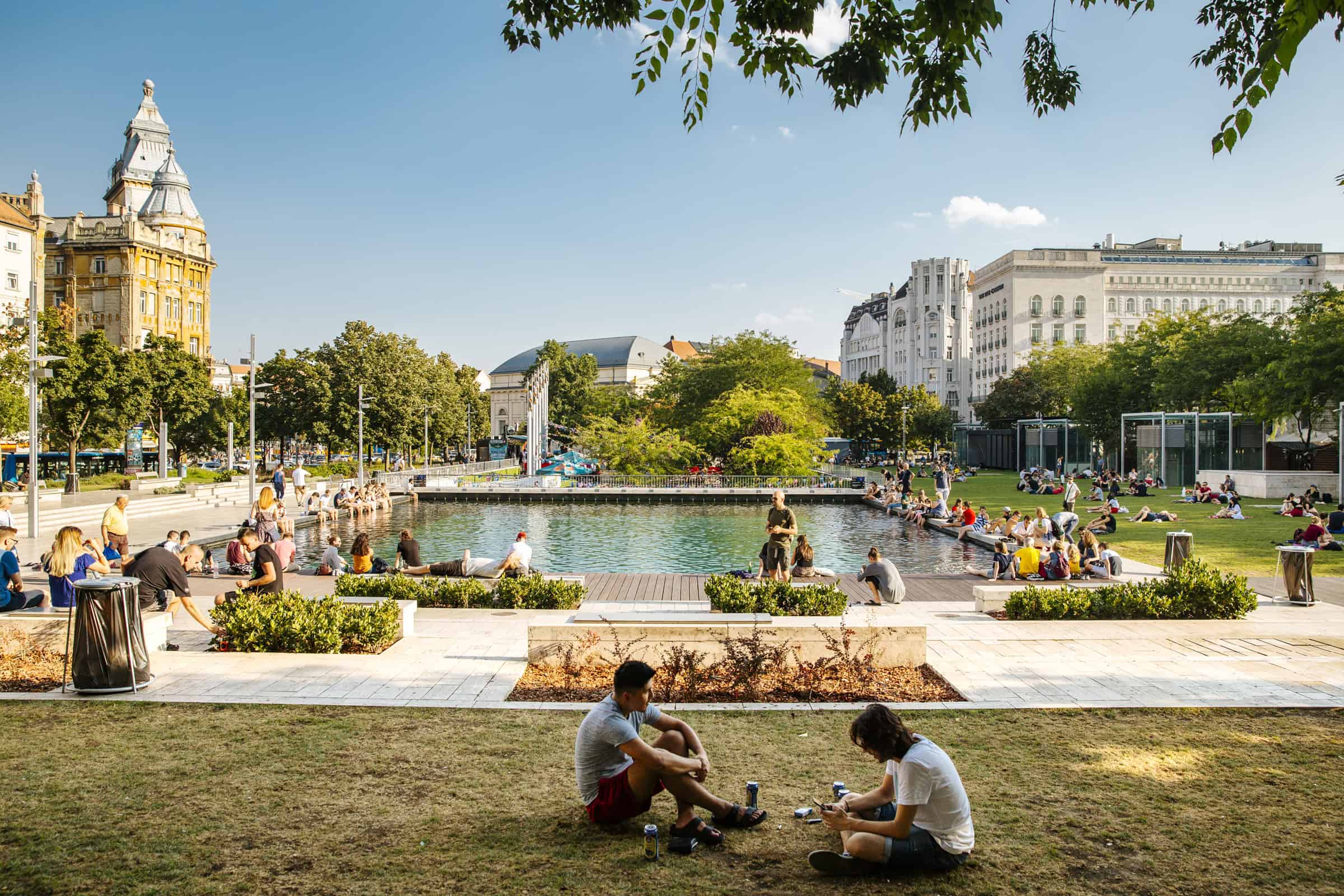
Erzsébet tér is the largest green area in the heart of Budapest, located next to Deák Ferenc tér. It’s a popular meeting place, especially among young people who love to sit around in the grass. Erzsébet tér is home to a skate park for those who are up for some active leisure time, and to Akvárium Klub where popular concerts and other musical events are held.
47. Budapest Eye
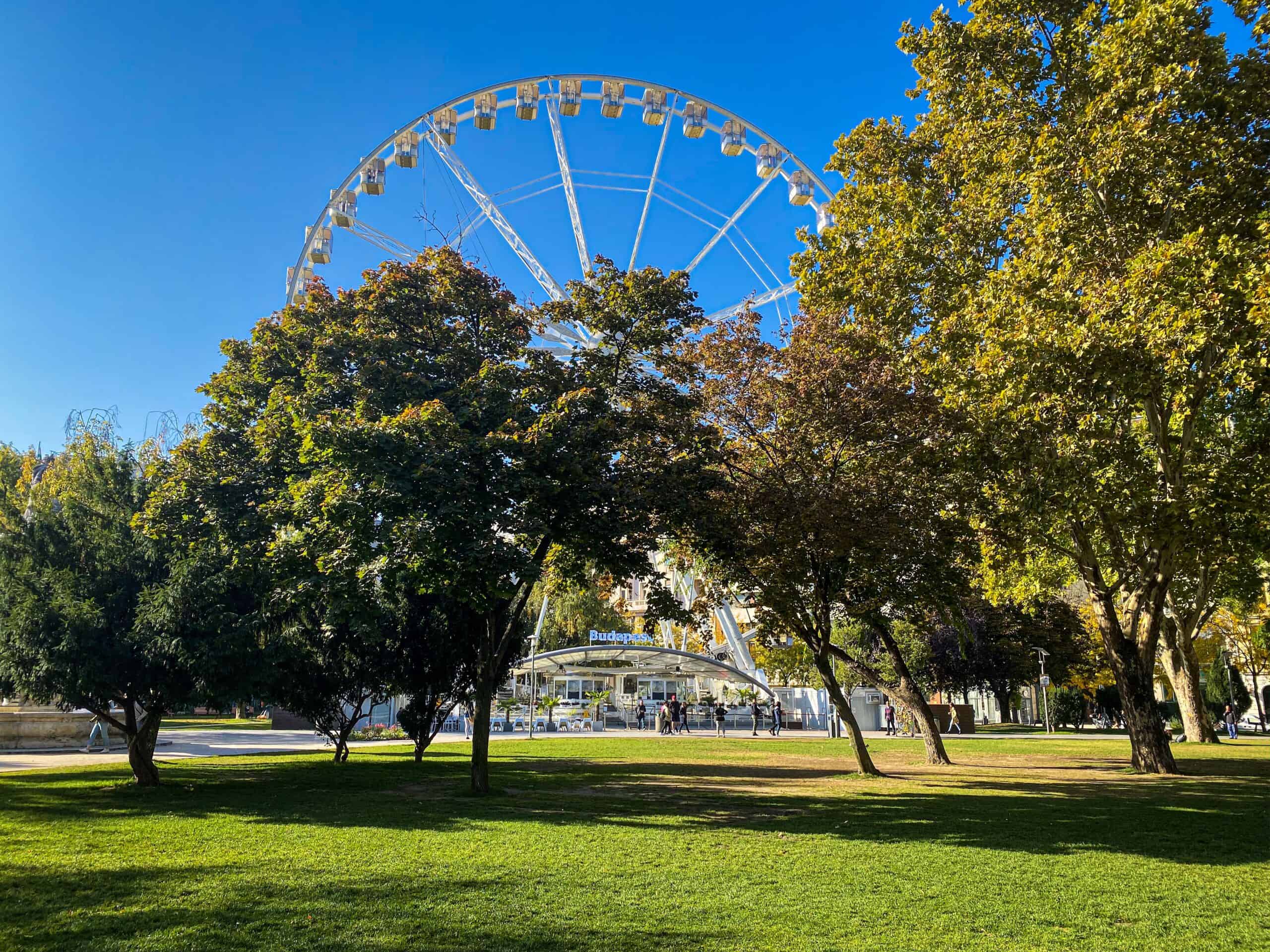
A smaller sibling of the London Eye, the Ferris wheel called Budapest Eye stands on Erzsébet tér in downtown Budapest, and it’s open every day of the year. Experience the panoramic view of both Pest and Buda from 65 meters high, and enjoy the comfort of the closed, air-conditioned cabins.
48. Christmas Market
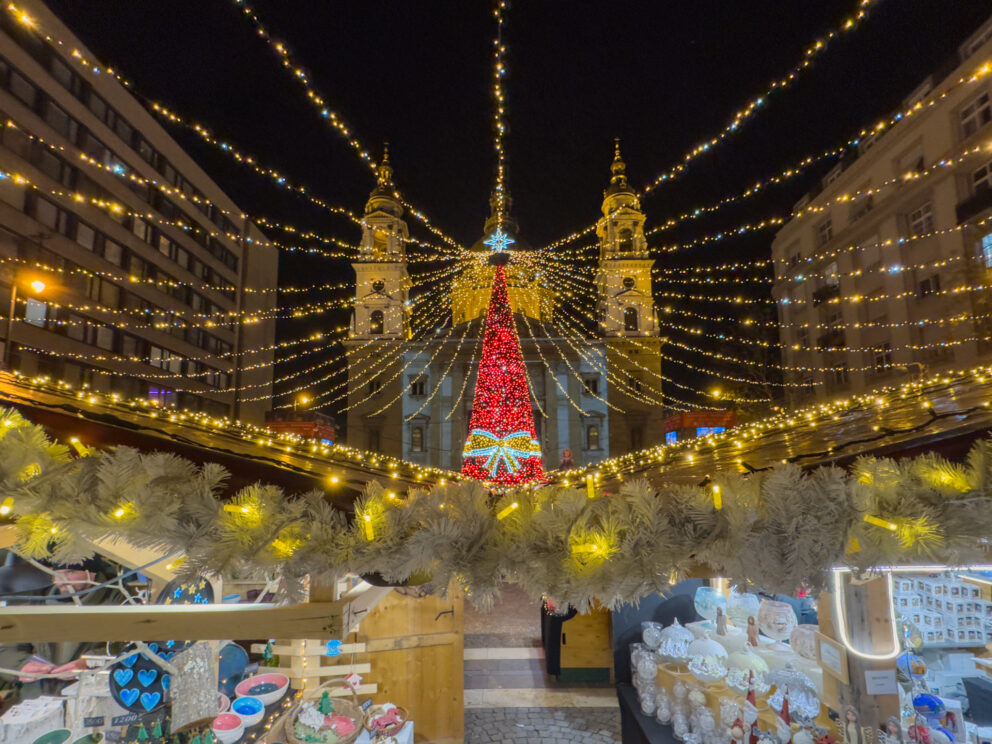
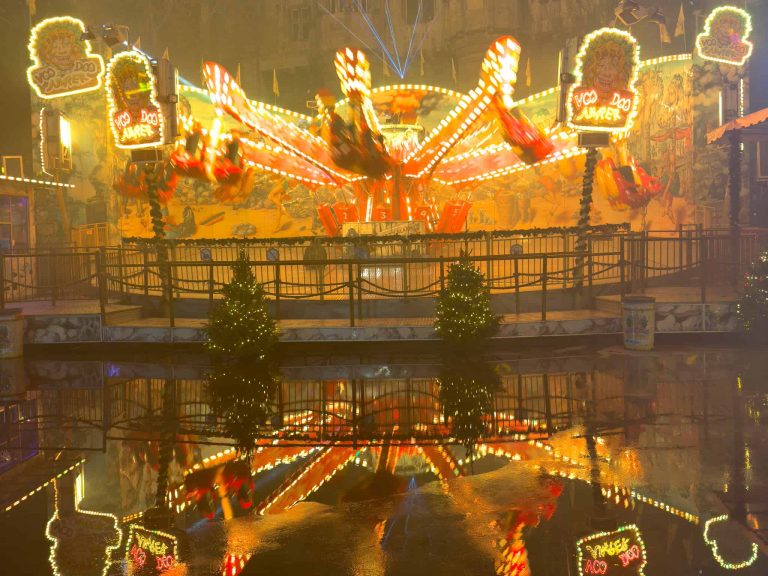
The most famous Christmas Market in Budapest can be found in Vörösmarty tér, at the final stop of metro line 1, but it’s just a few hundred meters away from Deák Ferenc tér. If you’re thirsty for a mulled wine or you’d like to experience gastronomical wonders from all over the country, this is absolutely for you.
49. Metro Line 1
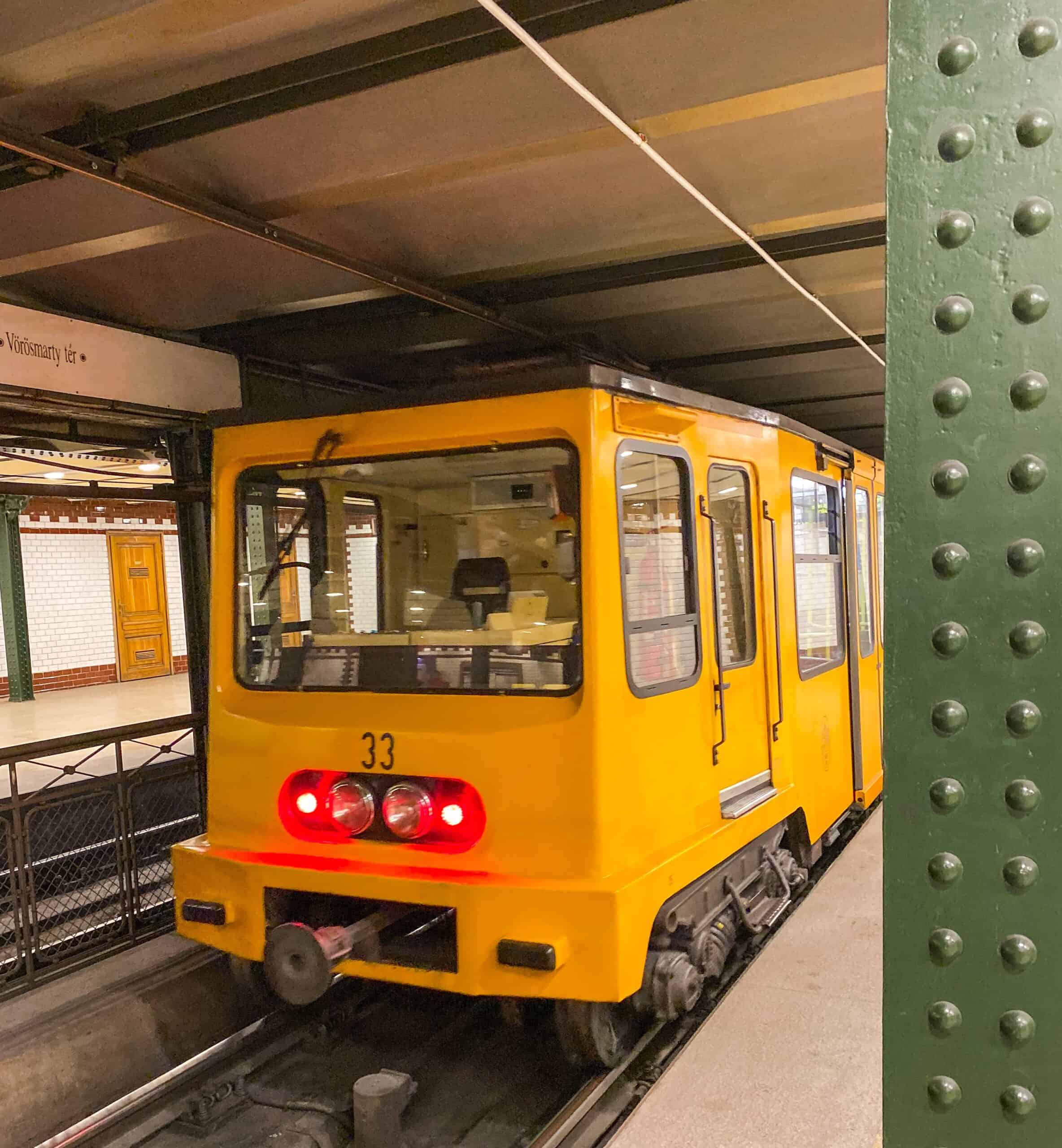
Opened in 1896, the 1000th birthday of Hungary, this was the second metro line in the world that connected Vörösmarty tér and Mexikói út stations. It mostly runs under the historic Andrássy út, and its stations are much closer to each other than those of other metro lines. It became a World Heritage Site in 2002, just a few years after the whole line and the carriages were renovated.
50. Szabadság Square
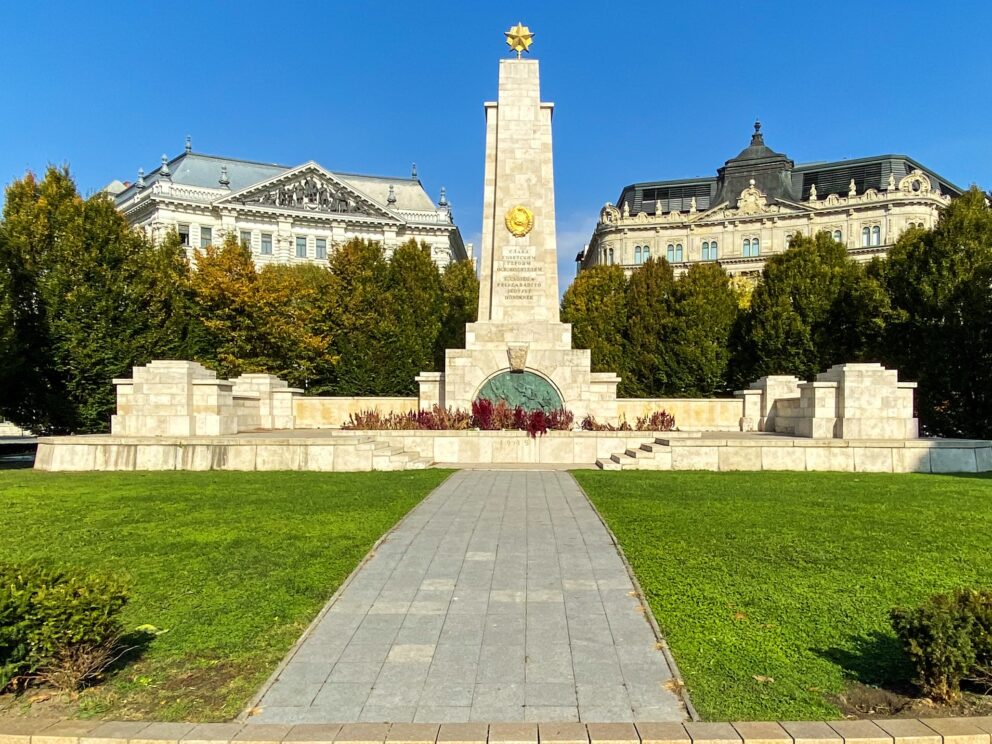
Szabadság tér is a huge square in the middle of the 5th district, right in the heart of the diplomatic quarter. Its name is Liberty square in English, and it’s a reference to the Hungarian Revolution of 1848/49. The square is home to several festivals throughout the year, like the Beer Festival or the BelFeszt (Downtown Festival). It’s within walking distance from metro line 3’s Arany János utca station.
51. City Park
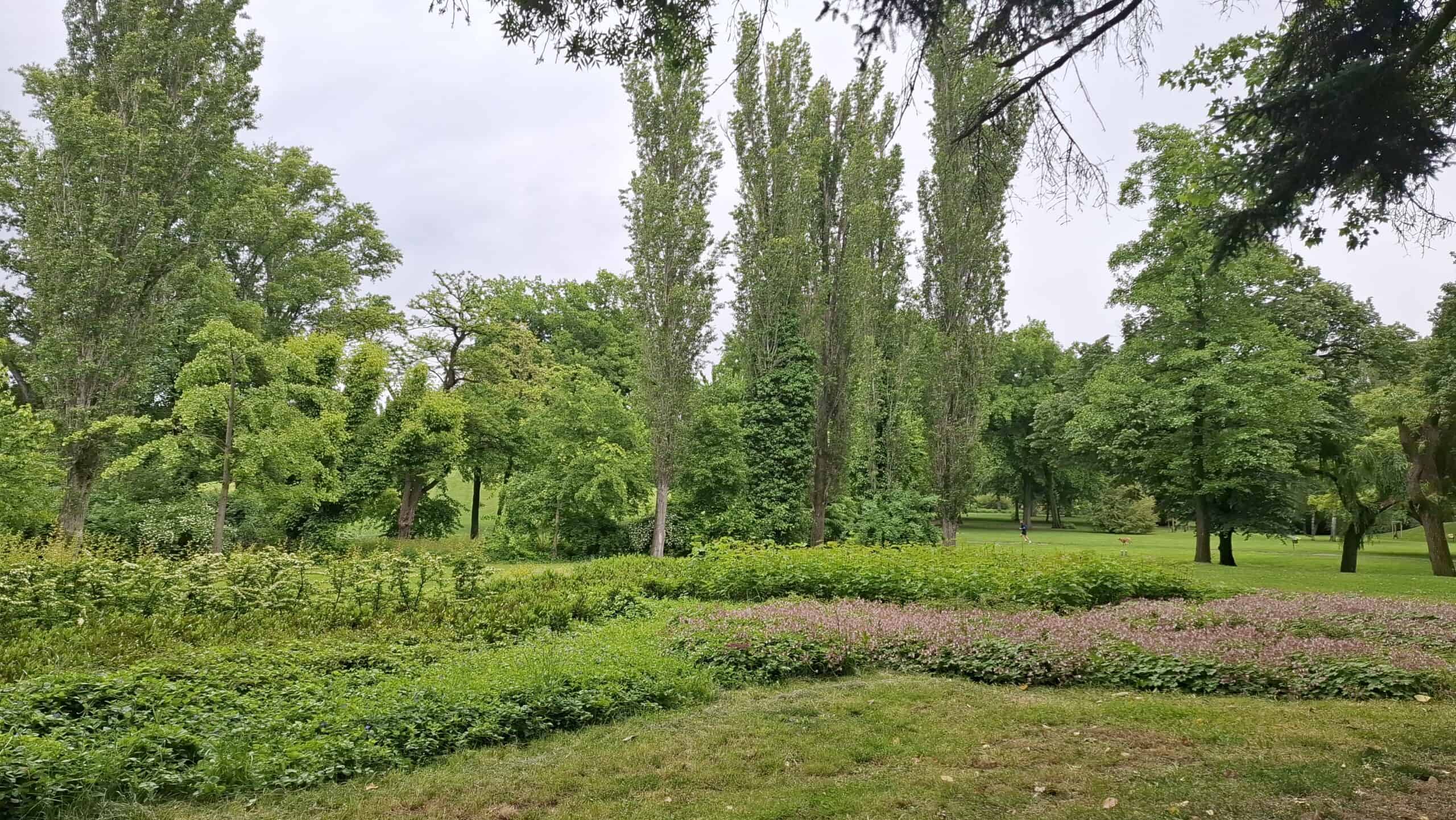
Városliget (City Park) is the second largest park in Budapest, located in the 14th district. It’s a popular recreational area and cultural center, and some parts are currently under reconstruction. During summer you can go pedal boating on the lake, and during winter you can go ice skating and drink mulled wine by the rink.
52. Budapest Zoo & Botanical Garden
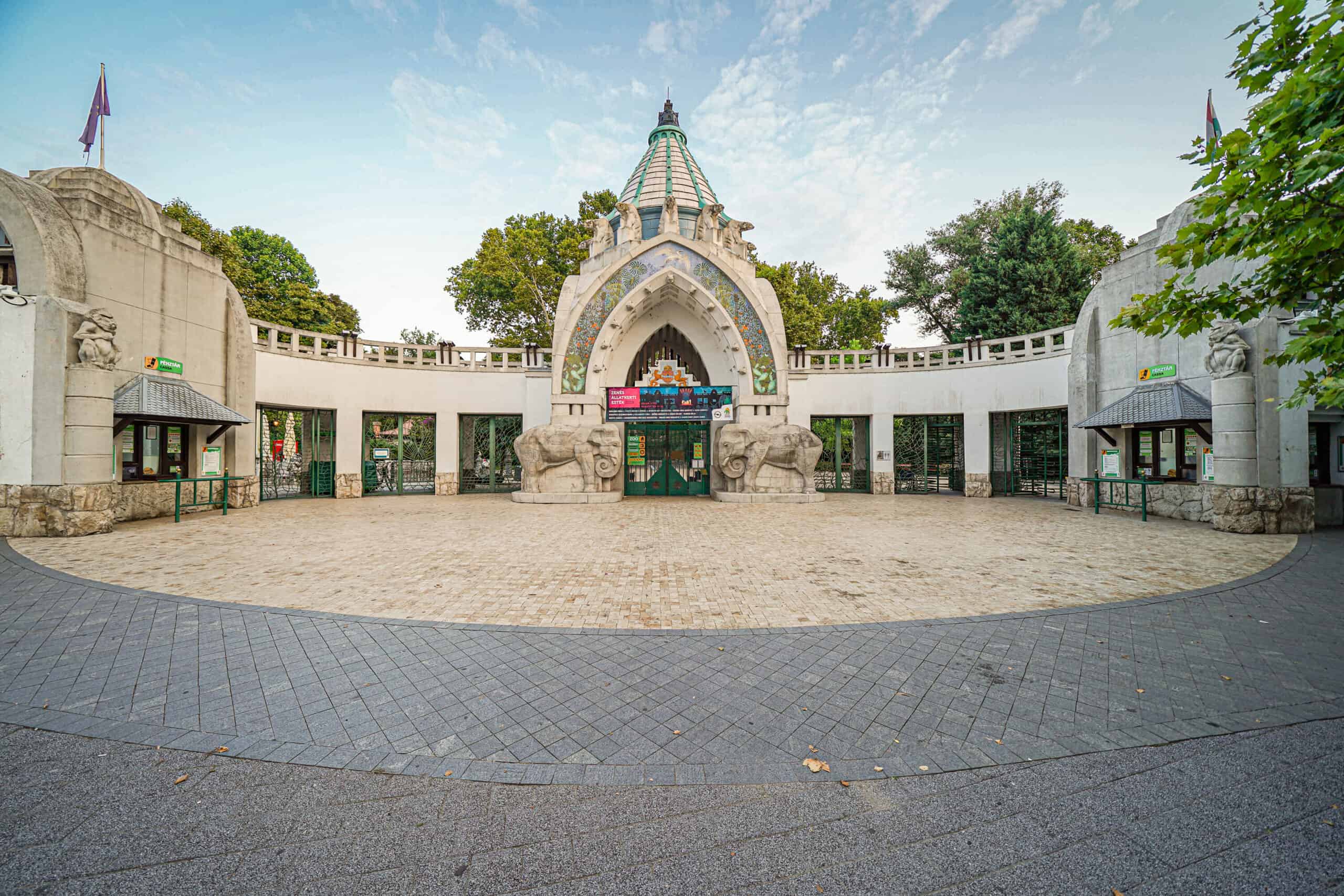
Located in the northern part of City Park, Budapest Zoo is just a stone’s throw away from Heroes’ Square, and thereby metro line 1. It was founded in 1866 and since then it has become one of the most popular venues with more than 1 million visitors every year. If you’d like to visit Budapest Zoo, it’s recommended to set aside a whole day, especially if you arrive with kids – they’ll have the chance to pet several animals for hours.
53. Vajdahunyad Castle
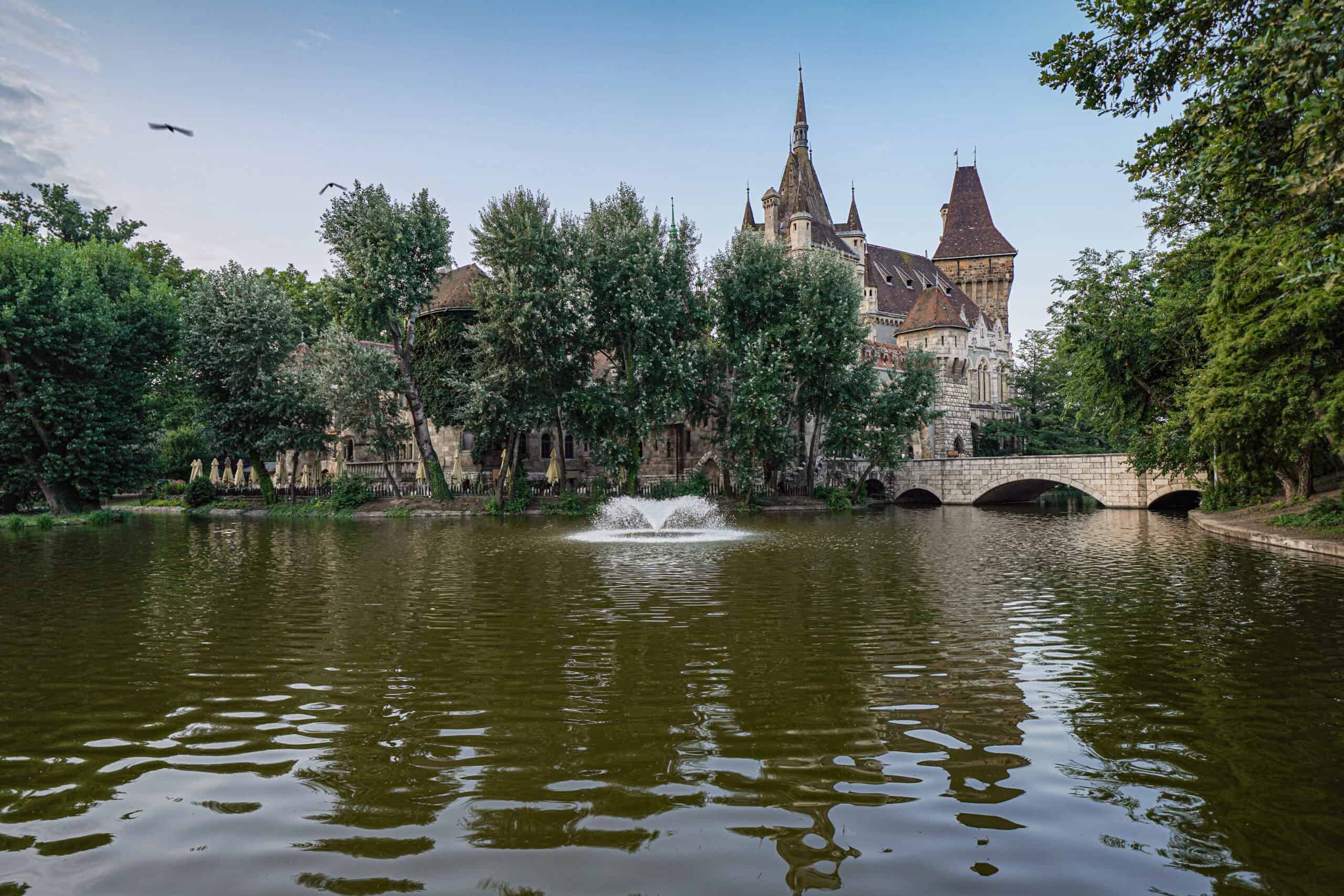
It’s a replica of the Castle of Vajdahunyad (located in Transylvania) in the heart of City Park, close to Heroes’ Square and metro line 1. It was originally a temporary wooden building, aiming to showcase the main features of Hungarian architecture, but it became so popular, they decided to build a permanent version. It stands on an island and can be reached via four bridges.
54. Boating and pedal boat in City Park
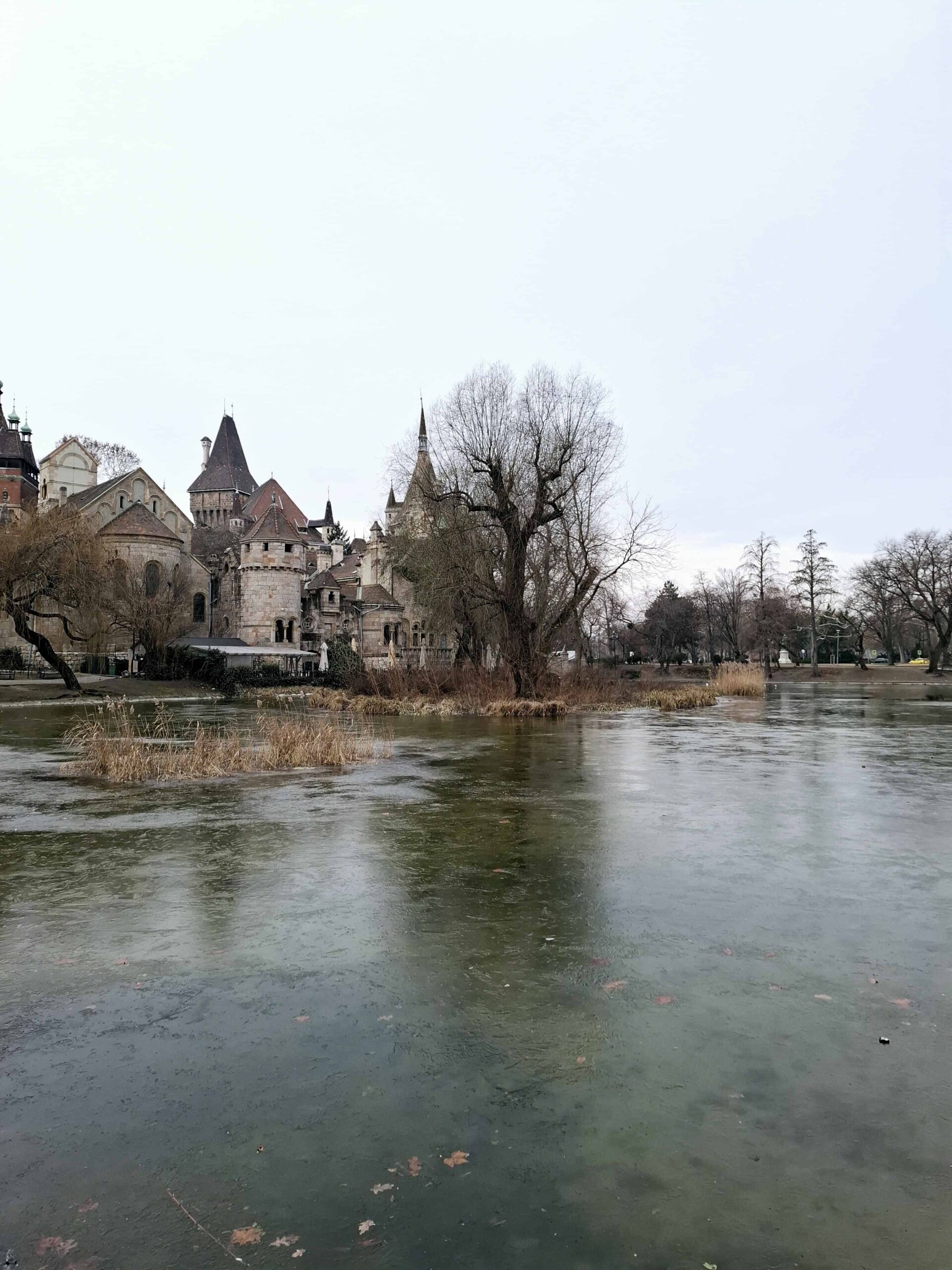
Right behind Heroes’ Square, on the lake of City Park there’s a special recreational opportunity waiting for you. Enjoy the green area surrounding you while rowing or pedal boating on the lake, and have a unique glimpse of Vajdahunyad Castle. It’s only available during summer, though, since come wintertime, a large part of the lake is converted to a skating rink.
55. Ice-skating in City Park
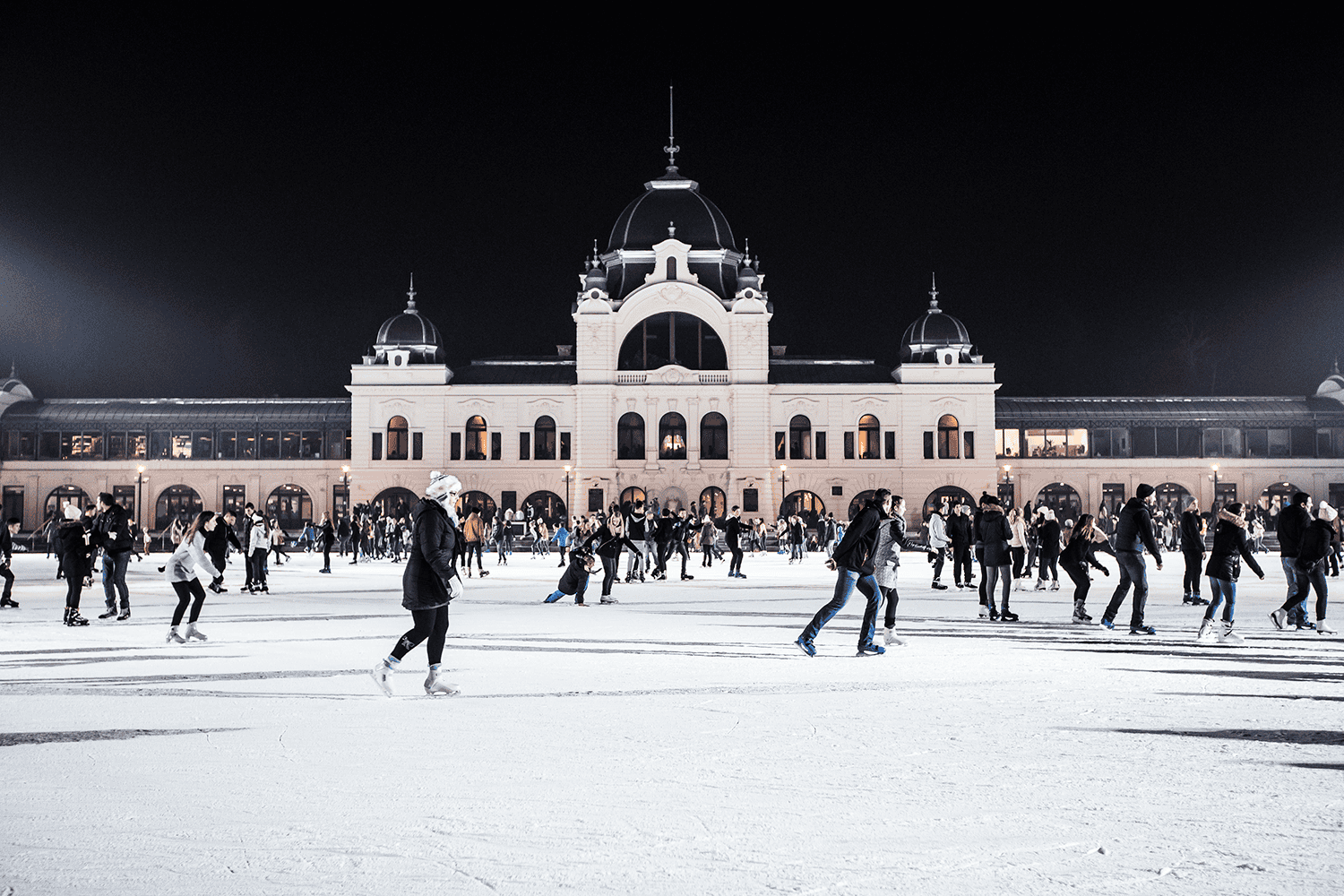
If you’re looking for a truly fun time during winter in Budapest, ice skating in City Park is definitely for you. Just a few meters away from Heroes’ Square, you can rent a pair of skates and skate on the artificial ice until dark. If you’ve exhausted yourself, have a mug of mulled wine and enjoy the laughter from the rink.
56. Széchenyi Thermal Bath

Europe’s largest medicinal bath, the Széchenyi thermal bath is located in City Park, and it’s easily reachable by metro line 1. It has 3 outdoor pools and 15 indoor pools, and several saunas and steam chambers. Its thermal water comes from two springs and they contain sulfate, calcium, magnesium bicarbonate, metaboric acid and fluoride. The Széchenyi Thermal bath has its own stop on metro line 1 (Széchenyi fürdő).
57. Gellért Thermal Bath
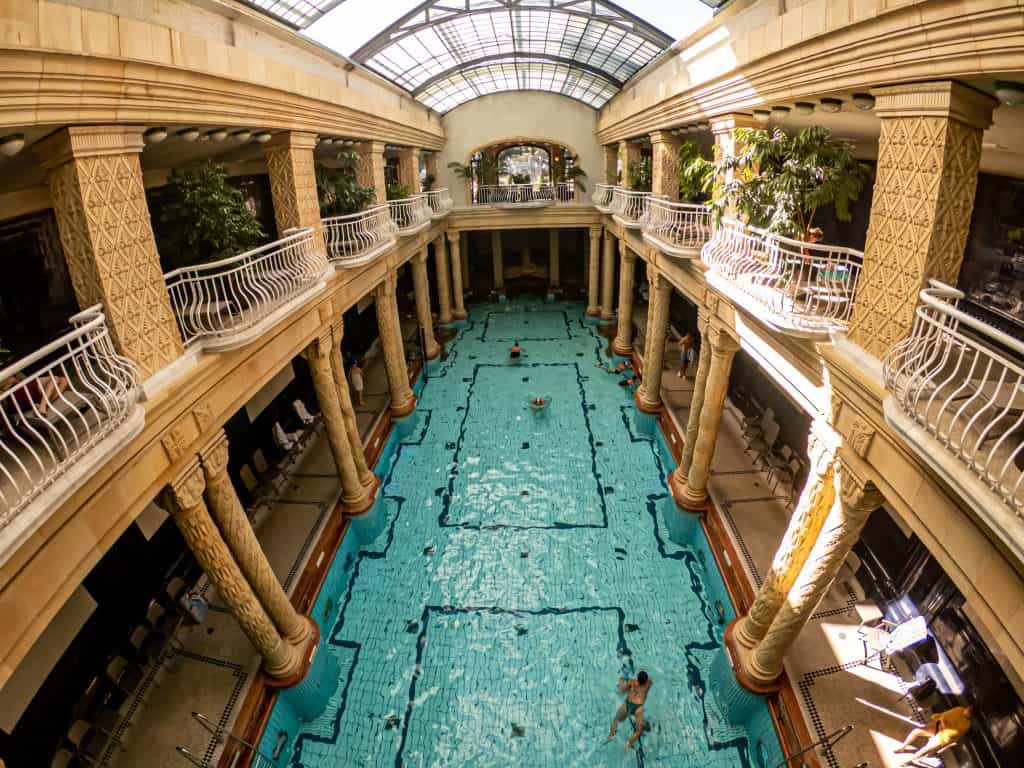
The origins of Gellért Thermal Bath can be traced back to the 13th century, but the current building was only built at the beginning of the 20th century in Art Nouveau style. It’s located in the same building as Danubius Hotel Gellért on Szent Gellért tér, and it has had such famous visitors in the past, like Juliana, former Queen of the Netherlands, Yehudi Menuhin and Richard Nixon. The thermal water of Gellért Bath is used to treat degenerative joint illnesses, spine problems, asthma and chronic bronchitis.
58. Rudas Bath
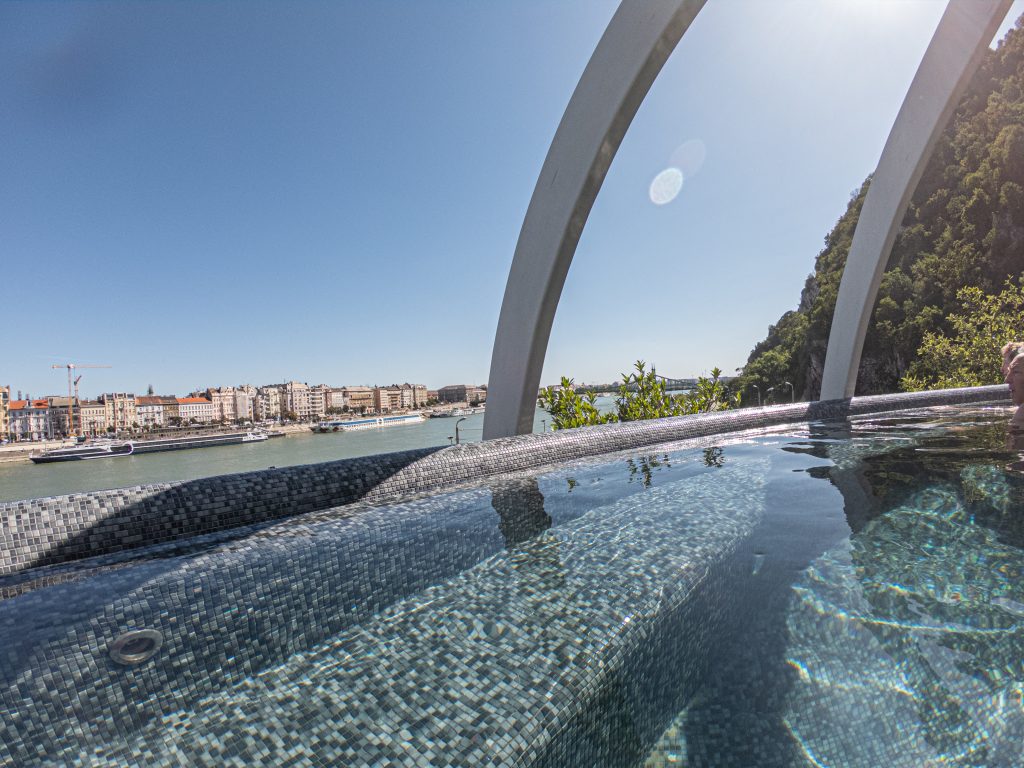
Rudas Bath is a famous Turkish bath in the 1st district, right at the Buda side of Erzsébet bridge. It was built in the mid-16th century, during the Ottoman rule in Hungary. Parts of the bath’s building were damaged in World War II, but they were later restored.
59. Király Thermal Bath

Király Thermal Bath can be found close to the bank of the Danube, on Fő utca in the 2nd district. It was built in the 16th century, during the Ottoman rule, and it still has some features of a Turkish bath. Its thermal water contains sodium, calcium, magnesium bicarbonate, sulphate-chloride and fluoride ion, and comes from the same springs that feed Lukács Bath. Kiraly Bath is currently (in 2025) closed due to renovation.
60. Lukács Bath
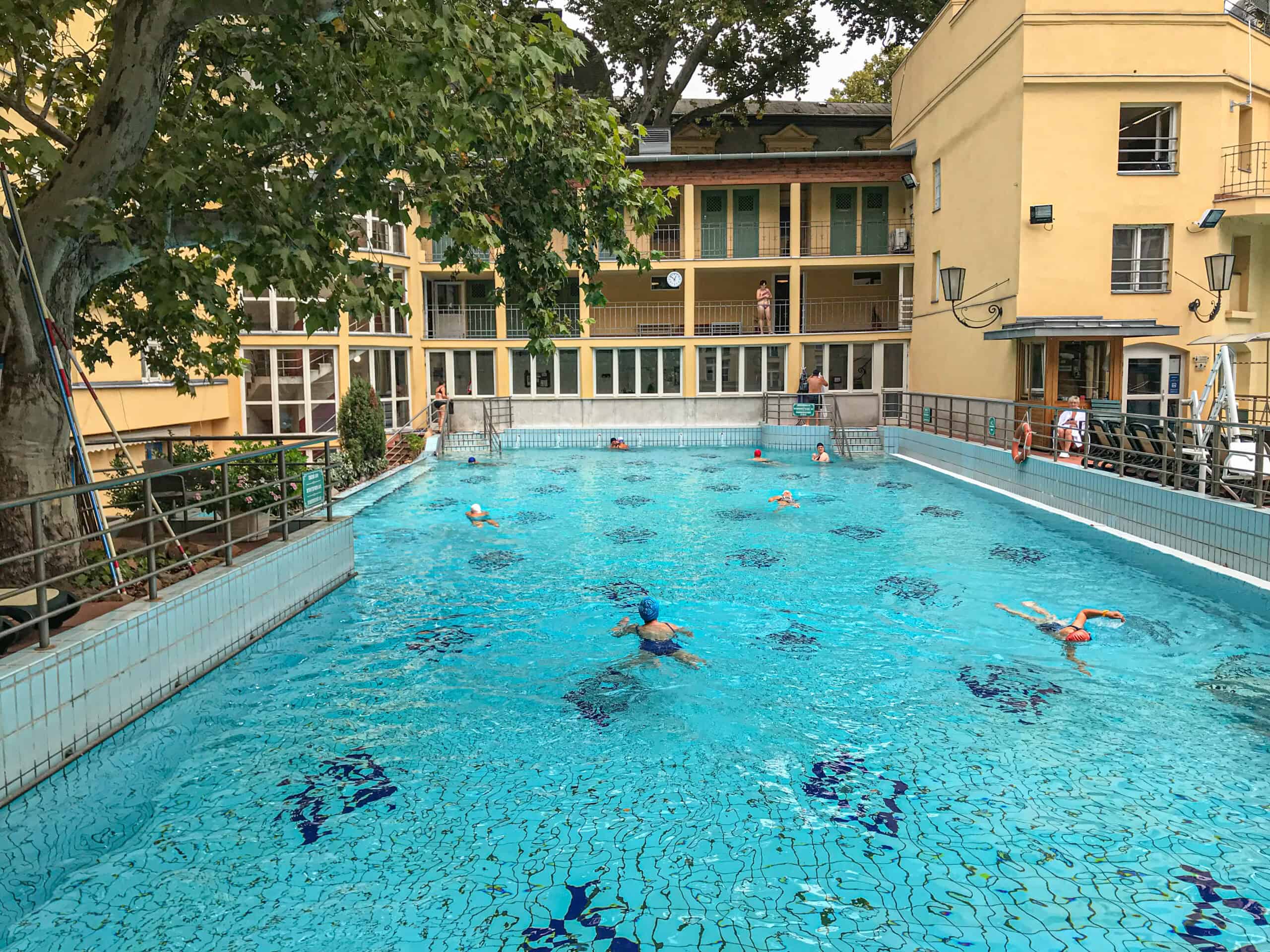
Lukács Bath is one of the oldest thermal baths in Budapest, first used in the 12th century. The spa complex built in the late 19th century was named after Saint Luke, and it’s water is heated by natural hot springs. Don’t get confused by the historic naming of the pools, like men’s swimming pool and women’s swimming pool, as all areas are equally accessible by both men and women. It can be reached by trams 19 and 41, and it’s also a short walk away from the tram 4-6 stop at the Buda side of Margaret bridge.
The Lukács Baths is one of the venues for the Budapest Spa Party, which you shouldn’t miss.
61. Dagály Thermal Baths

Dagály Thermal Bath is fairly new compared to other thermal baths in Budapest, its thermal water is provided by an Artesian well and the same hotspring that feeds the Széchenyi Bath. Dagály is the largest bath of the Pest side, suitable to host around 35,000 visitors.
62. Veli Bej
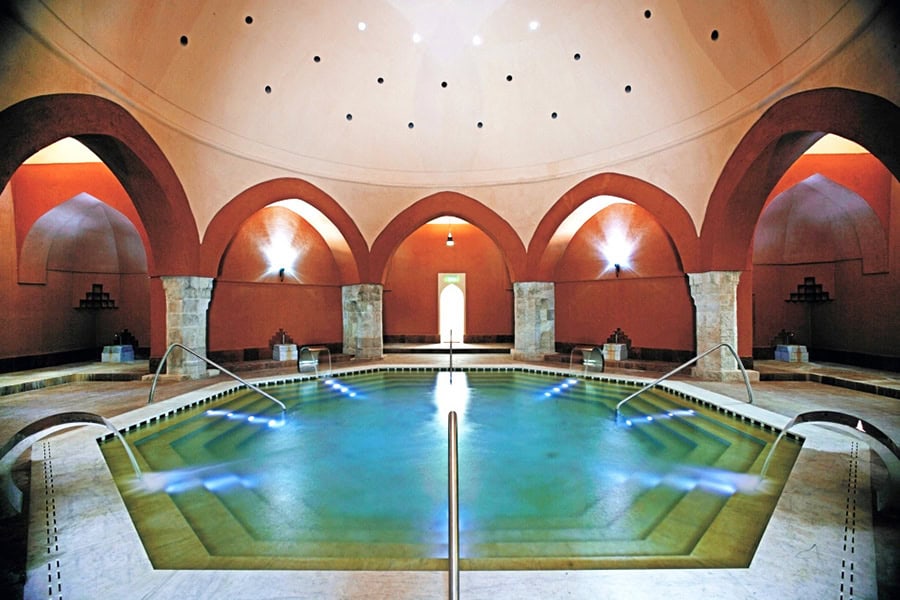
Veli Bej (Bej or Bey meaning “chieftain” in Turkish) is one of the amazing Turkish baths Budapest has to offer. It was built during the Ottoman rule in the 16th century, and has 5 pools, wellness facilities such as saunas and steam cabins, and special services, like underwater massage. Its largest pool is unique, as it’s the largest pool in Central Europe.
63. Paskál Spa & Swimming Pool
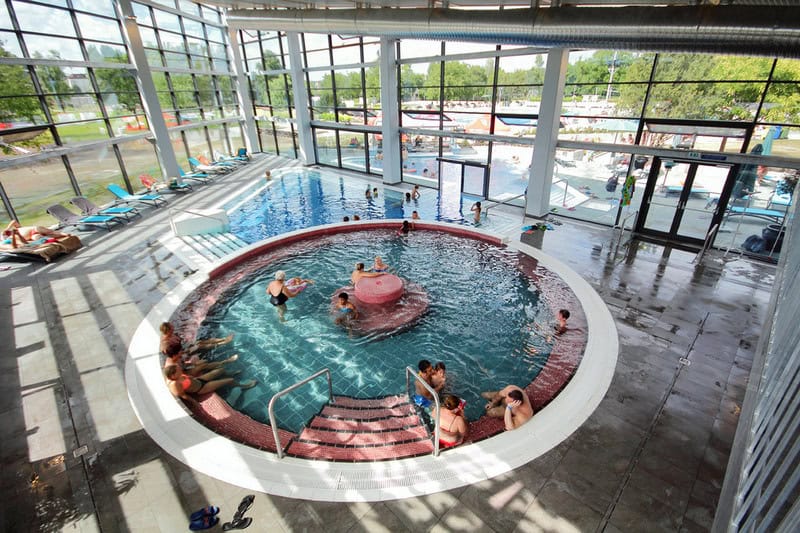
Paskál Spa and Swimming Pool is the youngest bath in Budapest, opening in 1989. It was renovated in 2016 and now it’s open for visitors all year. It has a special Finnish sauna, and a relaxation pool for those that are longing for a bit of peace and quiet. You can get there by trolley buses 77 and 92, or by tram line 3 and a short walk.
64. Aquaworld

Aquaworld is a stunning aqua park complex with water slides, indoor and outdoor pools, a water walking ball, a wave pool, surfing, and diving – all with a mesmerizing, Inca-inspired interior design. And being a joint venture with Aquaworld Resort Budapest, a 4-star spa hotel that’s more than perfect with kids as well, it can also cover your accommodation needs if you want – although we’re not going to lie: it’s kind of far from the city center. Either way, it’s a wet heaven for the whole family as they do not only have many kid and infant activities, but they also have their own babysitting service if you wish for some privacy with your significant other.
65. Budapest Park

Being the largest open-air nightclub and concert venue in Europe, Budapest Park is the top dog of the capital’s nightlife. With a capacity of 10.000 visitors, this magnificent wooden creature has already given its stage to Faithless, Die Antwoord, Marilyn Manson, Parov Stelar and Sum 41 – just to mention a few names. High-quality sound and light system, and an enormous LED wall are just minor technicalities beside the fact that here you can party beneath the stars all night long. Fresh air just makes everyone loco, don’t you think?
Pro tip: If you’re looking for real nightclubs in Budapest, read our article on the topic.
66. Pálvölgyi Cave
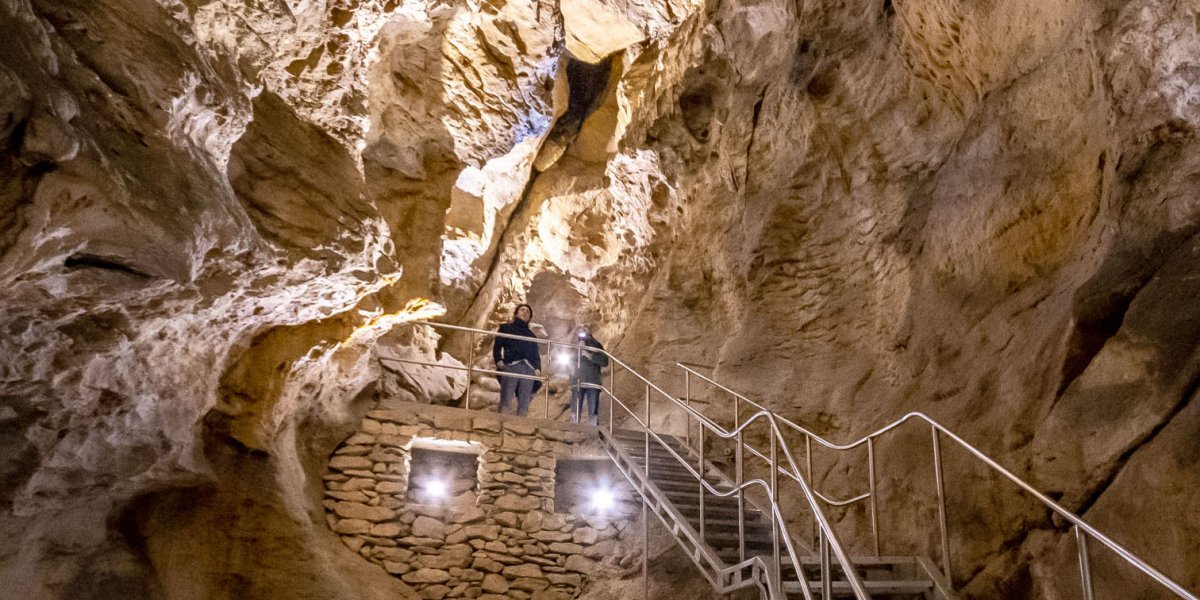
At 7200 meters, Pálvölgyi Cave is the longest cave in Buda Hills, the third longest in the country, and it became a highly protected natural preservation area in 1944. The 500-meter tourist route was recently renovated and adjusted not long ago to fit the highest modern requirements, so it’s as safe as caves get, too!
67. Children’s Railway in Hűvösvölgy

This shrunken railway road is like any other railway with ticket offices, diesel locomotives, signals, switches and a timetable. The only difference is that this 11,7018 km long narrow gauge railway line is run by children. You wouldn’t rob your kids of the opportunity to feel like real Hungarian train ticket conductors, would you? Located on the Buda Hill near the lookout towers, forest playgrounds, and several other sights, it can be an ideal part of a whole day hiking activity.
68. Andrássy Avenue

With its impressive neo-renaissance mansions and townhouses, Andrássy is one the most well-known avenues of Budapest, no wonder it’s been a World Heritage Site since 2002. If that weren’t enough, this broad boulevard is also home to the Hungarian State Opera House, the House of Terror, and the College of Fine Arts, and it crosses the “Pest Broadway” junction before it ends in the Heroes Square. Moreover, many world-famous shops, lovely cafes, exclusive restaurants, theatres, embassies, and luxury boutiques are situated on Andrássy Avenue. It’s easily accessible by Metro line 1, several bus lines and trolleys.
69. Váci Street
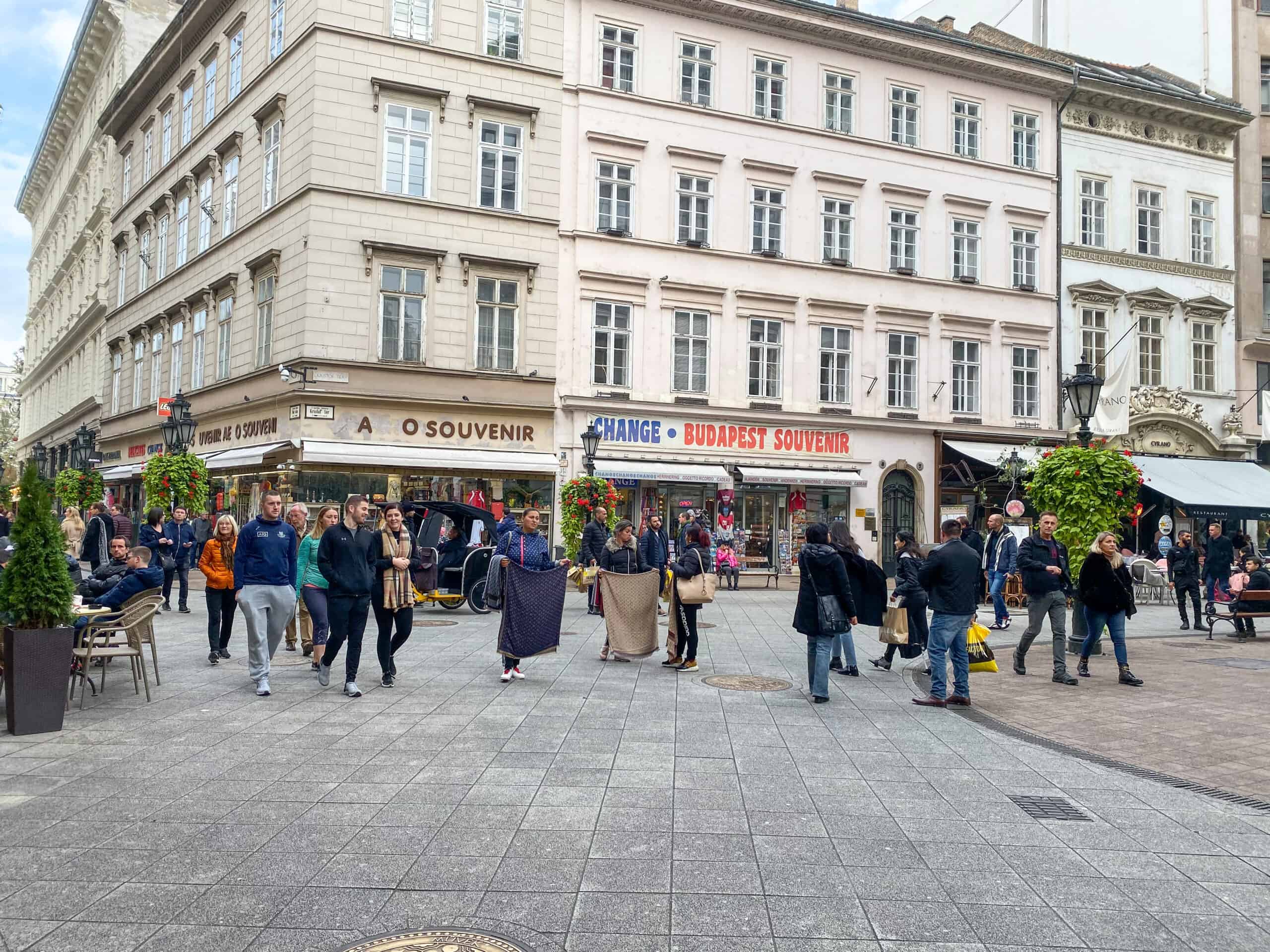
Váci street could be called the Hungarian The Champs-Élysées without any guilt. Being the fashion street of Budapest, it has all the fancy and not-that-fancy shops and luxury boutiques you would expect of it. It also has many restaurants, cafes and tourist shops, for example the famous Gerbeaud Confectionery, which is worth a visit. Vörtösmarty square is on the northern part of the street and is packed during winter season as it’s the home to the Budapest Christmas Market.
70. New York Café & Salon Restaurant

Built in 1894 by the New York Life Insurance Company, the building of the New York Palace initially served as the local head office of the firm. The famous New York Café on the ground floor was a meeting point for the biggest figures of Hungarian literature and poetry for a century. Nowadays, it’s still one of the most elegant and luxurious Hungarian restaurants in Budapest and it gives home to many prestigious events.
71. Gresham Palace
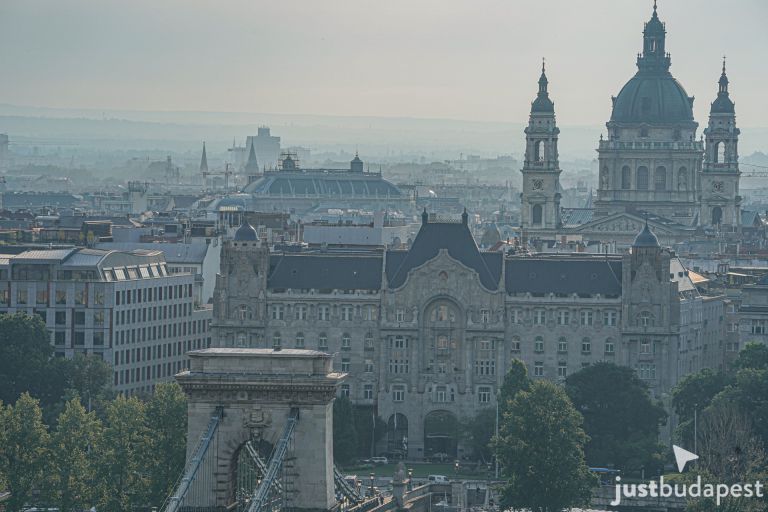
Gresham Palace is a magnificent, Art Noveau feather in Budapest’s cap. It was built by Gresham Life Assurance Company in 1906 to serve as an office and apartment building. After World War II it was occupied by the Red Army and was used for accommodation until 1990, which is when the Hungarian government presented the palace to the city of Budapest. In 2004 it was renovated to be suitable for one of the most prestigious hotel chains in the world, the Four Seasons. Facing the Chain Bridge, it is definitely a characterizing part of Budapest’s cityscape.
72. Great Market Hall / Central Market Hall
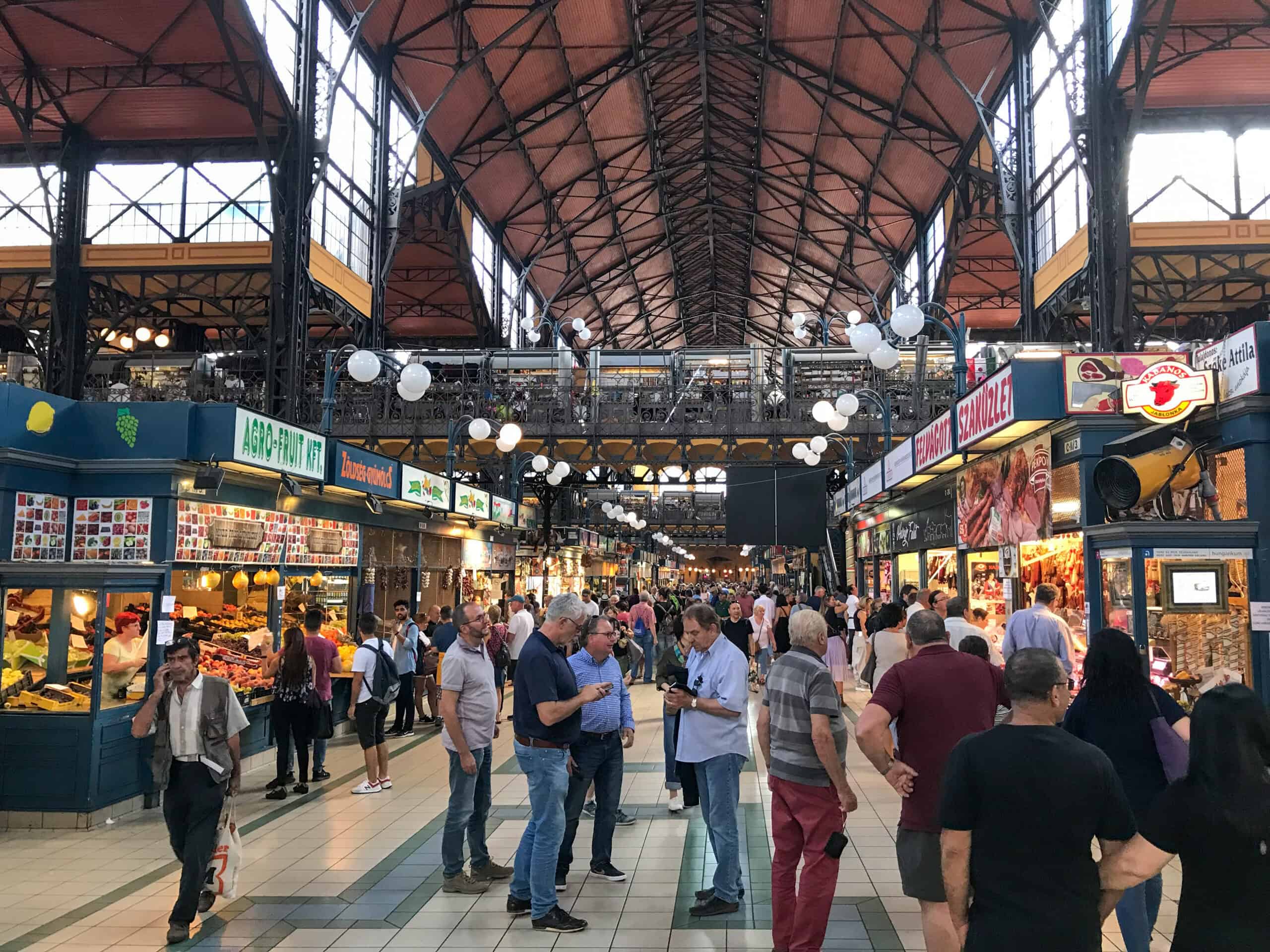
Great Market Hall isn’t just great in its name – it’s the largest and oldest market building in Budapest, which was built in 1897, after nearly 40 years of contemplation. The 10000 sqm metal building was designed by Samu Pecz with neo-gothic elements on the front gate and roof, and with colorful Zsolnay tiling. Apart from providing the citizens of Budapest with fresh goods to this day, the market hall has also become a popular tourist attraction. No surprise, though, as its gigantic size and architecture mixed with the charm of indoor markets give it an unmatched atmosphere.
Pro tip: The Great Market Hall is located in central district of Budapest. Check out what else you can find here!
73. Wine tasting

Wine tasting is a sensory evaluation of wine using specified methods to describe the detected flavors, aromas and other characteristics. Hungary is the wine capital of Central Europe, so be sure you don’t leave Budapest without going to a fancy wine tasting event. With 22 wine regions, we have more than enough categories for you to try, whether you’re someone who just enjoys a glass of red with your dinner once in a while, or a real sommelier type who recognizes a quality Pinot Grigio from a mile away.
74. Beer tasting
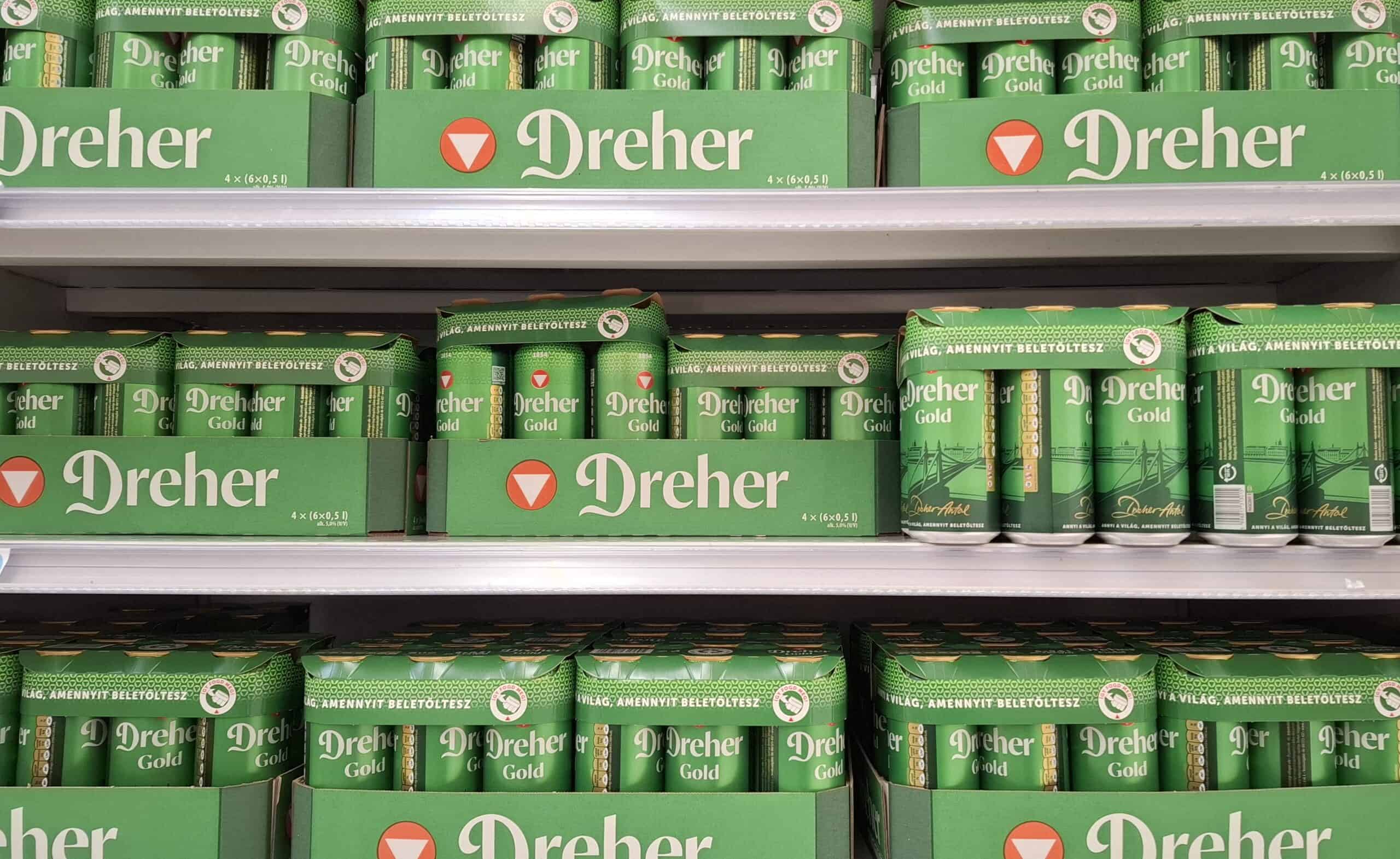
Whatever beer does, it does it well. Even before recent years when it became hip, this plain mix of water, barley, hops and yeast had always been known to be one of the most popular drinks in the world – and that’s including even non-alcoholic beverages. Then came the craft beer revolution, and IPA, APA, lager, ale, pilsner, wheat bear, stout, and an endless number of other beer types witnessed an unprecedented level of fanaticism.
Following in the footsteps of small brewing business, even commercial brands took note of and adapted to this change in beer culture and started filling shelves with new fancy types of beer after a while. It’s exactly this shift that’s behind today’s hip beer tasting events, and Budapest boarded the hype train successfully. Check out our article on beer tasting to get some ideas.
75. Pálinka tasting
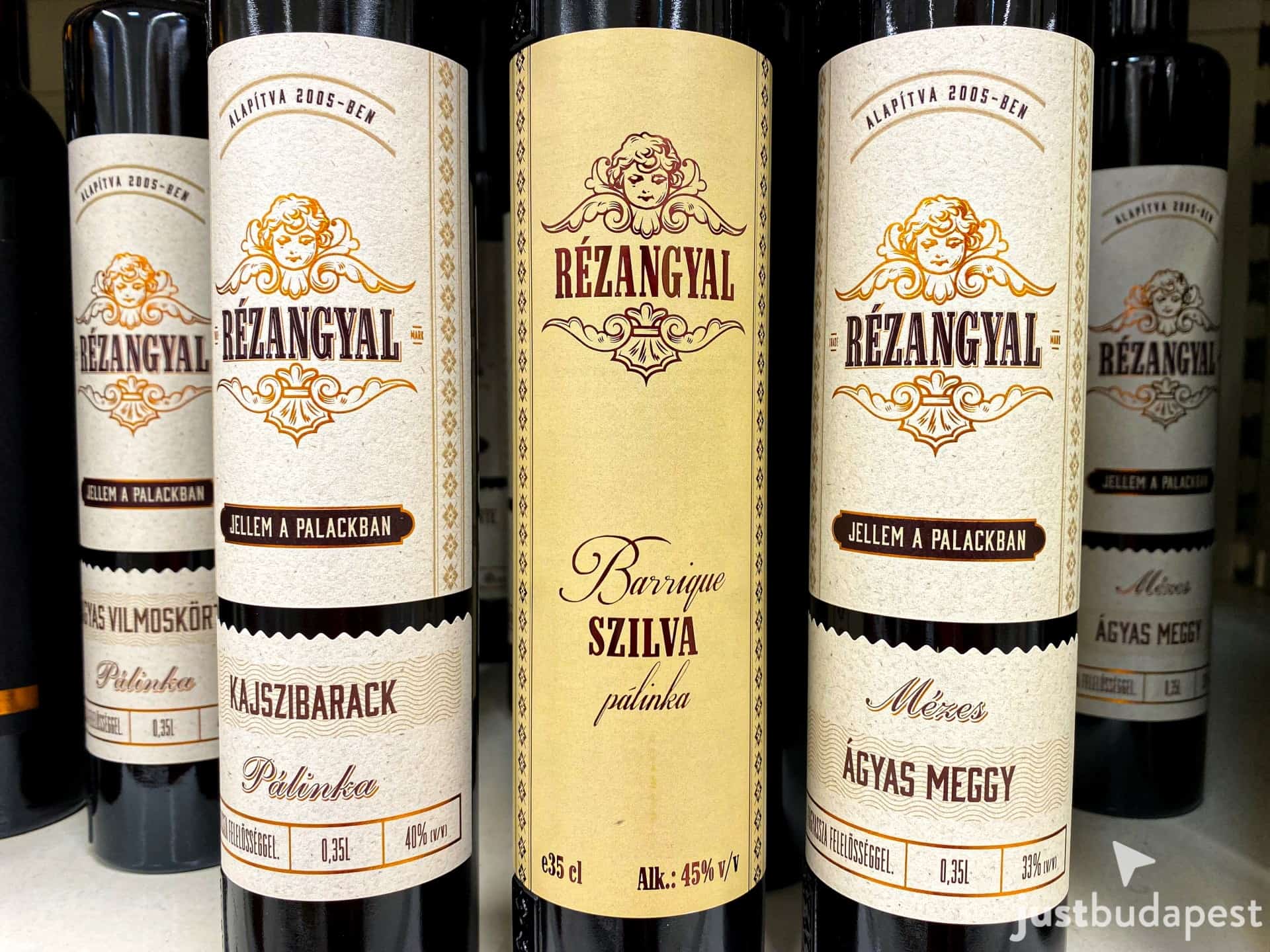
Pálinka is Hungary’s signature, traditional fruit brandy that can be made from basically any kind of fruit (sometimes even vegetables) and the combination of those. The tasting event itself is really similar to a wine tasting: you gather with fellow liquor lovers and go through many types of pálinkas coming from different regions and pálinka houses of the country. If you’d like to know more about pálinka, we recommend visiting the Pálinka Museum where you can participate in a tasting in place.
76. Zwack Unicum Museum
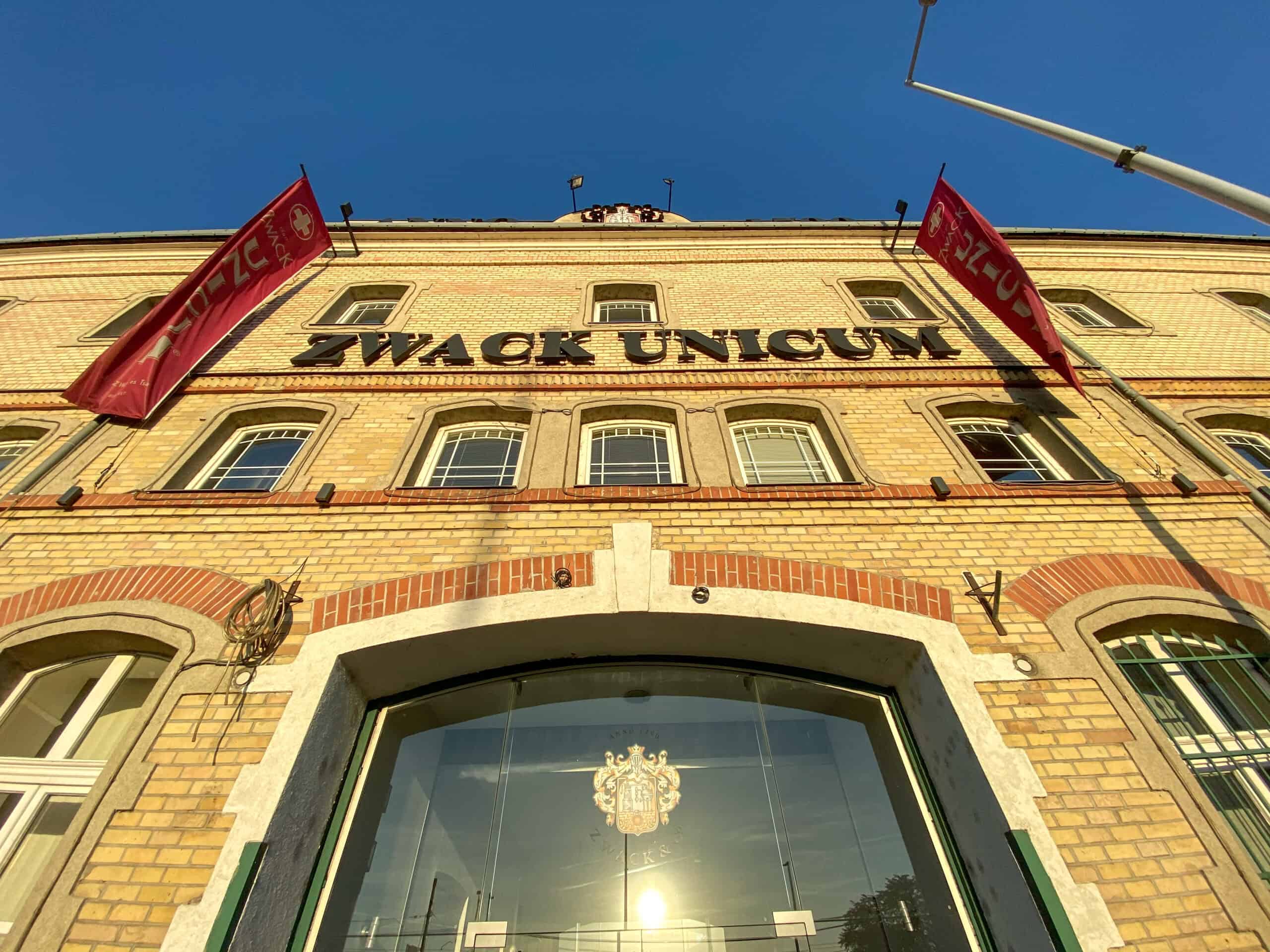
While we’re at unique Hungarian alcoholic beverages, we can’t leave Unicum unmentioned. This herbal liqueur is made from a secret blend of more than 40 different herbs and spices. The history of the nearly 230 years old Zwack company is anything but boring, so it was only logical they built their own museum. While at the venue, you can also purchase tickets for individual and group packages including film screening, a virtual tour to the old distillery and cellar, a tasting, and museum visiting with audio-guide – all available in English.
77. Rooftop bar crawl
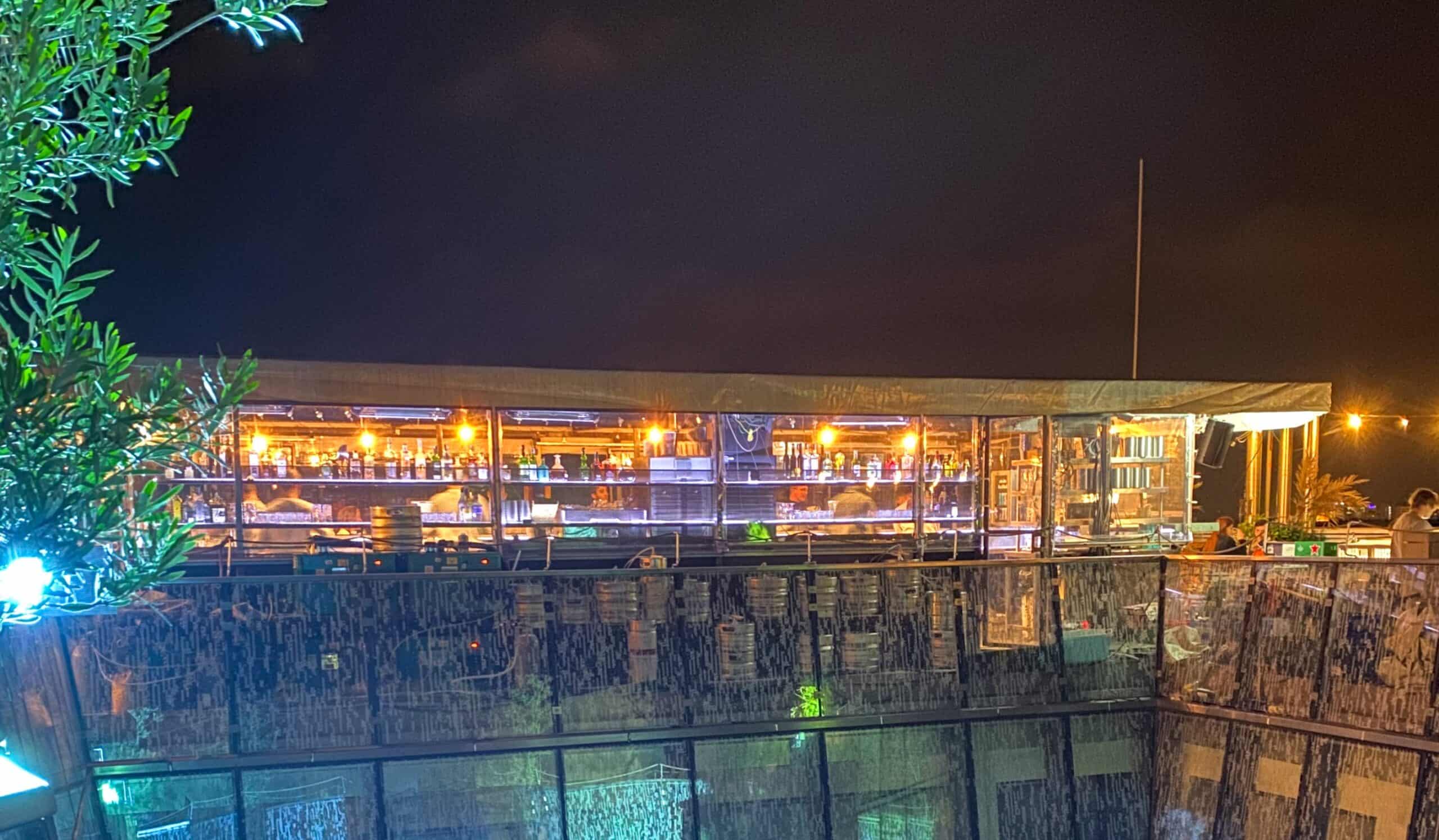
We’re sure you already heard of pub crawls. Why don’t you upgrade this experience by visiting various rooftop bars in one night? At one point, bar owners in Budapest must have realized that the city’s beautiful skyline is worth gazing at with drinks, because there sure isn’t a shortage of high-quality rooftop bars in Budapest today. Get lost in the beauty of the inner city from High Note Skybar or take in the panoramic views from 360BAR’s unique igloos where you can enjoy the view even in wintertime.text here.
78. Ruin pub crawl
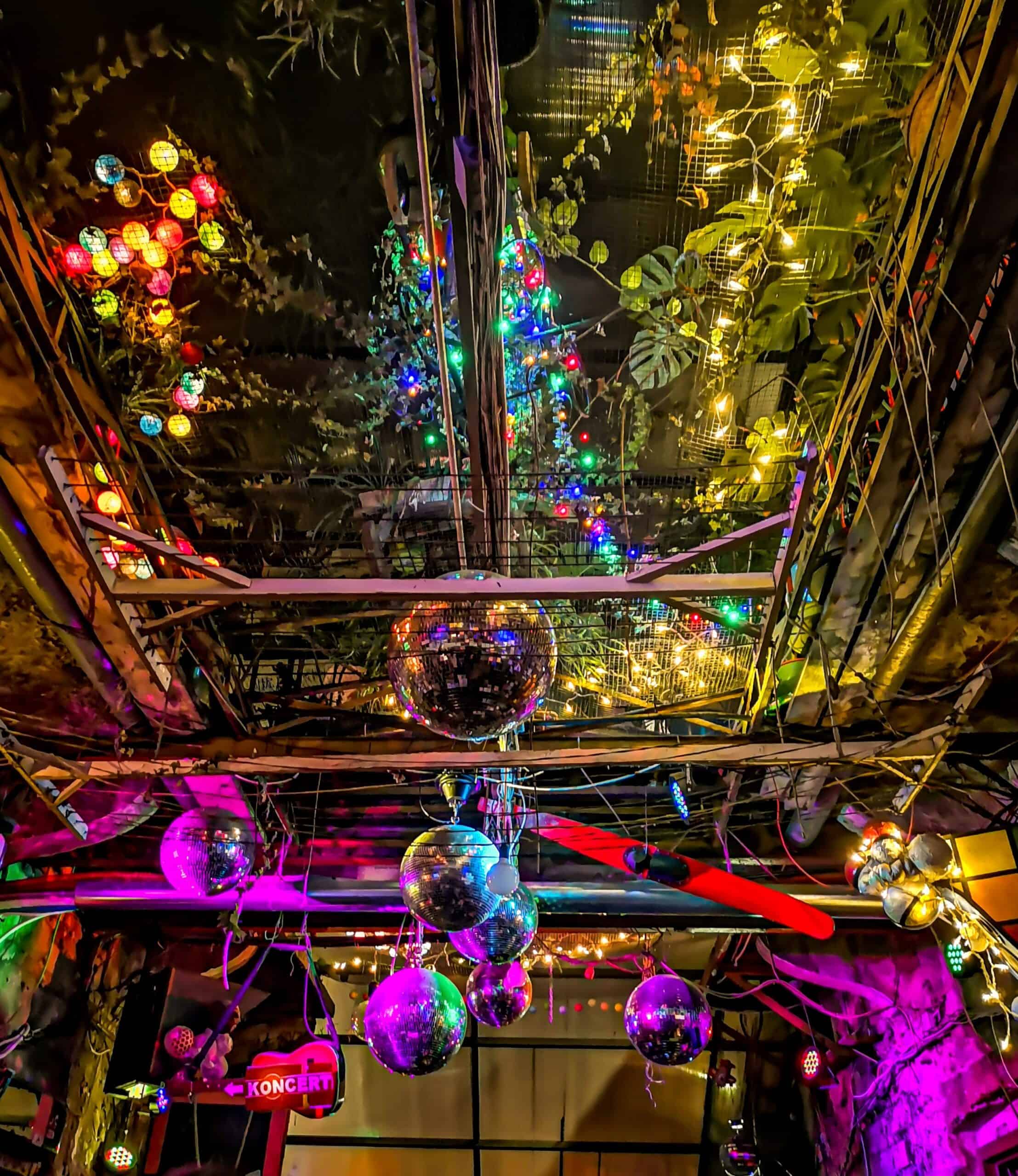
Budapest is famous for its worn-down, funky pubs that became popular during the early 2000s and flourish to this day. Honestly, in how many cities can you get smashed and have a party in a 19th century living room? Hit the city for a night out and visit as many of the nearly two dozen ruin pubs of Budapest as you can.
79. Nightlife
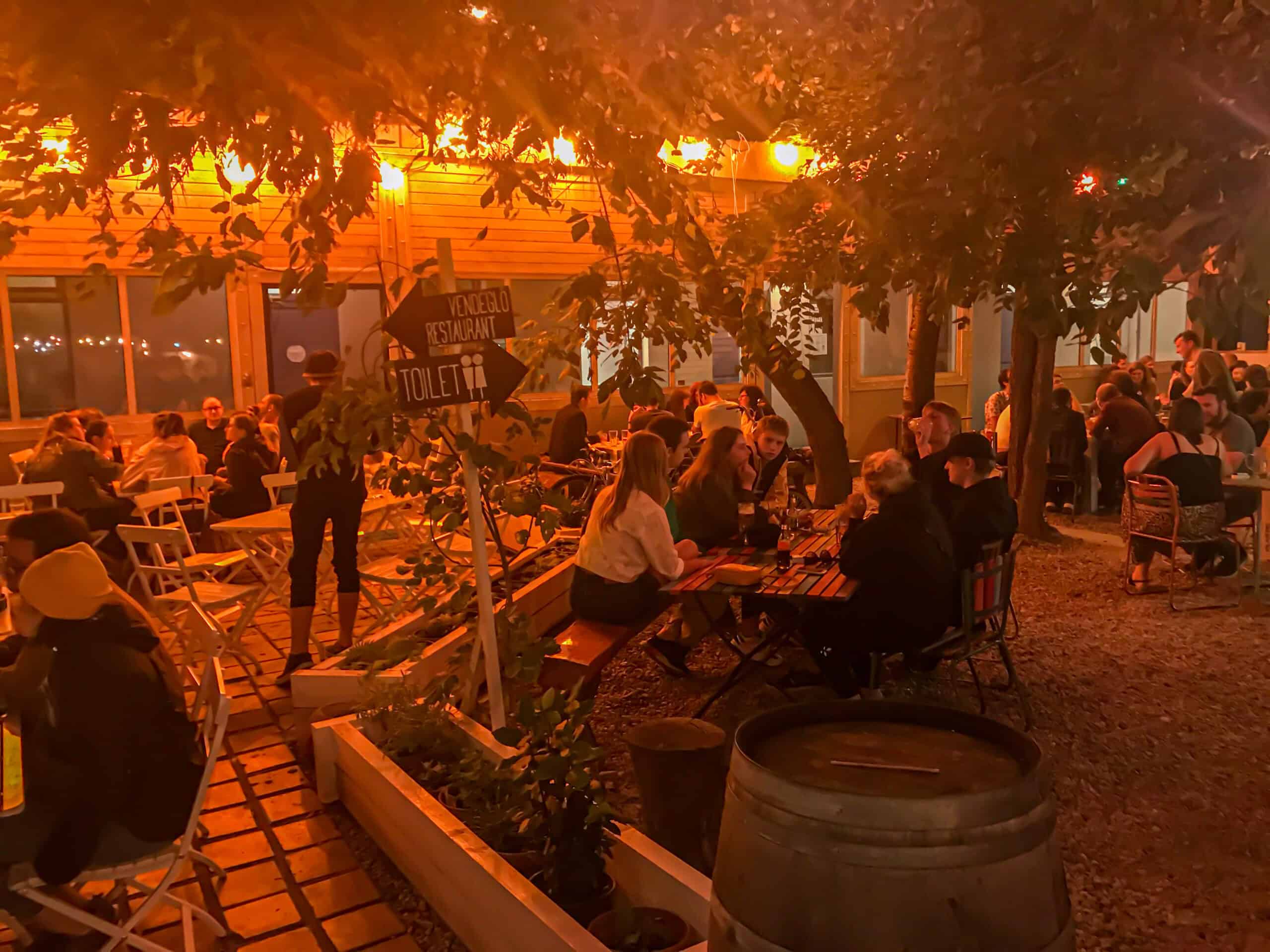
We’re sure you’re already familiar with the nightlife of Budapest – the countless concerts, parties, rave venues, cheap prices and unmatched romantic atmosphere that make this city the party capital of Central Europe. But, if you’d like a summary, we encourage you to read our guide to a perfect night in Budapest – you can’t go wrong with our tips.
Pro tip: If you’re curious about the top 5 clubs you definitely should visit when in Budapest, read our article about Budapest’s famous nightlife.
80. Escape rooms

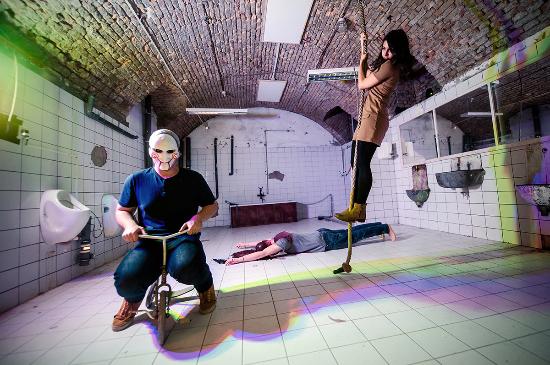
Escape rooms are the craze of this century. We’re not exaggerating, Budapest was in fact the first country that brought the Asian concept to Europe. An escape room is a live game in which participants are confined in a themed room and are given a set amount of time (usually 60 mins) to find a way to escape by discovering hidden clues and solving a series of riddles or puzzles. Budapest has nearly 80 of these, so you have a huge pool to choose from, but if you’d like to know which are the best ones, read our article!
81. Langosh
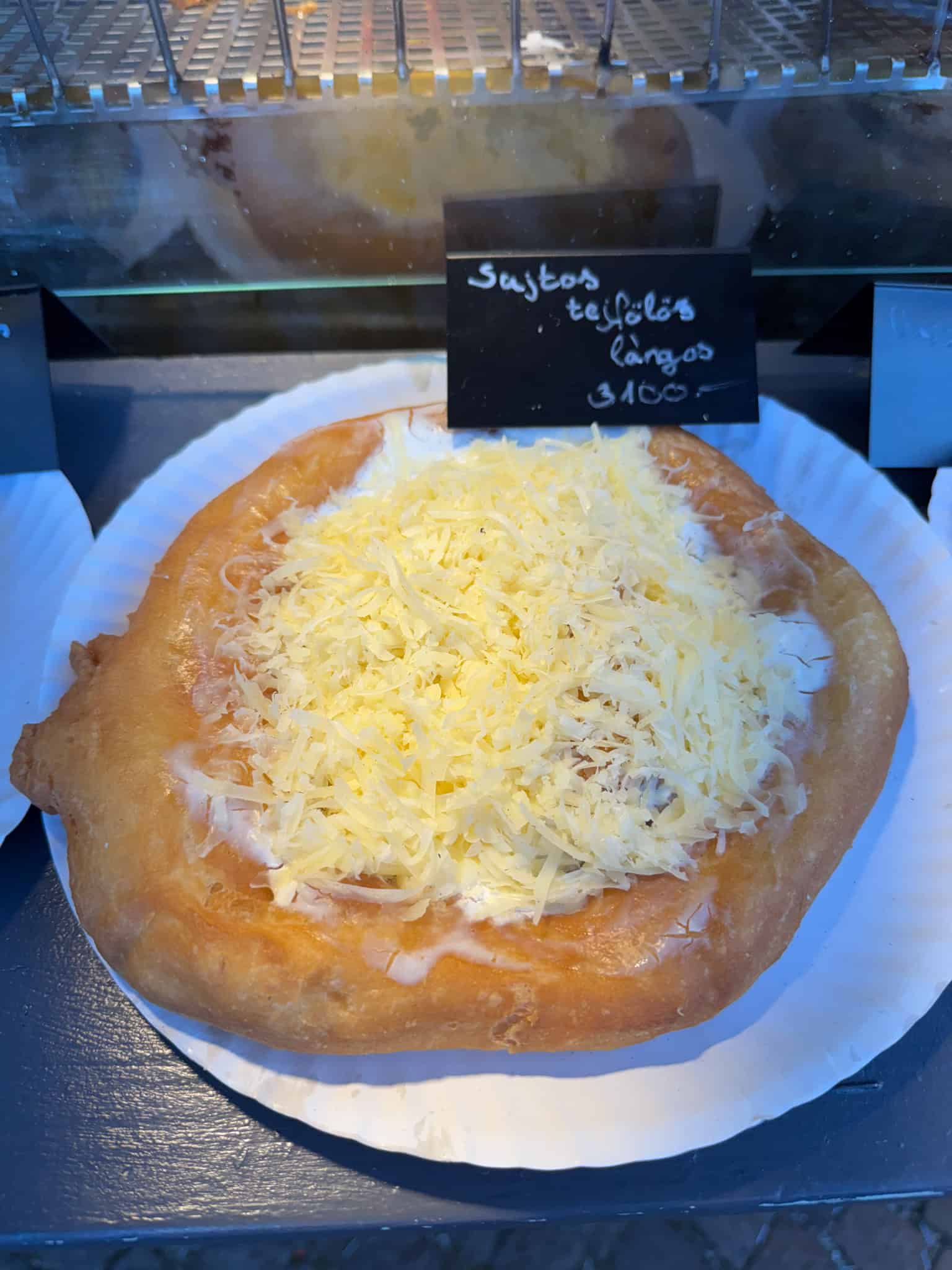
Lángos is a traditional Hungarian deep-fried dough most frequently topped with sour cream, cheese and garlic sauce. Although it became a popular street food in Budapest, it’s also a favored beach food throughout the country despite its heaviness. You must think Hungarians are crazy, but we cannot remember a single person who tried lángos and didn’t like it. In fact, riding on the wave of the recent street food revolution, lángos is living its renaissance. Thanks to this, you can choose from an incredibly versatile range of toppings nowadays, e.g. cottage cheese and dill, Bolognese sauce, beef stew, and even with Nutella and other sweet toppings.
82. Chimney cake

Kürtöskalács, as we call it a Hungarian, is a traditional sweet, yeast dough cake coming from Transylvania (a part of Romania where Hungarians live). If lángos is the favorite savory dough of the country, then Chimney cake is the sweet counterpart. During its making, they wrap the dough around a truncated cone–shaped baking spit, then – according to the original recipe – they roll it in granulated sugar. As the recipe evolved, now it’s available with walnut, coconut, cinnamon, and many other coatings as well.
If you’re in Hungary, you should definitely try one of the locals’ favorite and special desserts, the chimney cake. The chimney cake of Budapest is one of the most delicious treats which is available in many flavors -it is definitely a must try!
83. Palacsinta
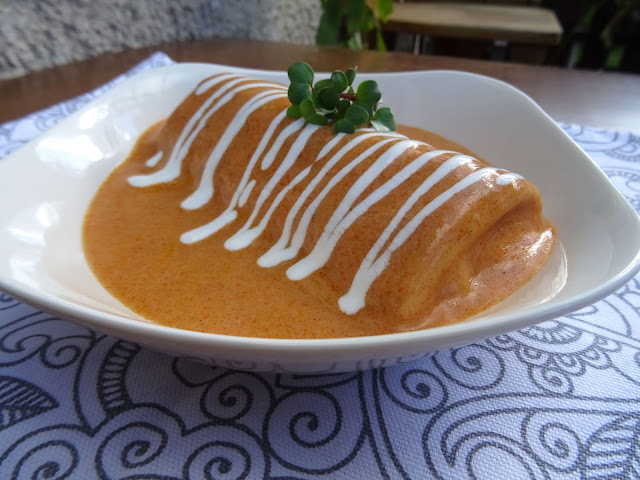
Everyone has heard of pancakes. It’s not a Hungarian invention, not even the way we make it. The British pancakes and the French crepes are made almost the same way, but we do put a unique twist on them: the filling! There’s probably no other country that puts sugared cocoa powder in their pancakes, or grandma’s jam that’s always on the shelf of our pantry. Our recommendation? You should definitely try a “lekváros palacsinta” (pancake with jam) when you visit Budapest!
84. Fisherman’s soup
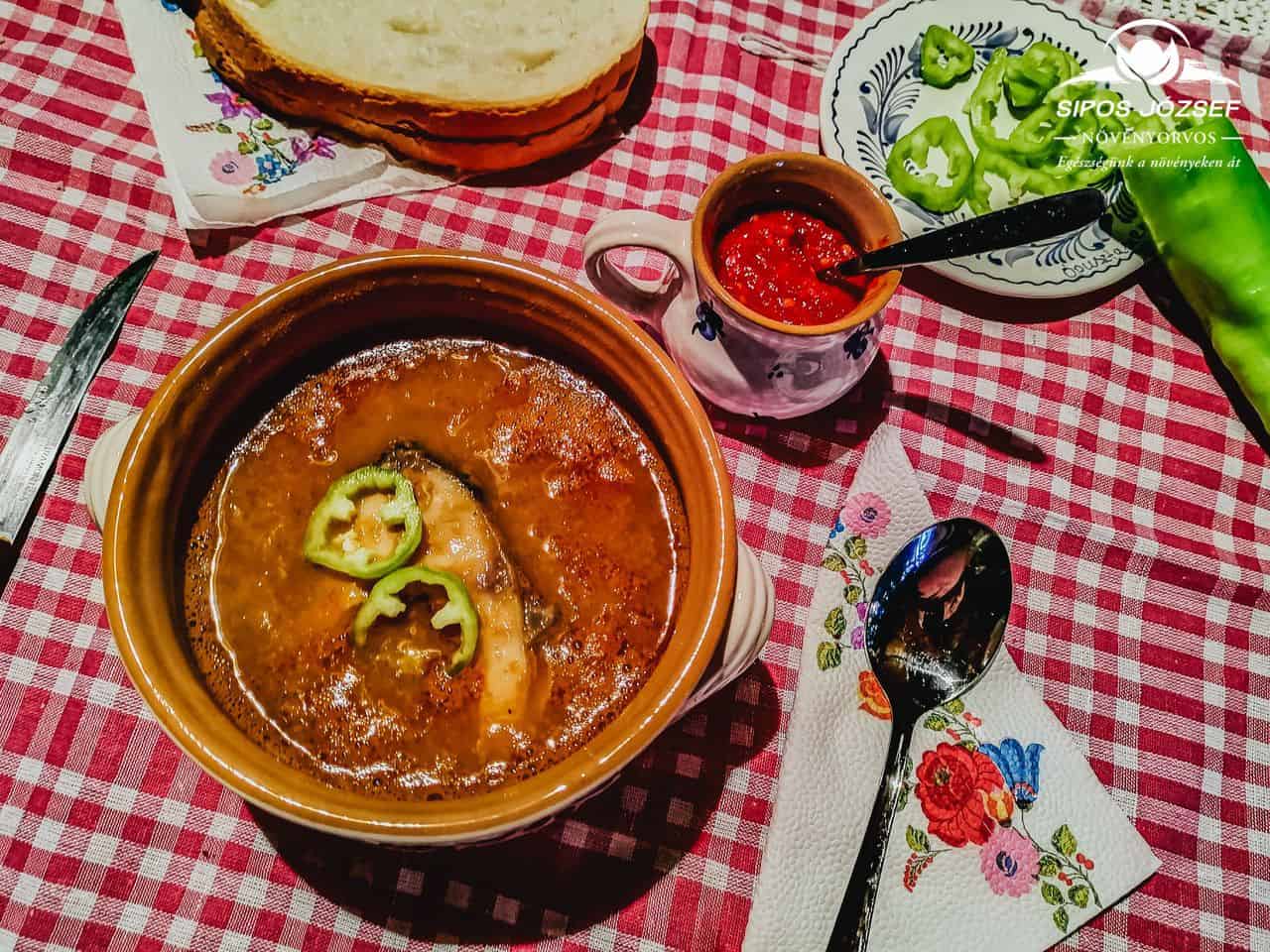
Finally, a meal that has Hungarians’ red gold in it: paprika! The three basic elements of a Fisherman’s soup are sweet water fish, onion, and paprika. Beyond these, the recipes change based on the region they come from. The two most popular ones are the Bajai (a town by the Danube) and the Szegedi (a town by the Tisza, the second largest river of Hungary). The main difference is that Bajai is served with noodles and the soup itself is clear red, while the Szegedi is muddy looking and has a rusty-red color. Good news is, you can try them both in Budapest, along with other delicacies of Hungarian cuisine.
85. Stuffed cabbage
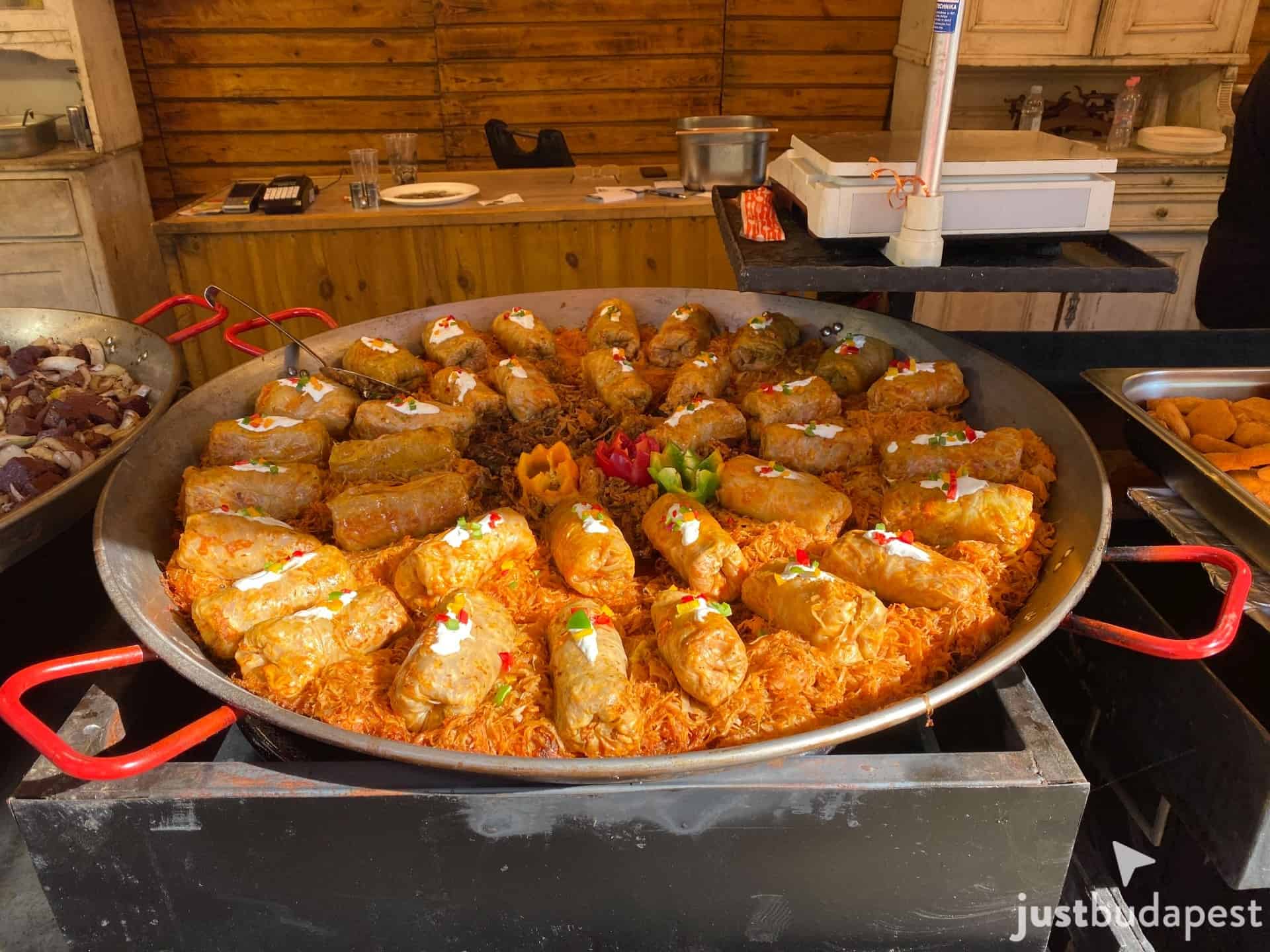
As much as we Hungarians like to think of it as our own, if we claimed stuffed cabbage as a traditional Hungarian food, all our neighboring countries (and even a few more) would declare war on us. This filling, heavy food is well-known all over Central and Eastern Europe, and although the recipes slightly differ in each region, the main characteristics are constant. Spiced minced meat mixed with rice, stuffed into sweet or pickled cabbage leaves and cooked together for hours. In Hungary, we add paprika to the spice mix (shocking, isn’t it?) and serve the meal with sour cream on top.
86. Goulash
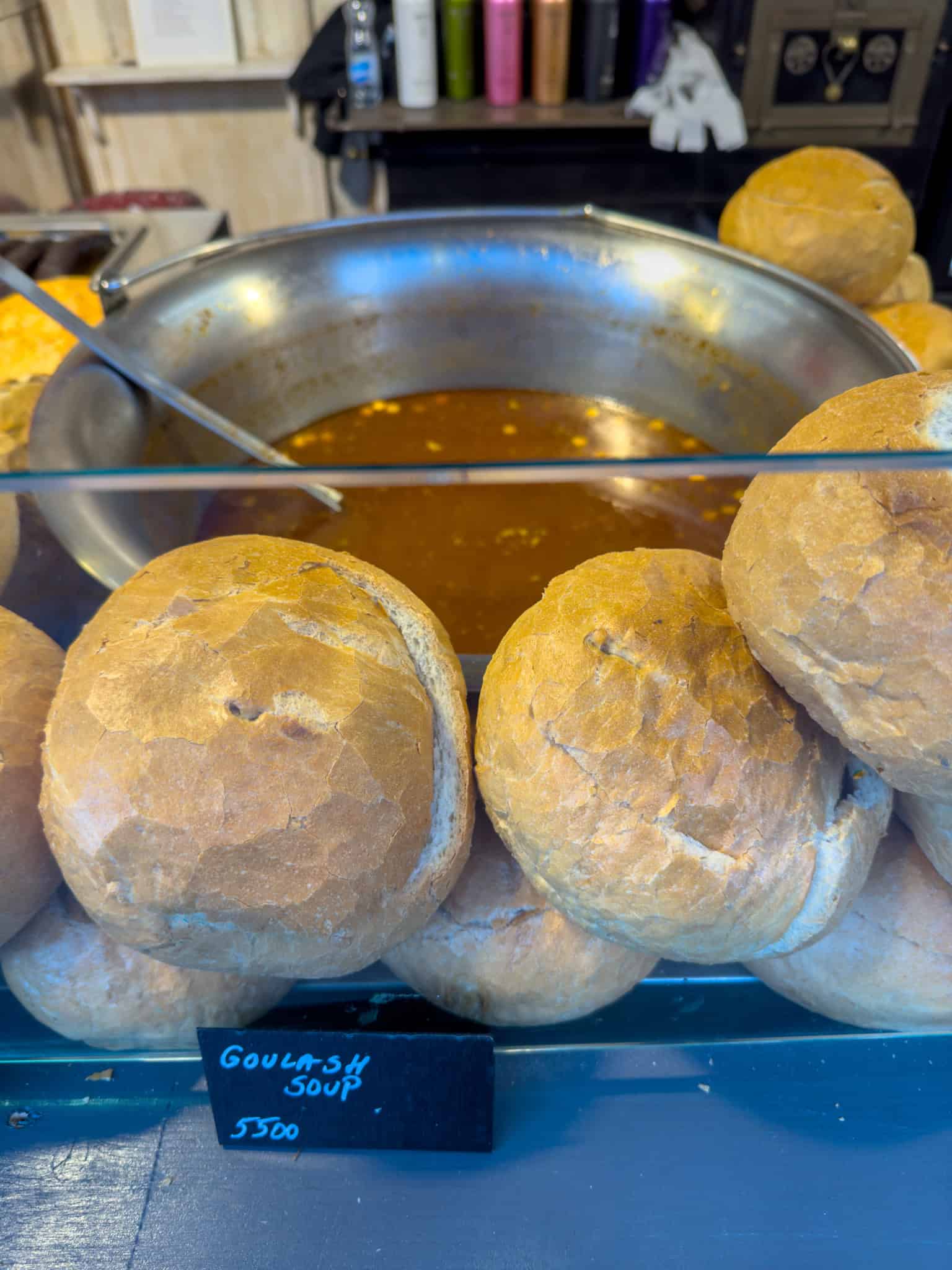
You’ve most certainly heard of goulash already. If you ask somebody what’s the first thing they think of when they hear ‘Hungary’, it will probably be goulash (or maybe Puskás Ferenc if they’re football fans). Our national dish consists of more or less the same vegetables (usually potato, carrots, and parsley), meat (beef, veal, or pork) and spices (garlic, cumin, paprika, etc.), but all families have their own takes on the recipe. There are many rip-off versions of it all around the globe, but if you’d like to taste the real “Gulyásleves”, you have to visit Hungary!
87. Michelin star restaurants
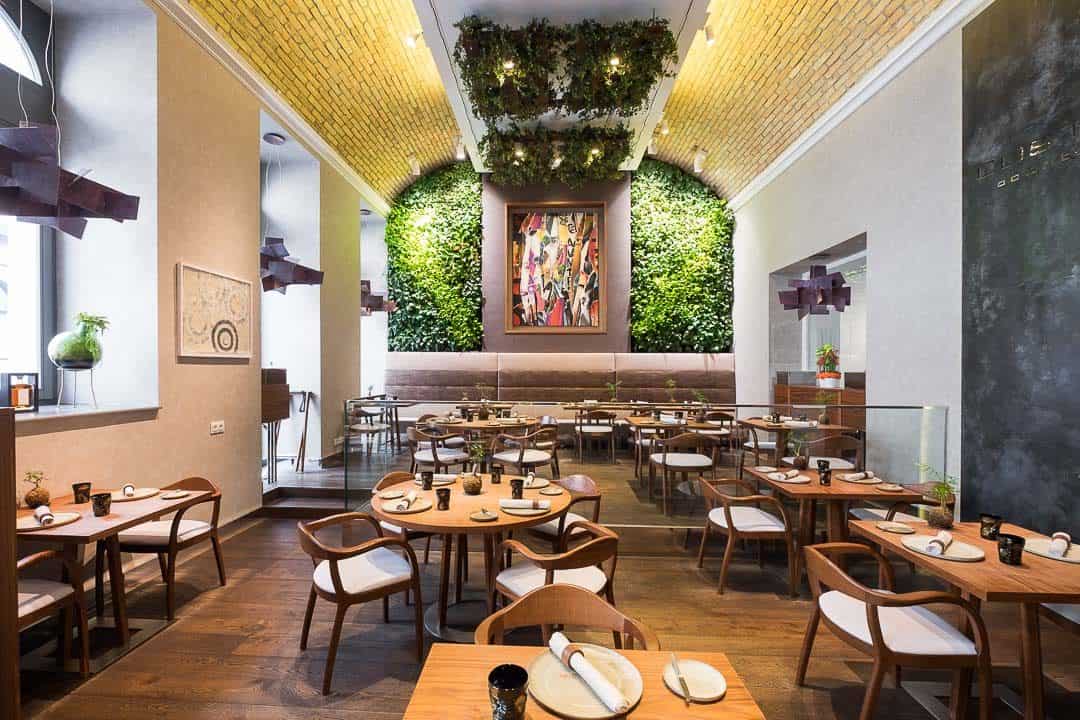
Michelin stars are a rating system used by the red Michelin Guide to grade restaurants on their quality. Having only one means we talk about an exceptional restaurant, but having 3 stars means that place is a restaurant royalty! As of 2025 in Budapest, you can come across seven 1 Michelin star restaurants, and one that was awarded 2 Michelin stars – the latter being called Stand.
88. Chairlift
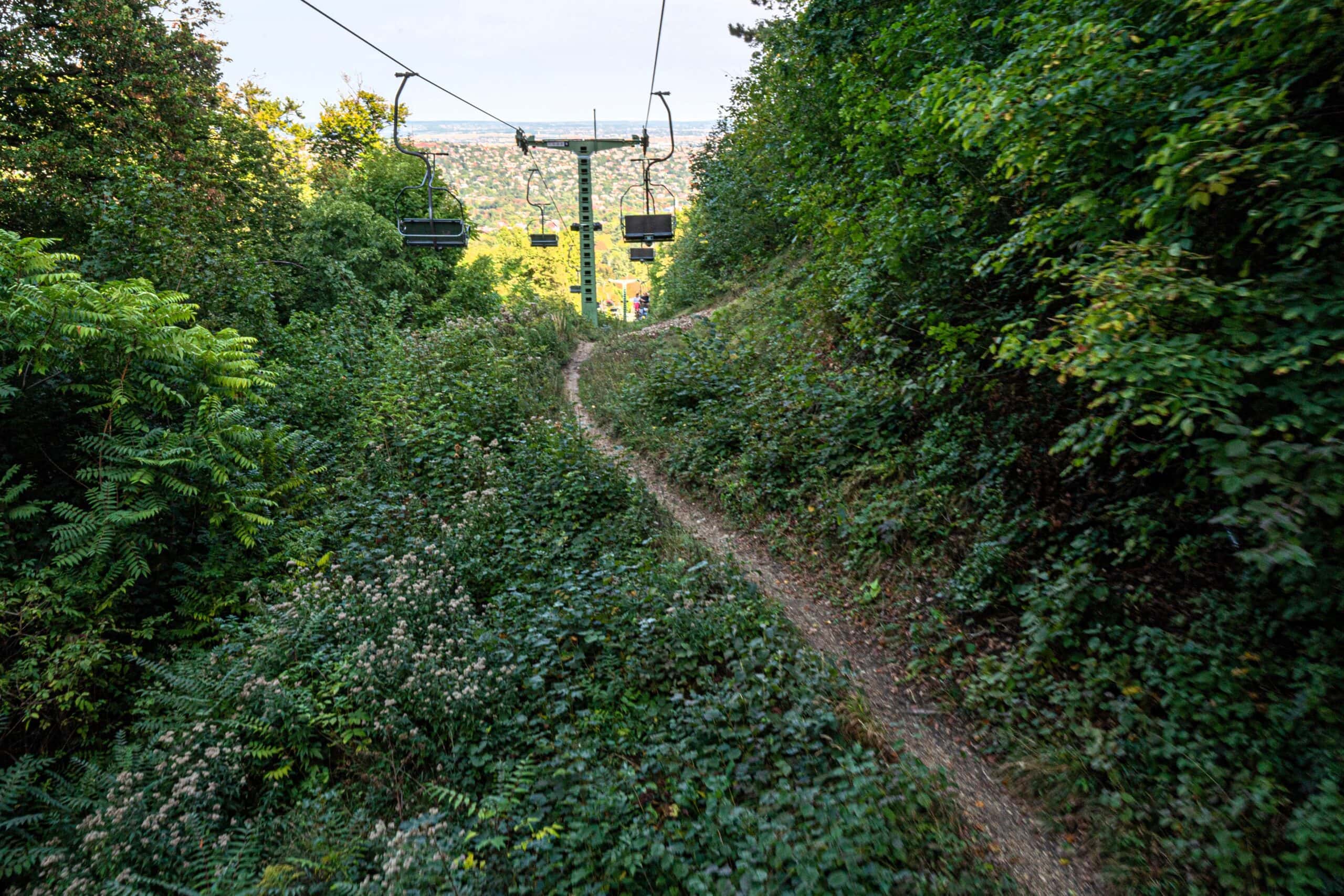
Take a good look at Budapest from a suspended chair that cuts through the beautiful greens of Buda hill. Using the chairlift (Libegő), you can travel between Zugliget and the road leading up to the Elizabeth Lookout Tower in roughly 15 minutes while enjoying the panoramic views of the Buda surroundings.
89. Elizabeth Lookout
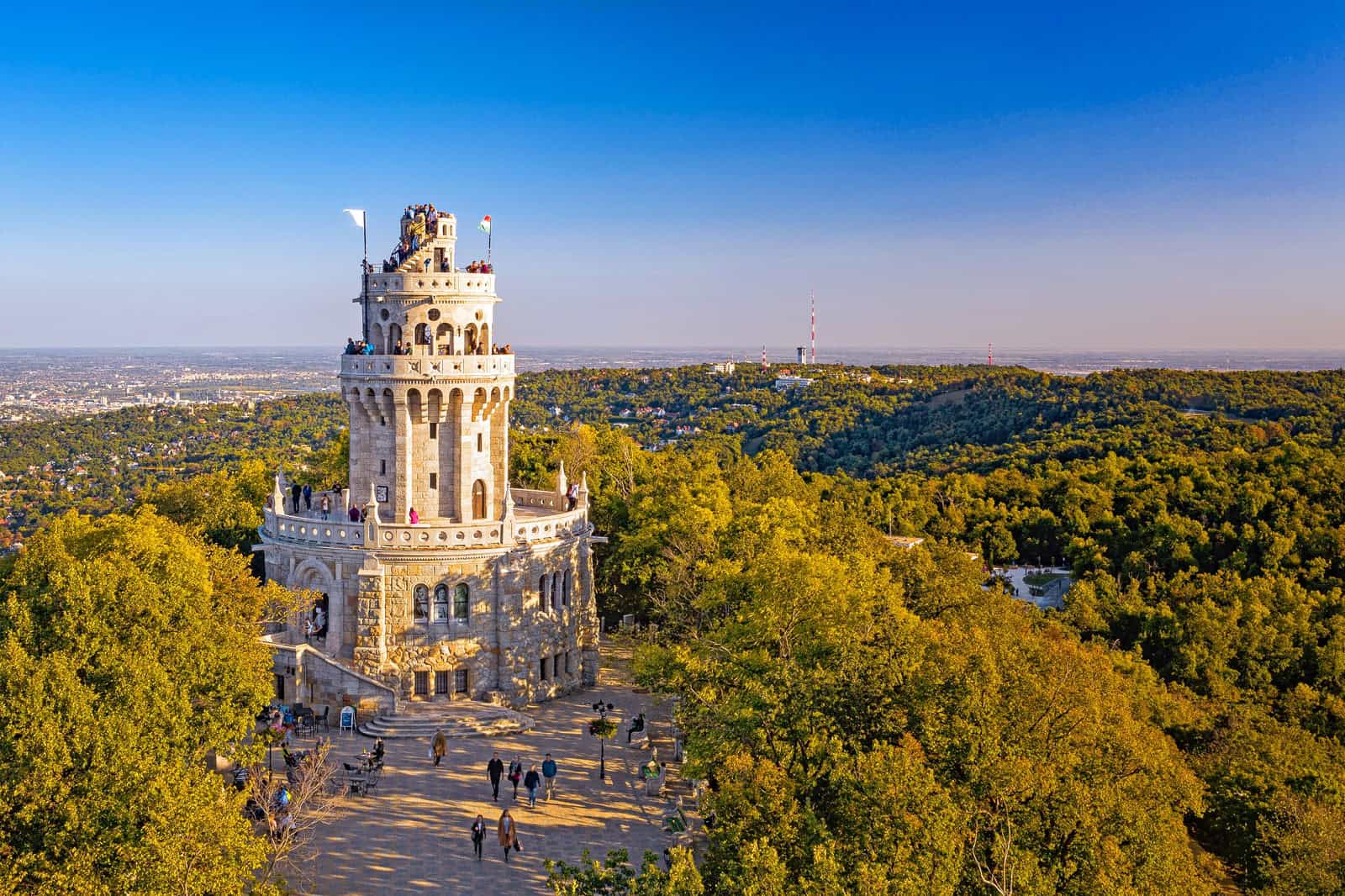
The Elizabeth Lookout Tower is located in Normafa, Jánoshegy, the largest and most popular green area of Budapest. It was built in 1911 and got its name after the revered Habsburg Empress Elisabeth of Austria, wife of Emperor Franz Joseph I. It was designed by Frigyes Schulek, the same architect who designed the Fisherman’s Bastion. If you walk up the 100-step spiral stairwell, you’ll be rewarded with a breathtaking view from the top.
90. Go-kart
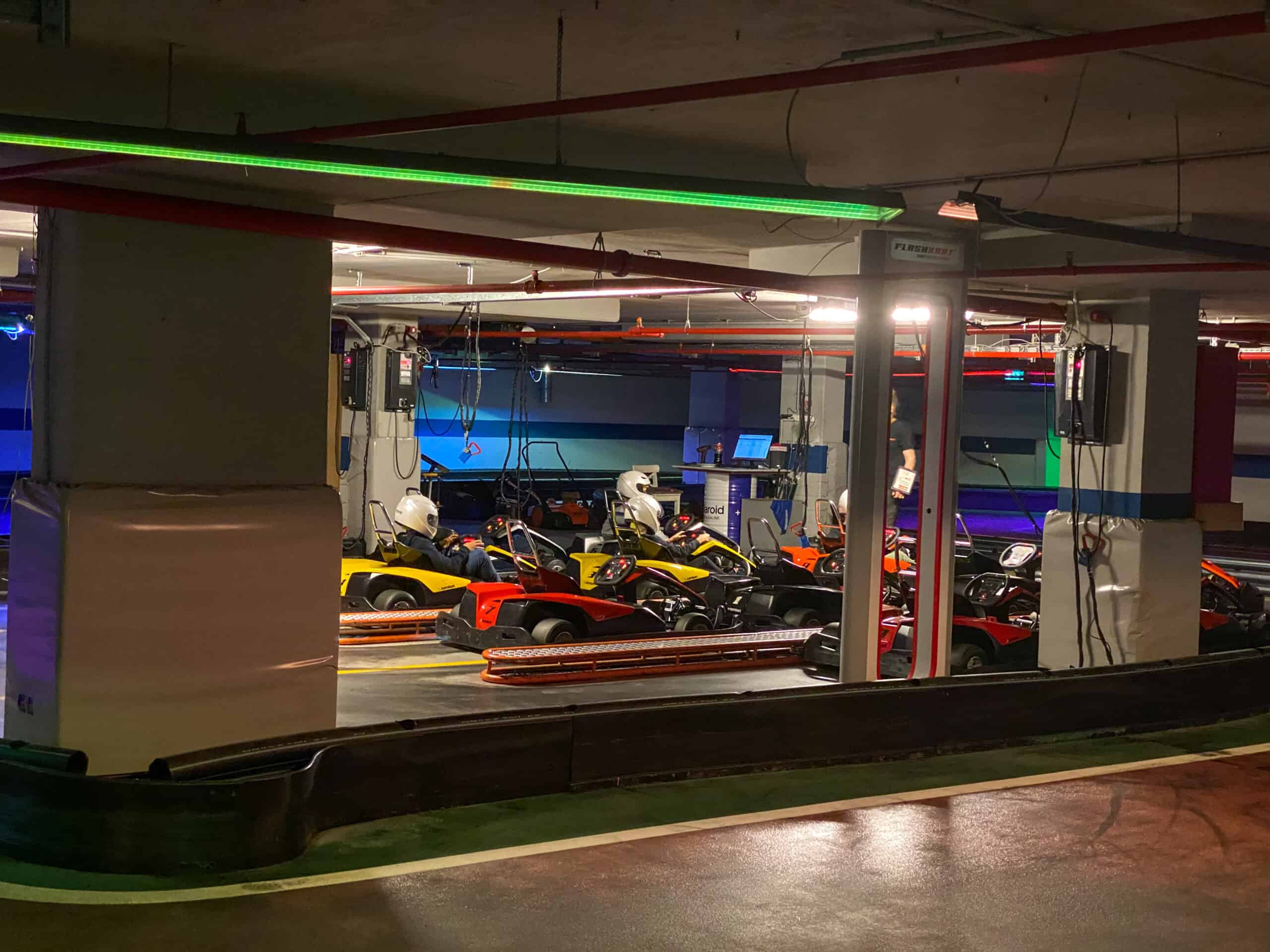
Racing with these miniature cars is a great source of joy whether you come with family or friends. Compete with each other on the narrow and winding kart tracks and figure out who’s the real devil of the asphalt. There’s at least half a dozen go-kart tracks in Budapest, so you have plenty of options – you can even floor the gas pedal on the Hungaroring!
91. Pinball Museum
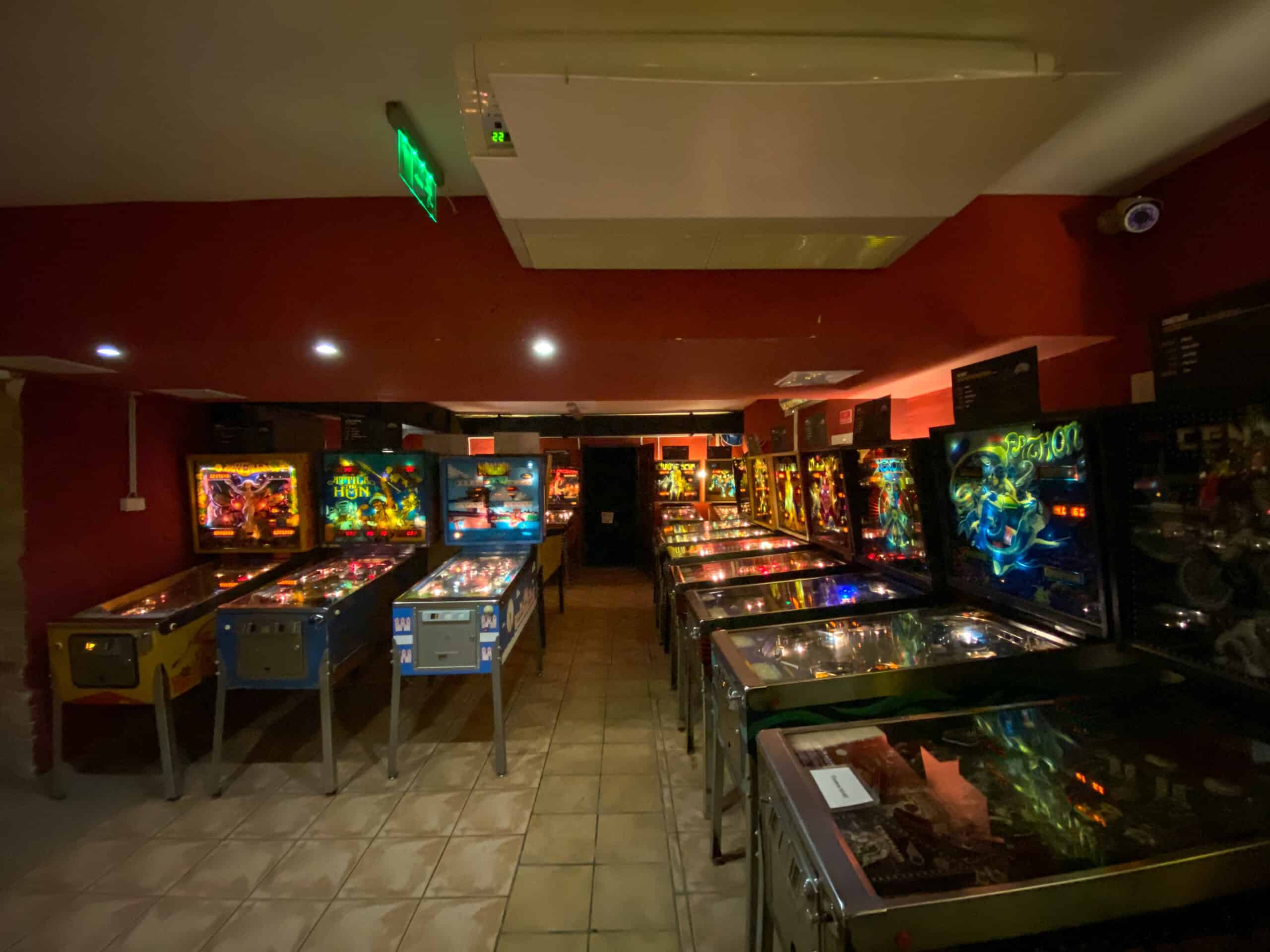
You didn’t think you could find something like a Pinball Museum in Budapest, did you? With over 130 machines in their collection which cover each era from the end of the 19th century, this venue is the wet dream of every pinball lover. Travel back in time and play with the different pinball machines of every decade.
92. F1 Hungarian Grand Prix
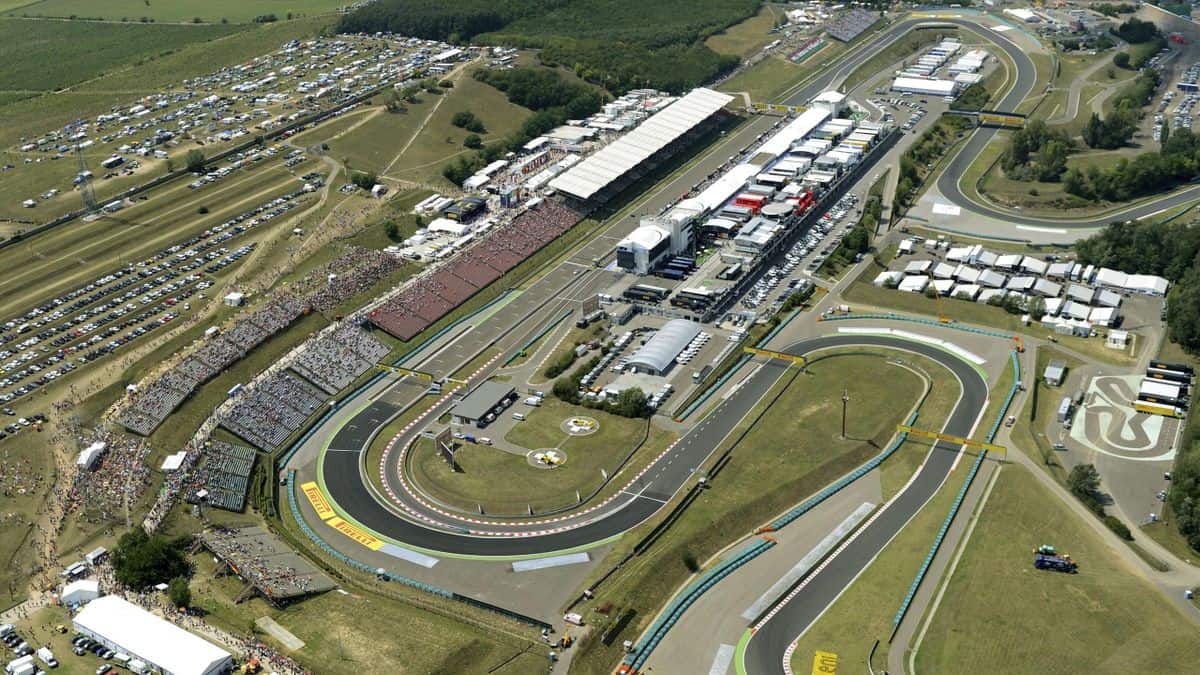
Hungary has been on the list of FIA Formula One World Championship locations since 1986. Once a year every F-1 maniac has their eyes on Budapest to see which pilot wins the Hungarian Grand Prix. It takes place in Mogyoród at the Hungaroring, the 4381 km long racetrack. Fun fact: as the circuit gets twisty and bumpy in the summer, it’s frequently called “Monaco without the buildings” jokingly. According to surveys, Mogyoród ranks third among the most visited Hungarian destinations by tourists. Mogyoród is just 30-40 minutes away from Budapest by car / taxi.
93. Shopping malls
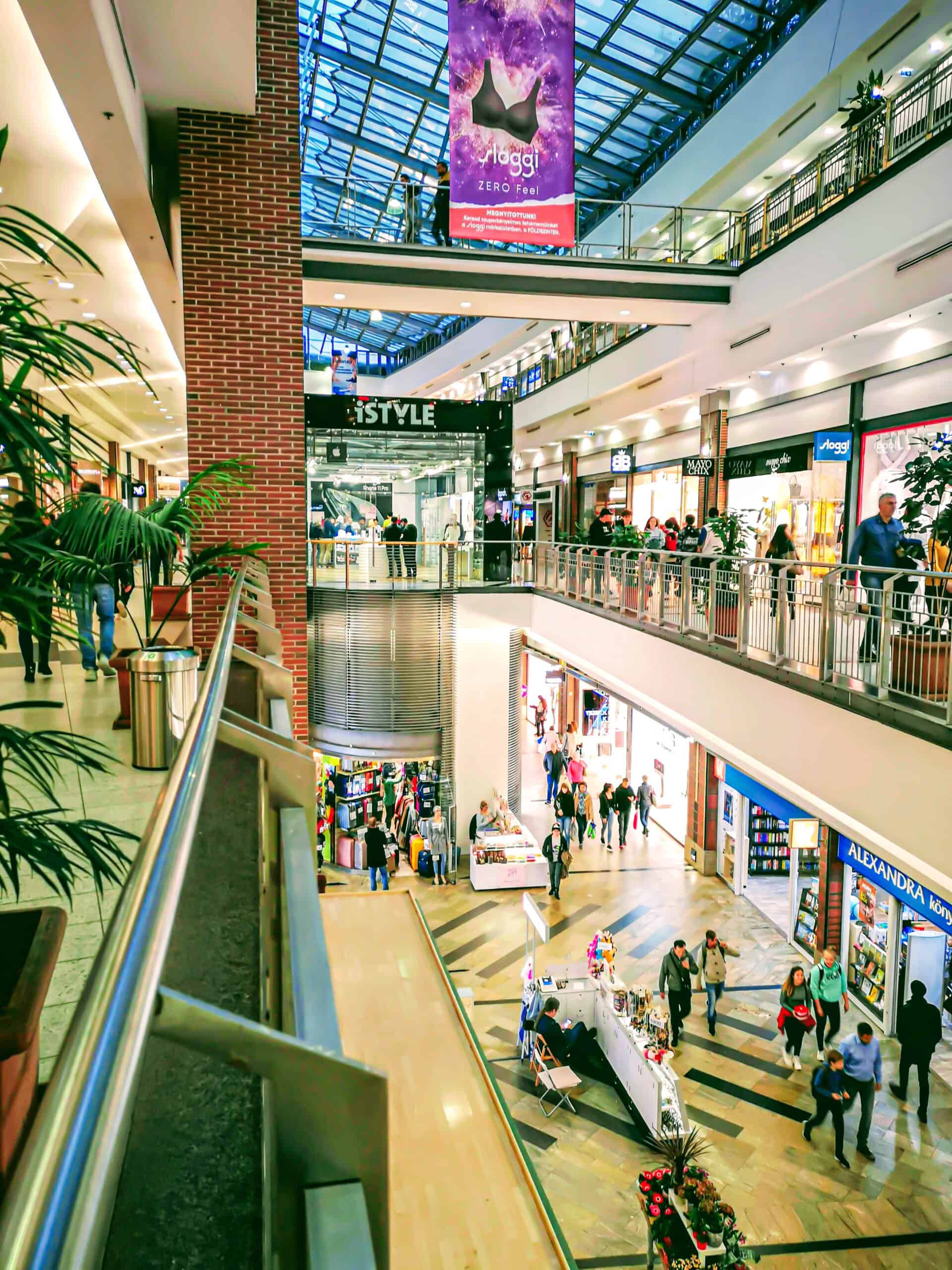
No need to be shy about it: Budapest is packed with shopping malls! Officially there are 13 of them in the city, and most of them are quite massive. The largest and most frequented ones are Arena Mall, Allee, Árkád and the Westend.
As for accomplishments: Arena has the largest floor area of all the shopping malls in Central Europe and Westend has the second largest total area in the whole region. If you asked us to recommend you one, we’d put our vote on Westend for two reasons – one, it’s really close to the center (adjoining Nyugati railway station), so it’s easily and quickly accessible both on foot and with public transportation (metro line 2, tram 4-6 and several bus and trolley lines); and two, you can take a Hop-on Hop-off bus to get there. Click here to find out more.
94. Hop-on hop-off
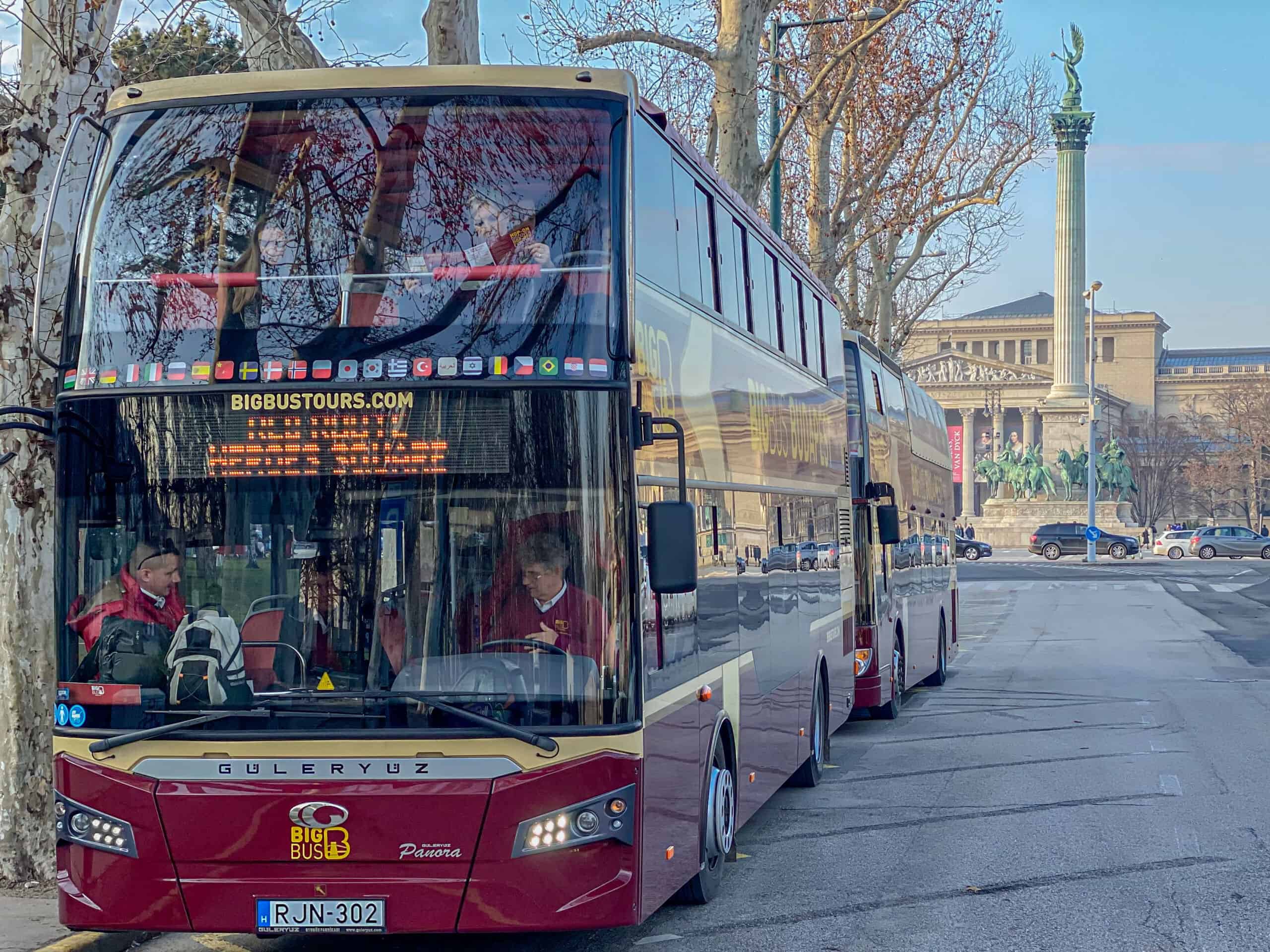
First time in Budapest? Don’t know where to start the sightseeing? There’s no better way to explore the city than Budapest Sightseeing’s Hop-on hop-off tours. It’s almost hard to believe how many amazing things you can do and see over the course of a few hours. The main tour lasts for about 2 hours and includes 22 stops (2 of them for taking photos) and audio guide is available in 16 languages. From City Sightseeing Budapest’s double-deckers, you will have a look at the city from a point of view that’s unavailable from any other type of transportation. The buses operate all year and the tours start as early as 9 AM and keep going until 5 in the afternoon. Boarding one of the unmistakable red or green buses guarantees you a once-in-a-lifetime sightseeing experience.
This 100-item list of Budapest’s finest includes several places that are accessible by Hop-on hop-off buses. Wherever there’s a Hop-on hop-off stop nearby, we indicated it in the description for you. Learn more about Hop-on hop-off bus tours here.
95. River cruise
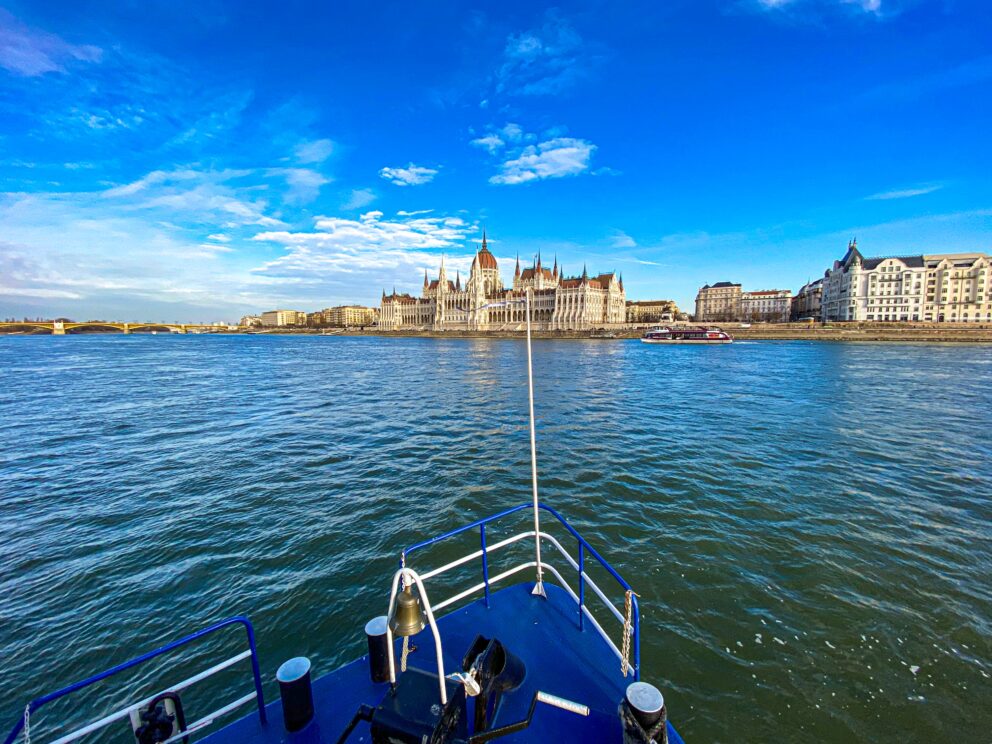
One of the best ways to truly appreciate the beauty of Budapest is to go on a river cruise and watch as the historic landmarks of this thousand-year-old city unfold before your eyes while riding the calm waves of the Danube. Either by day or night, you’ll be amazed by the magnificent bridges, and spectacular sights on both sides of the river. Intrigued yet? Check out our article on the best river cruises Budapest has to offer.
96. RiverRide
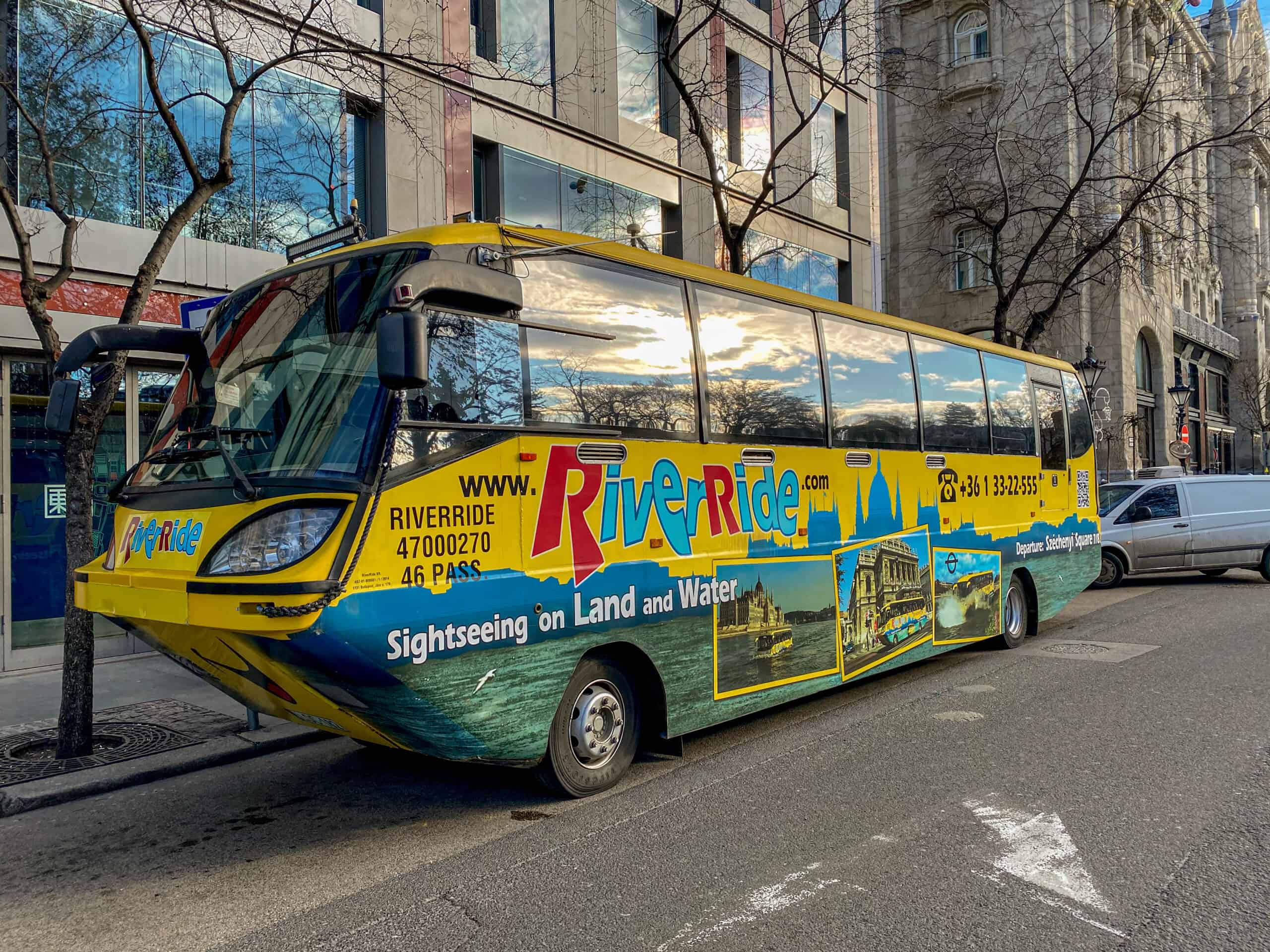
RiverRide is a unique sightseeing bus that roams the streets of Budapest – as well as the Danube. Yes, we’re talking about an amphibious transport vehicle capable of riding the waves of the river despite looking almost exactly like an ordinary bus. Did we pique your interest? Check out their website to learn more.
97. Bike rental
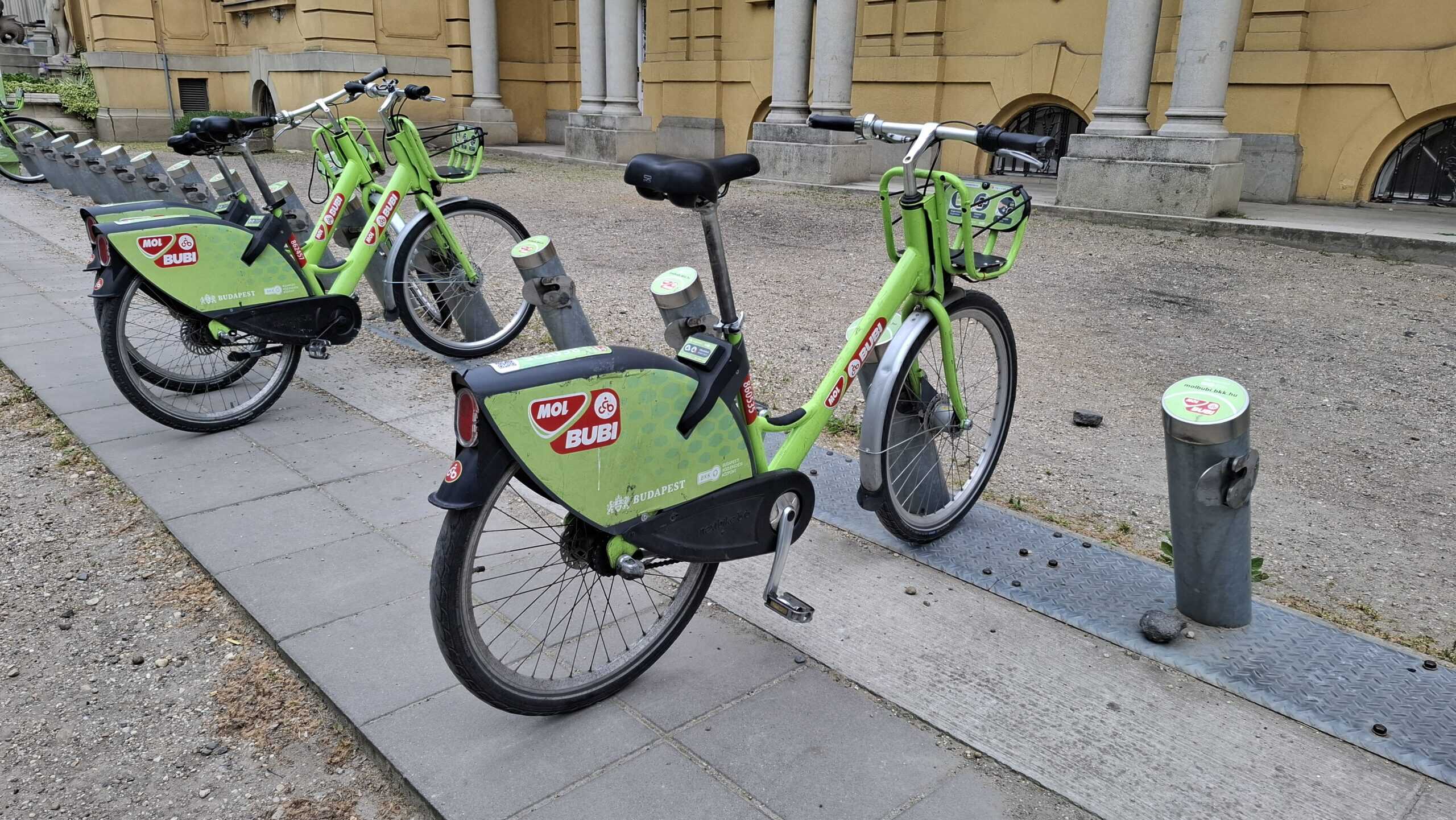
The bike situation has been steadily evolving in Budapest lately. As the bicycle lane network keeps getting extended and upgraded, more and more bike rental and sharing options emerge in the city. In addition to privately owned bike rentals, modern app-enabled bike sharing companies have also taken Budapest by storm: the government-founded MOL Bubi boasts a network of 158 docking stations and 2071 bicycles. If you would like to know more about public transport in Budapest, check out our article.
98. Scooter rental
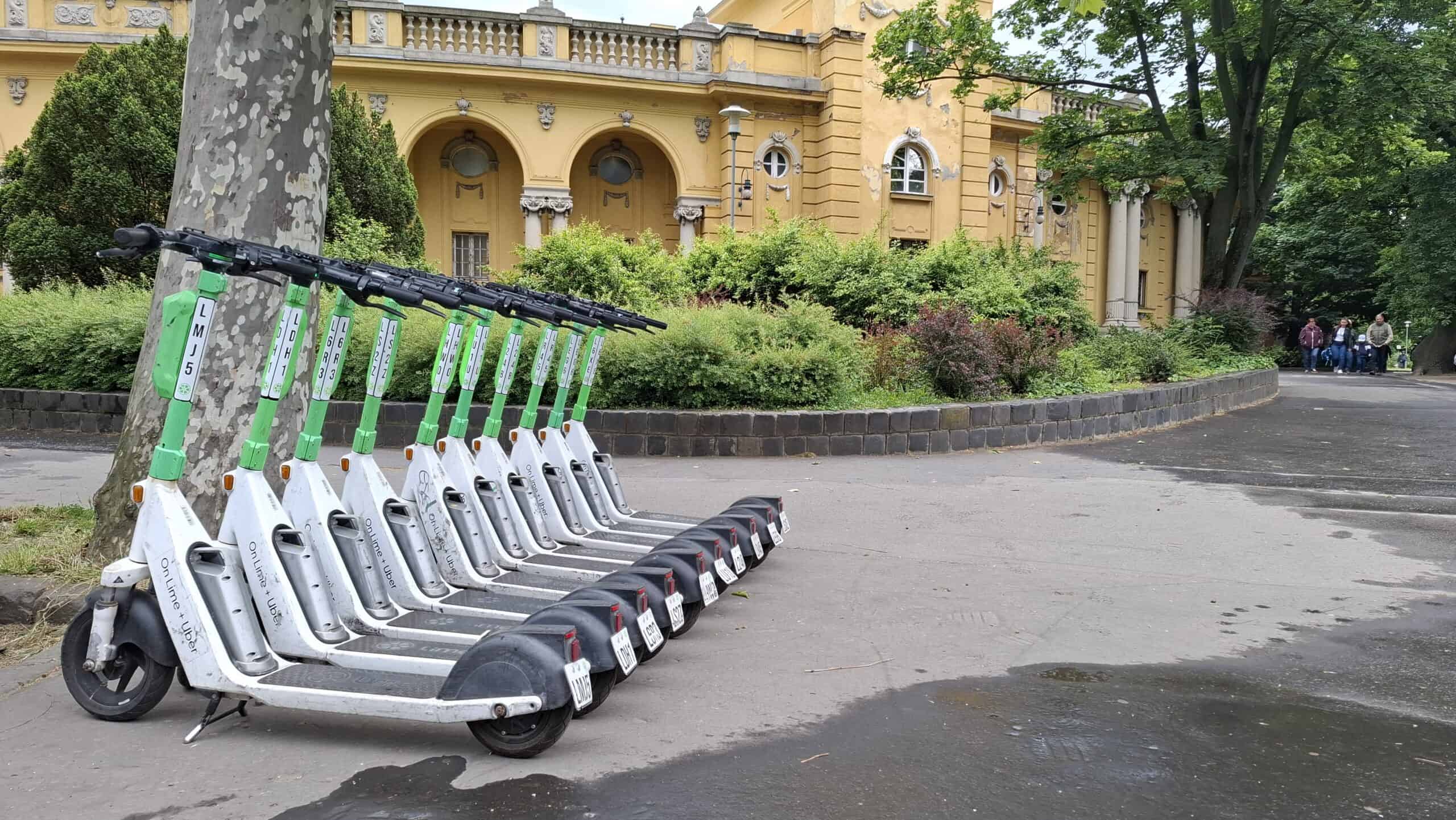
Similarly to bike rental the scooter market is quite monopolistic in Budapest. Lime, the international electric scooter sharing company appeared on the streets of the capital in 2019, and has conquered it in the blink of an eye. It doesn’t come as a surprise, though, as using it is extremely simple and convenient: all you need to do is download the app, register, then find a scooter (which is about as hard as finding oxygen these days), scan its QR code, and you’re good to go. However, if you prefer fixed term rentals from smaller businesses, Budapest has some options for that, too. If you’re interested, read our article about the scooter situation in Budapest.
99. Flight tours
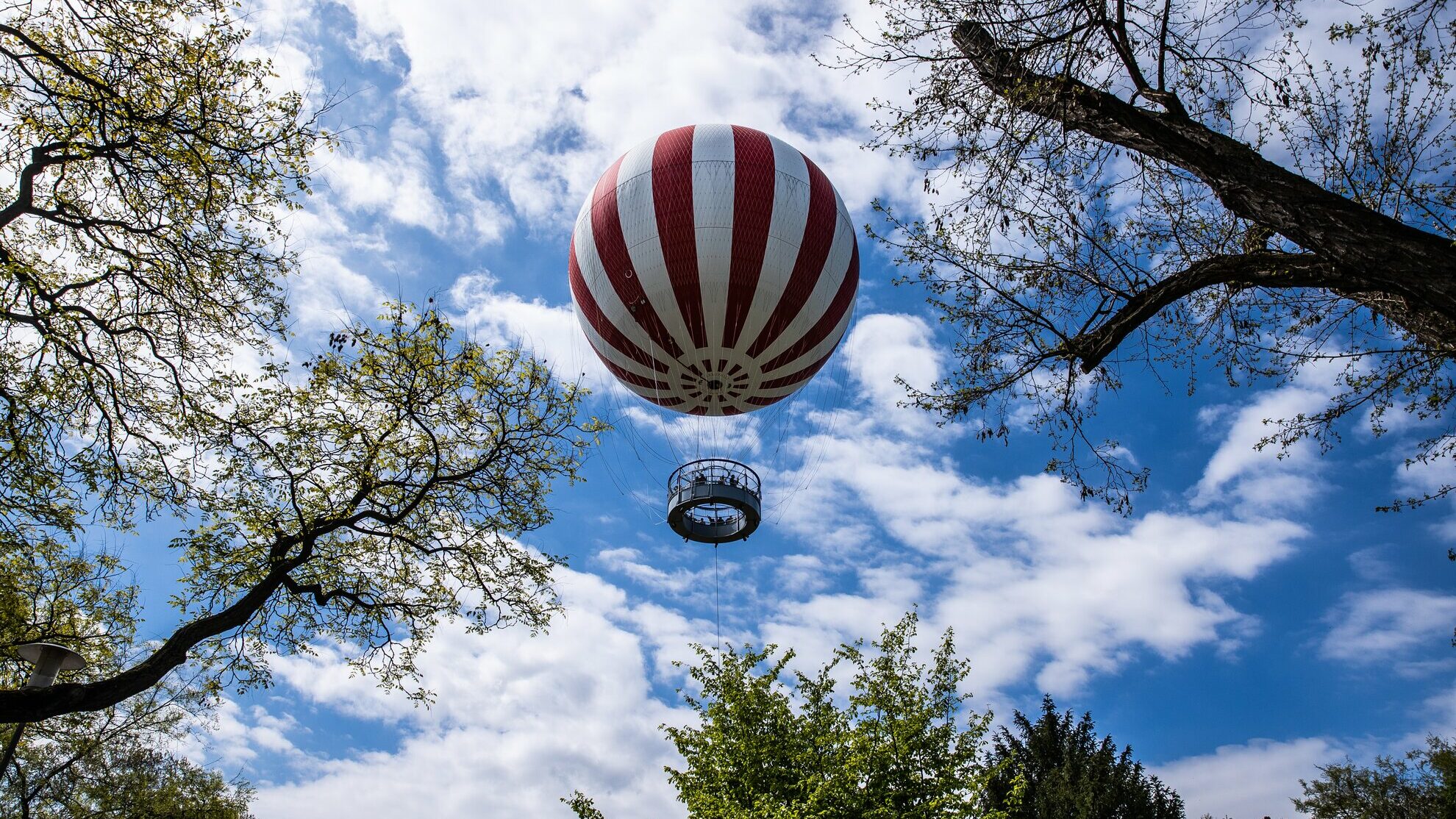
You won’t get any higher than this in Budapest! If you’re the insatiable type who isn’t satisfied with viewpoints but wishes to admire the beautiful city from the air, then flight tours were made for you. Jump into a light aircraft or a helicopter and explore the undisrupted panorama of the city from above! Check out what companies offer flight tours in Budapest.
100. Day trip to Szentendre
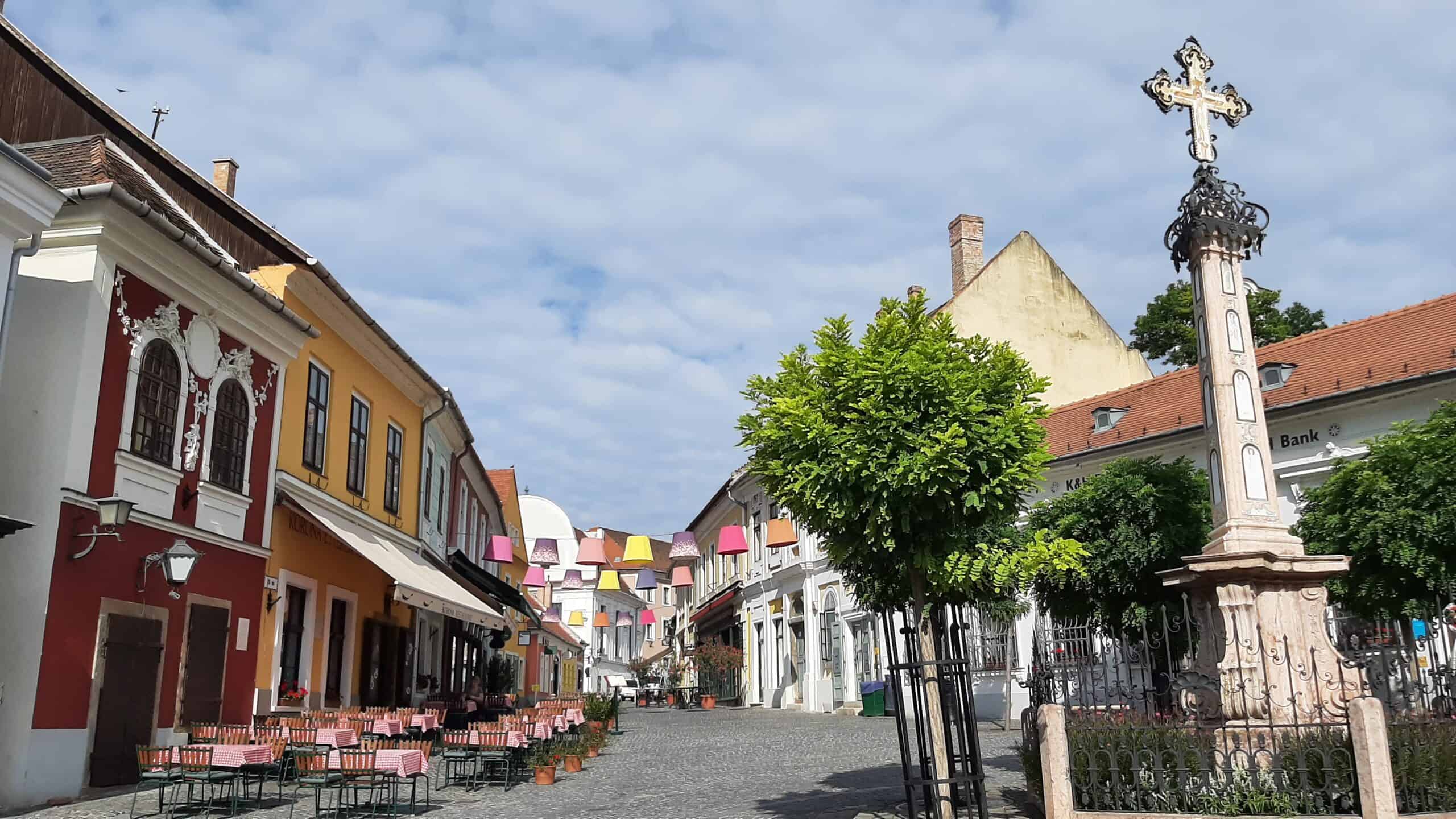
A perfect day trip from Budapest is a visit to Szentendre, a charming riverside town just 40 minutes away by HÉV train or boat. Known for its colorful Baroque architecture, narrow cobbled streets, and vibrant art scene, Szentendre offers a peaceful escape from the hustle of the city. One of the highlights is the Szentendre Open-Air Ethnographic Museum (Skanzen), Hungary’s largest outdoor museum, where you can explore traditional Hungarian village life through authentic buildings and crafts. Strolling along the Danube promenade and enjoying a coffee or local pastry adds the perfect touch to your excursion.
In our article, you could read about the 100 things you definitely should see when visiting the Hungarian capital. Budapest is a safe place where both little ones and adults can have a great time.
Pro tip: Experience the golden age of Budapest at the Párisi Udvar Hotel, known for its breathtaking architecture.
Pro tip: The musical-themed Aria Hotel Budapest is a true luxury experience right next to the Basilica.
Pro tip: The Anantara New York Palace houses the ‘World’s Most Beautiful Café’, a must-see.
Pro tip: Part of the twin palaces at Elisabeth Bridge, Matild Palace is a pinnacle of Budapest luxury architecture.
Pro tip: The Kozmo Hotel Suites & Spa offers a peaceful sanctuary with a stunning library.
Pro tip: With its magnificent grand ballroom and royal history, the Corinthia is one of the city’s landmarks.
Pro tip: Located in the heart of the pedestrian area, Kempinski Hotel Corvinus is famous for its art collection.
FAQ
What are the top things to do in Budapest?
When it comes to things to do in budapest, you’re in for a treat! From exploring the stunning hungarian parliament building to taking a relaxing dip in a thermal bath, there’s no shortage of attractions. Don’t miss a stroll along the Danube for breathtaking view of budapest or a visit to the historic Buda Castle. And if you’re up for some nightlife, the ruin bar scene is a must-see! There’s something for everyone in this vibrant city.
What is the best time to visit Budapest?
The best time for a trip to budapest is during the spring or fall when the weather is mild and the crowds are thinner. You’ll get to enjoy beautiful scenes at places like city park without battling the summer heat. Winter can also be magical with the holiday lights, but make sure to bundle up! No matter when you go, Budapest has its unique charm that’s worth experiencing.
How do I get around Budapest?
Getting around the city of budapest is super easy! You can hop on the metro, trams, or buses, all of which are affordable and efficient. If you want to soak in the sights, walking is a great option too. The chain bridge connects Buda and Pest and is a lovely way to cross the Danube. For a more unique experience, consider renting a bike or even taking a guided tour to explore the city like a local!
Are there any hidden gems in Budapest?
hidden gems waiting to be discovered. Check out the jewish quarter for quirky cafes and street art. The budapest zoo is another fantastic spot, especially if you’re traveling with kids. Don’t forget to explore the lesser-known thermal baths like Rudas Bath for a more authentic experience. There’s so much more to see beyond the usual tourist spots!